
Excerpt from a Book (2): The Iranian Woman, An Undefined Identity

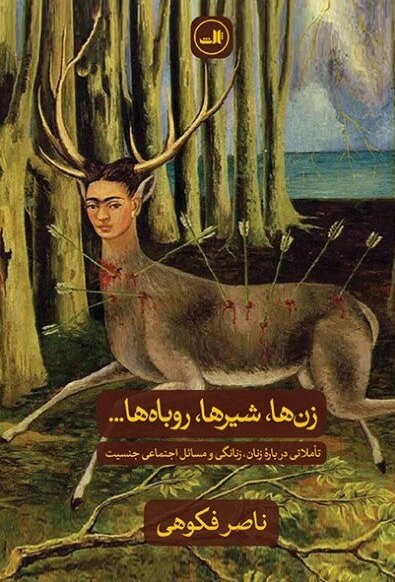
Today, the postmodern critique of post-industrial society challenges the paradoxical consequences of modernity more fiercely than ever. The precarious and ambiguous position of the modern human, caught between two irreconcilable poles, involves a constant oscillation from one to the other, unable to forever alleviate the anguish of this impossible choice. On one hand, there is the rigid, automated technological “logic” that has dismantled all boundaries, establishing pleasure and utility as the sole guiding principles of life; for the first time in human history, this provides the “individual” with the potential to completely annihilate “society.” On the other hand, there is the flexible and ambiguous—yet volitional and self-imposed—moral “sentiment” that seeks to reclaim ancient religious boundaries and establish new constraints. These limits are intended to harness one’s rebellious impulses and desires, rescuing the individual from the dangers posed by the unrestrained freedom of hedonistic instincts. The war between technology and ethics has begun, and the stakes of this conflict are identities that at times seem unattainable.
The reclamation of lost identities, or the creation of new ones, occurs within a crisis where the erosion of ideological and even philosophical benchmarks renders any judgment regarding their “positive” or “negative” nature seemingly impossible. Diverse cultural identities—such as religious, ethnic, and national identities—have become so intertwined, forming such complex and often contradictory relationships, that it is increasingly difficult to rely on an “objective” analysis of their interactions based on provable reality. As we move beyond the framework of institutionalized forms and social-political “conventions,” these processes of identity-construction or identity-seeking lead us toward undefined terrains and a fragile, vulnerable plurality. In such spaces, cultural identities can only be defined in a highly relative, episodic, and somewhat tenuous manner.
What may be termed bio-cultural identities in anthropology are situated within these very terrains. Feminine identity is one of the most prominent cases where the processes of formation, continuity, and consequence trigger intra-gender and inter-gender tensions. When the phenomenon of underdevelopment is added to these contradictory clusters, we arrive at an even more formidable situation—one where merely surviving requires extraordinary strength. Such has been the predicament of the Iranian woman over the past three decades.
Identity Plurality
Being a “woman” in Iran, we contend, imposes a highly complex reality and symbolism upon social actors, driven by forces from all sides that seek to present divergent images of external reality or the symbolic existence of “womanhood.” These forces tend to define feminine identity in at least three fundamental directions: first, in a romantic, retrospective, and diachronic dimension; second, in a functional, pragmatic, and synchronic dimension; and finally, in an idealistic, value-oriented, and prospective dimension. Rather than forming mutually exclusive contradictions, these diverse directions create a form of dynamic synthesis. Through the constant production and reproduction of hybrid forms, they enable the process of social action—despite the manifest tensions this action may create between various identity definitions of “being a woman” and the actual or symbolic positions of “womanhood” within socio-cultural frameworks. Consequently, multiple definitions can be offered within each of these aforementioned directions.
Note: This is an AI-generated translation by Gemini, based on an excerpt from the book “Women, Lions, Foxes” by Nasser Fakouhi. The original Persian text can be accessed at the following link:
