
Try to build a world better than the one you inherited
A conversation with Nasser Fakouhi

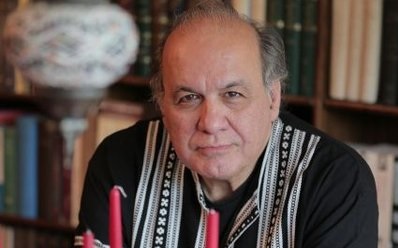
Report on the Sepanj program: A conversation with Nasser Fakouhi – Filimo
Anything related to human life can be a subject of anthropology. Anthropologists believe that every aspect of human life, in all phenomena and issues, contains cultural dimensions—and it is their responsibility to study those dimensions.
In the Sepanj program on Filimo, Dr. Nasser Fakouhi—anthropologist, writer, and university professor—highlighted the importance of Iran’s geographical and semantic positioning. He stated: “One can consider Iran within the scope of the Middle East—this is a common and accepted view. However, placing Iran within Eastern Europe is not entirely unfounded either. Anthropologists, by the nature of their discipline, approach words and concepts with particular care and caution, since language is not merely a tool for describing reality—it carries reality itself.”
In response to the fundamental question, “When a person migrates, where is the good society?”, he noted: “From an anthropological perspective, the question is not viewed in the conventional humanistic sense, but in a deconstructive way. In anthropology, we avoid anthropocentrism. From my point of view—which also draws on a Spinozist perspective—humans are no more important than animals or objects. Humans are a part of nature, not its master.” He added that our value judgments stem from our systems of thought, not from any intrinsic essence. In his view, making distinctions between the worth of a human being and, for instance, a poem by Hafez or an animal, is itself a subject open to debate.
In another part of his conversation with Ali Dorostkar on Sepanj, Dr. Fakouhi referred to contemporary French philosopher Elisabeth de Fontenay, emphasizing that the silence of the non-human world is itself a form of language. “Our language is not limited to spoken words. In psychology, it’s said that 80% of human communication occurs through body language. If we accept that animals also communicate through movement, sound, signals, and even silence, then they too possess language. We are simply incapable of understanding it.”
He added that ignoring the language of silence in animals and objects is a way of erasing the problem itself—and such a stance is incompatible with the scientific reality established in biology and zoology.
Human: The Supreme or the Most Destructive?
“Is the human being still the highest creature of creation?” Fakouhi responded:
“At least in the sense constructed by modernity, I’m not sure we can still consider humans the supreme being. Personally, I do not hold such a belief. Even in our religious texts, humans are described as beings capable of both greatness and depravity—that they can rise above angels or fall below any other creature.”
He described the human as a being who, due to a cosmic or evolutionary accident, acquired abilities that can lead either to transcendence or to ruin: “Human capabilities are a double-edged sword—they can elevate the self, or lead the world into destruction alongside themselves.”
Dr. Fakouhi, emphasizing that human beings are defined by their actions, referred to Nelson Mandela, the South African anti-apartheid leader, as a symbol of humanity. He stated:
“When Mandela was released from prison, he didn’t say he wanted revenge. Instead, he declared that if he were to imprison someone, the prison would remain in his own mind. This perspective—the effort to break free from cycles of violence and resentment—is, in my view, the pinnacle of humanity.”
What should we do for the future? Who is a better human being?
In another part of the conversation, this university professor offered a key piece of advice for the current and future generations:
“If I were to tell someone how to be useful for the future, I would say: try to leave the world a better place than the one you inherited. Everyone lives in different circumstances, but that doesn’t justify being indifferent to their impact. A person should strive to be at peace with themselves, with the path they have taken, and to leave something behind that holds value.”
According to Fakouhi, concepts like justice or being better are complex and relative ideas that must be sought within nature itself:
“Natural justice is a model for the growth of beings. If nature operates on a just balance, all beings—humans, animals, and even objects—can move toward their own growth and equilibrium.”
He emphasized that justice should not be confined only to human constructs but must also be recognized within the order of nature and the universe. With a different and profound perspective, Fakouhi defined the human being as a creature who bears responsibility: to themselves, to others, and to nature.
This report is an AI-generated translation of a conversation with Nasser Fakouhi on the program Sepanj, broadcast on the Filimo television channel. The interview was originally published in Ettelaat Online on May 30, 2025. The original text is available on Nasser Fakouhi’s official website at the following address:
