
The Place of Intellectuals and Researchers Is Not in Prison! On the Recent Arrests of Progreressive Critical Intellectuals and Researchers in Iran
By Nasser Fakouhi

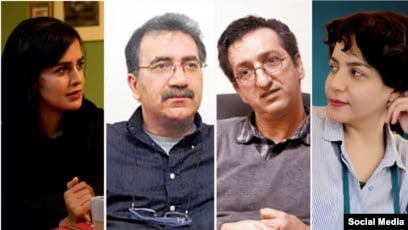
In these difficult days for all of Iranians, as Trump’s America, hand in hand with Netanyahu’s Israel, exerts maximum pressure on global media to present the ugliest and most terrifying image of Iran and to organize a new attack against the country; in these days when Iran’s enemies think of nothing but dragging the region into war and chaos, particularly aiming to destabilize our nation, yet they themselves face intense scrutiny from the public opinion in their own countries and are constantly trying to justify their actions by demonizing Iran, the responsibility of all those who hold decision-making power in our country is all the greater.Even the smallest misstep, or giving an opportunity to extremists who, over all these years, have laid the groundwork for increasing pressure on the country, carries a heavy cost for the people of Iran—people who, with calmness and dignity, emerged victorious from the twelve-day war and have shown that they will not tolerate repeated foreign “regime change” schemes, the dismemberment of their land, or witnessing the great Iranian civilization being set back hundreds of years, as has happened in many countries in the region such as Iraq, Syria, and Libya.
Throughout the difficult days of the twelve-day war and the period that followed, our people demonstrated remarkable maturity, fully aware of the country’s critical and dangerous geopolitical situation. Yet, this awareness could not lead to any significant economic relief or improvement in their daily lives, and even this hardship they endured. Amidst these challenges, certain correct decisions—such as modest openings in social freedoms and the relaxation of restrictions on youth and dress codes—could have indicated steps in the right direction: a path we have repeatedly emphasized can only be hopeful through calm, expanded freedoms, economic improvement, and achieving interaction and balance with the world. However, it appears that those who, through decades of misguided neoliberal and right-wing policies, have brought the country to its current precarious state, possess such influence that instead of abandoning these policies, they seek to intensify them, adhering to a form of “shock therapy.” The recent arrests of left critics can perhaps also be seen as part of this hardline approach, which, despite its harsh rhetoric and slogans, politically functions to escalate tensions within the country, pushing society ever closer toward polarization and unrest.
Over the past few years, we have repeatedly felt compelled to emphasize that policies of political repression—tightening control over the political space and removing critical thinkers from the field of intellectual engagement—do not signal strength, but rather reveal the fragility and weakness of a political system. Unfortunately, once again in recent days, we have witnessed the arrest of a group of scholars aligned with the critical left, following statements primarily targeting economic neoliberalism and the spread of corruption in the country. The perpetrators and motives behind these arrests remain unclear. Among those detained are Parviz Sedaghat, Mohammad Maljou, Shirin Karimi, Mahsa Asadollahnajad, and Rasoul Ghanbari. I personally know several of these researchers and have collaborated with them over recent years in various academic and scientific sessions.What their scholarly record and social conduct demonstrate is that all of them are individuals of established academic and social repute, opponents of the coercive policies of the United States and Israel, supporters of Palestinian freedom, and critics of any new imposed war against Iran. Therefore, it appears that nothing motivated these actions beyond labeling them as “leftists” and the fear—often irrationally inspired—that this label has historically instilled in opportunists and financial exploiters. Yet such measures, and similar actions, have no social effect and convey no message other than the weakness of a system. Worse still, they risk providing pretexts to the country’s enemies, making the terrifying image of Iran constructed abroad appear more “real,” thereby justifying potential acts of aggression against it.In previous years, both through institutions in which we have participated—particularly civil society organizations such as the Iranian Sociological Association—and individually, we have consistently protested and issued warnings against such behaviors; unfortunately, there has been no attentive audience. The framework within which these restrictive actions are currently taking place—such as the polarization of political factions in Iran and their open insults and threats toward one another—has made the country’s situation increasingly perilous. Accordingly, we once again consider it our duty, and indeed the very least we can do, to condemn such conduct and to warn of the danger these actions pose to the fate of the country.The group that consistently hides behind harsh slogans has, repeatedly over the decades, attempted to physically eliminate thinkers and critics or to undermine their credibility in the eyes of the public. Such behaviors and similar actions, which are increasingly frequent—from the closure of the “House of Humanities Scholars” by the municipality, to a “mural painting” that depicts Iran’s national hero Dr. Mossadegh alongside dependent figures and dictators such as Gaddafi, and so on—achieve nothing in the short term other than further tarnishing the reputation of those who carry them out, wasting public and national assets, and providing hostile media with additional material to attack Iran. History shows that, in the long term, none of these old methods have ever strengthened the rulers’ authority or enhanced their legitimacy.
We repeat once again: the right way to resist external pressures aimed at destroying Iran’s independence and damaging its national integrity is to increase civil and social freedoms, especially by allowing space for healthy, knowledgeable critics throughout the country. Unlike resolving economic problems, this is something achievable and effective even in the short term, but it requires rationality and ethics. Without these, it should come as no surprise if Iran’s enemies get closer to their goals. Thinkers, researchers, sociologists, and social doctors—those who diagnose societal ailments and propose solutions—do not belong in prison. Rather, listening carefully to their words and implementing their solutions is what is needed. We hope these words, though wearisome from repetition, will reach the ears that understand well that, in the current situation, extremist actions are the worst way to preserve the country.
October 4 2025
This text is an AI-generated translation of a note by Naser Fakouhi. The original has been published at the link below.
جای اندیشمندان و پژوهشگران در زندان نیست! درباره دستگیری پژوهشگران منتقد چپ در روزهای اخیر
