
Stone Heads on the Canvas: Fernando Botero (1932-2023)
By Nasser Fakouhi

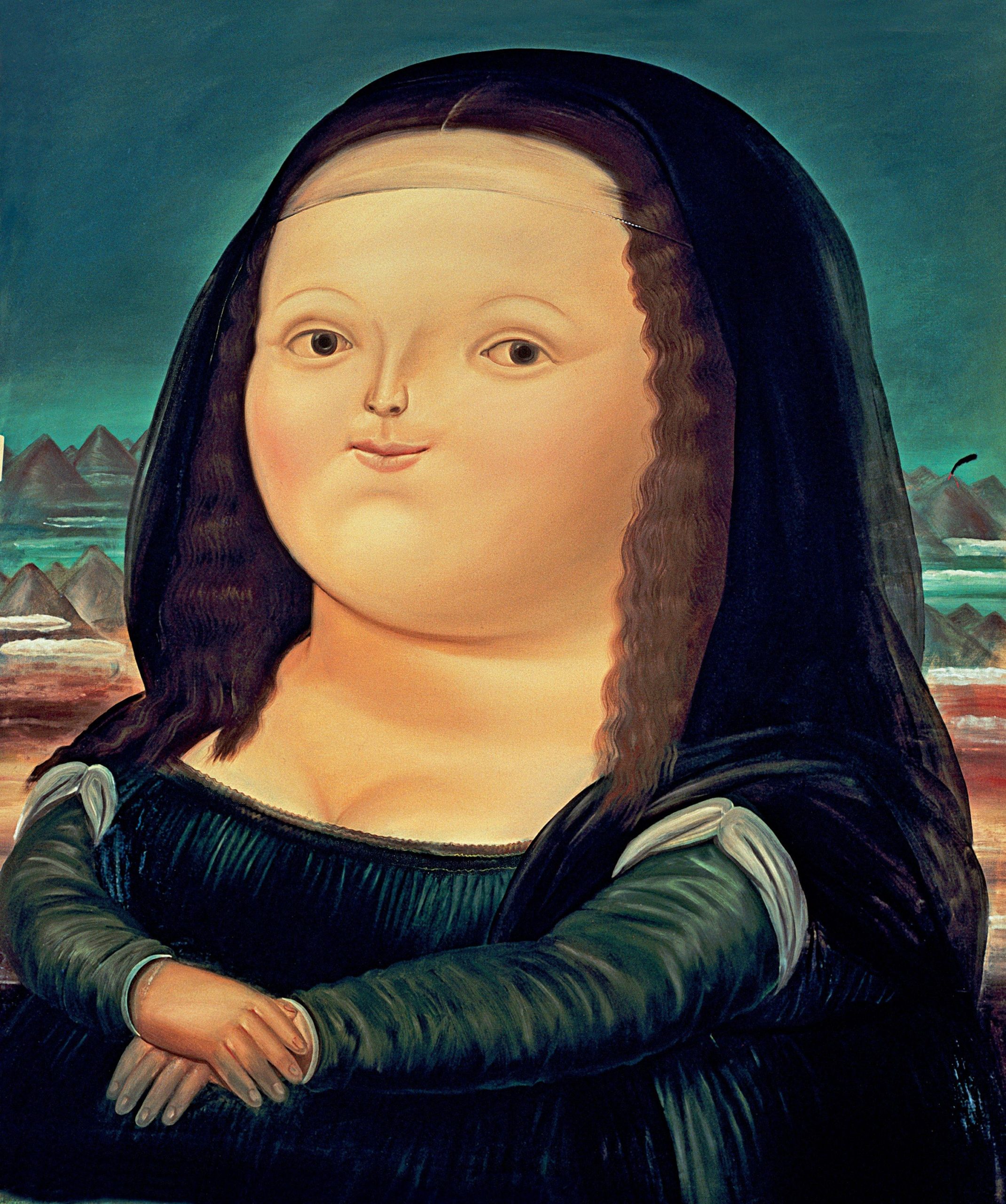
If we consider Jorge Luis Borges, Gabriel García Márquez, Octavio Paz, and many other writers within the magical realism tradition as echoes of early 20th-century visual arts in Latin America, then Fernando Botero must be seen not merely as a continuation of that tradition, but as a return—an even deeper one—to pre-Columbian art, predating the European conquest. At the age of 91 (in 2023), Botero stands as the most recognized and emblematic representative not only of pre-Columbian and Latin American art, but also of the very spirit of the continent—one that has never forgotten its ancient, devastated heritage in its intellectual, artistic, and literary existence.
The artists of this continent—especially its avant-garde figures, from the Mexican muralists (Rivera, Siqueiros, Orozco) to contemporary literary icons who gained global recognition, as well as sculptors and painters like Botero—have never forgotten, nor ceased to condemn, the atrocities committed by their European ancestors in destroying much of the heritage of the continent’s Indigenous peoples (the Maya, Aztec, Inca, Mixtec, among others). Yet, this awareness did not lead them to reject the artistic legacy of the Old Continent (Europe), nor to remain untouched by its influence.
Thus, when we approach Botero’s work—much like the tradition of Mexican muralists or the literary lineage of magical realism—we must recognize that we are facing a remarkable synthesis of two powerful artistic legacies: European art and Pre-Columbian art. For those unfamiliar with this tradition, Botero’s figures may at first appear merely as oversized, corpulent, and imposing bodies, with faces that betray no emotion. Whether depicting sorrow and grief, celebration and joy, or even catastrophe—as in his series on the Abu Ghraib prison and the torture of detainees—his works seem to be carved into stone, frozen in time, evoking an enduring and timeless stillness.
What might first come to mind for such viewers is a satire of a consumerist world, where everything has grown monstrous and grotesquely oversized. However, anyone who has seen the massive stone heads of the Olmec civilization will quickly recognize that Botero’s monumentalism is of a different kind. It belongs to the same tradition we find in the works of Rivera and Siqueiros—a deliberate exaggeration of reality, not for mockery, but to more powerfully convey the depth of a truth.
This is not irony, but rather a radical return to a historical legacy—one that expresses itself through the intensity of physical form and a deliberate restraint in emotional expression. By resisting the delicate rendering of skin or subtle facial cues, Botero’s figures evoke something deeper: a connection to the ancient, the timeless, and the collective memory of a continent that has long resisted erasure.
In Botero’s Abu Ghraib series, the emaciated, tortured Iraqi prisoners—whose real-life photographs had circulated worldwide—are reimagined with monumental, powerful, and seemingly unbreakable bodies. This is the same visual treatment he gives to children, women, and other figures in his work. It is a transformation that could be described as the archaization of the modern world’s imagery—achieved through a unique visual technology in painting and sculpture that has become synonymous with Botero himself.
In this process, corpulence sheds its grotesque or comical connotations. Instead, it becomes a metaphor for an inner strength—a kind of enduring presence that, much like the colossal Olmec heads, channels the ancient, civilizational power of a world that, despite being deeply wounded by history, refuses to disappear.
In his book “The Labyrinth of Solitude”, Octavio Paz recounts that during the conquest of Mexico, when European invaders found themselves unable to destroy the colossal indigenous sculptures—symbols of native civilizational power—even with dynamite, they resorted to burying them. This symbolic burial, however, came to an end in the 19th century. Since then, hundreds of these monumental sculptures have been unearthed, restored, and either placed in museums or circulated across the globe as cultural artifacts.
Fernando Botero, in a bold and expansive gesture, has revived the spirit of these ancient forms. Through his monumental paintings and bronze sculptures, he has set in motion an even more impactful and far-reaching circulation of these massive figures—transformed now into aesthetic and political statements that echo across contemporary global culture.
This English translation is AI-assisted and based on a note by Nasser Fakouhi about Fernando Botero. The original text is published at the following address:
