
Once Upon a Time, a Woman Filmmaker…
By Nasser Fakouhi

There was a time when the male-dominated culture of cinema persistently sought to reduce women to mere objects of desire — sexualized images that reinforced gendered clichés and the subordination of women.
A time when women were positioned in front of the camera merely to seduce, to allure, to captivate the male gaze — that “male gaze” which, as Laura Mulvey described, filled the darkened halls of cinemas with hungry eyes. Femininity, in those days, was little more than a tool — a means to gratify the greed of men and fill their pockets.
For many, cinema was nothing but an extension of a misogynistic worldview, a domain where women were playthings for men who had never truly left boyhood behind — eternally adolescent, chasing fantasies across the silver screen. Then came documentary cinema, bearing with it the promise of a masculine maturity — or so it seemed. And yet, even there, under the solemn banner of “reality,” it insisted on reproducing the same limited, domesticated images of women …as mothers, sisters, wives, and so on — figures who flickered through the minds of male documentary filmmakers. Like imagined dolls, these women were placed among villages and mountains, in cities, plains, and by the sea, to enact the roles these men called “reality.”
But then came another time — a moment when some men said to themselves, How much these women suffer! Let us show their pain. Let us stir the hearts of audiences, bring tears to their eyes — because that, too, sells. And so, tired, aging, grief-stricken mothers lying on deathbeds began to appear on screen. Sisters, wives, and daughters — shown doing whatever they were forced to do, pushed by men’s hands and men’s orders. And other men, behind the cameras, filmed it all.
They called it “documentary.”
They invited others to sigh, to grieve, to whisper how tragic… and then, just as coldly as before, return to their everyday lives, leaving reality untouched — abandoned, again, to its silent suffering. And yet, a time finally came when women raised their hands and covered the eyes of the camera. Everything fell into darkness — into an ambiguity, a trembling, uncertain fear.
Moments passed. One after another, they slipped away… Until — the cameras whirred to life again. But this time, it was different. This time, women stood not before the camera, but behind it — behind that male-formed monster — and claimed their own place and presence in cinema.
Once upon a time… women filmmakers emerged
And they showed the world that their existence was not limited to being good mothers, sisters, wives, or daughters — they could also be filmmakers, and often better than many men. They decided to tell their own stories — the stories of what millennia had imposed upon them — in their own voices, in their own language. And this was not only in cinema, but in literature, in art, in science — and especially in history. Women rose to speak of their own lives — of their pain, of the indifference and hostility they had endured for simply being women. With the rise of women’s movements, they consciously chose to reclaim history — or at least their history — no longer told through the voices of fathers, husbands, and punishing, obedient brothers, but through the words of loving mothers, of different men, and even of those women who had never borne children — but were capable of tenderness deeper than that of nature itself.
Women did not seek to wail or lament. Their hearts bled — they had suffered deeply — but they did not aim to take revenge, not on men, not on other women. They only wished to become storytellers — not against men, but beside them — narrators of their own lives, and of all human life. And it was there that cinema was born again. But not this time from mere curiosity, nor for money, nor fame, nor the puffed-up bravado of so-called “courage” and masculine violence—
but from love. A love for creation. A love for creativity. A child called Art, finally finding not only a father but also a mother— one who held it tenderly, with infinite love, for the first time. Thus, the female gaze was born. Female filmmaking. Female subjects. But none of these “feminine” things in a merely gendered sense— rather, in the truest meaning of womanhood: Life itself. Life, with all its loves, its beauty, its pleasures— and with all its hatreds, its ugliness, and its pain. Life, with all its curves and winding paths— its endless, mysterious, labyrinthine secrets. And from this was born Azadeh — a free spirit, one among many other free spirits, taking up no one’s space, replacing no one—as every human being is irreplaceable in their uniqueness.
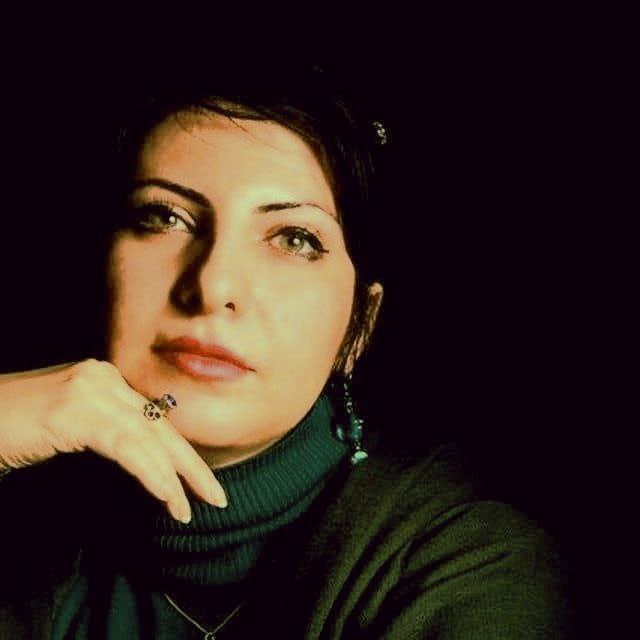
Our Azadeh was — and is — the one who, through her true stories, tells us of pain and joy, of life’s beauty and suffering, and who continues to do so, every single day. What endless searches she had to endure, what sleepless nights, what crushing setbacks and soul-numbing obstacles she had to brave— what closed doors before which she sat, for hours and days, heart pounding with anxiety, yet cradling a flicker of hope— a heart alight with the thrill of creation, waiting in agonizing stillness for some opening, some chance, for a forgotten story lost in the folds of history, or hidden from every eye, to finally find its way to countless watching souls.
It was the story of that young woman— whose body had been seized by illness, like a demon raining her blood, turning her very organs into terrifying beasts. Yet she fought, and fought, until at last she transformed— into a radiant angel, full of life and joy. (An Angel on My Right Shoulder – ۲۰۱۱).
The story of those elderly women and mothers who lost their youth, beauty, and love to the merciless bombs that rained down from the sky— (“A Daybreak Scented with Lemon”, 2014).
The story of those young, powerful women who did not stand aside during the Constitutional Revolution, but gave their lives wholly in the name of freedom— (“The Hidden Half of the Moon”, 2016).
The story of women who refused to be charmed by the tale of the “man as breadwinner,” and instead, wrestled their livelihood from the roaring, perilous waters— (“People of the Water”, 2018).
The story of women who, far from the masculine and combative society that surrounded them— a society so rigidly chained to its stereotypes of “womanhood” and “women’s work” that it left no hope of convincing anyone they were not just women— or better yet, that being a woman meant being alive, meant loving life, meant giving meaning and creation to existence— not merely as mothers birthing another human, but as artists, as builders, as craftswomen— (“The Carpenter Girls”, 2020).
The story of the little girl, murmuring softly in her solitude, dreaming that her voice might one day echo across the world— that people would come to listen, that she would step upon a stage, and the sound of her voice would flow like blood through the veins of others, bringing joy to their lives. And for this dream, she was ready to wait until old age, to fight time and the world itself (“Shadow Moon”, 2022).
Azadeh has always been, to me, like a younger sister— one who, through her cinema, has shown not only the harrowing struggles of the people of this land, but has also refused to surrender to the humiliation that outsiders have long tried to impose upon them. We often spoke about these things. In one such conversation, as always with gentleness, calm, and love— a love that had become her second nature— she spoke of her films in a way that reminded me of a mother talking about her children: each with its own tale, each carrying an untold, unheard story of pain and hardship. She would speak of the torment she endured turning those stories into film, and the endless burdens of bringing them to light. She spoke of how her thoughts were consumed by lost and forgotten lives, and how, because of that, she has always wanted—and still wants— to bear the weight alone, even if it means shouldering the tasks of researchers, writers, readers, and more by herself.
And still, to this day, she is unsure if she has done justice to the work. But as someone who knew her life and work to some extent, and had written about several of her films, I felt it was my duty—not only to thank her for her storytelling and research— but also to express my deep gratitude for the way she had stirred something within me, inspiring texts that I have since cherished, and, I believe, will continue to be proud of—forever.
Texts shaped by a feminine essence, yet written by a man— who, through her influence, was able to let that essence flow onto paper, and in doing so, defy, even if only slightly, the deeply rooted biological and historical lines drawn by a society still gripped by misogyny and patriarchy.
I thanked her because, directly or indirectly, she had infused her spirit into my words through her films. And I told her: she lacked nothing of a true scholar. She possesses a powerful insight, a beautiful command of language, and an admirable analytical strength. I encouraged her to gather her scattered writings—many of which I had read—into a cohesive body. She responded with hesitation, questioning the true value of collecting these isolated “islands” and expressing doubt about whether she could undertake such a task amid the sea of her countless other commitments. But one day, she wrote to tell me she had done it. And in that moment, the researcher— who had always regarded her own sharp, investigative eye, her thoughtful pen, and her distinctive filmmaking style with a quiet skepticism, often dismissing her own idealism and unique path— was, in a sense, reborn. Or perhaps more accurately, she gave birth to herself.
I say “reborn” because from the very beginning, Azadeh was never just a filmmaker. She has always been a thoughtful writer, a sharp analyst, a diligent researcher— and perhaps most importantly, a critic. And now, in this collection of essays being published by Anthropology and Culture, any reader can see this clearly— as clearly as the misty glow of a sunlit dawn. Today, with the help of our dear colleagues— especially the dedicated director of our publishing house, Ms. Zohreh Doudangeh, and her talented young team— Azadeh has completed this work and created something truly worthy of pride. In these bitter and disheartening days, this achievement is one that can warm our hearts and brighten our time— perhaps forever. And undoubtedly, she will leave behind a written legacy for future generations— a testament that even in these harsh times, there were those who loved, who wrote, and for whom writing was a weapon more powerful than any deadly armament incapable of creating life. I wrote these few lines to fulfill a part of the debt I owe Azadeh, a part of the debt that Iranian culture owes her—not only for these thoughtful writings, but especially for creating beautiful and enduring films that tell the stories of the suffering people of this land. Let us read the pages of this special issue with love, for they are filled with love, with pain and joy—the very meaning of life— and a memory of a time when a woman filmmaker arose, created beauty, and among a powerful wave of women, the true saviors of these painful days, who may one day bring this culture to a safe, bright, and joyful shore.
This English translation was produced by artificial intelligence from Nasser Fakouhi’s introduction to the collection of essays by Azadeh Bizargiti. The original text is available at the following source:
