
On War or Negotiation in the Middle East
By Nasser Fakouhi

Before reducing the issue of supporting or opposing nuclear negotiations and cooperation with the International Atomic Energy Agency to an internal dispute between reformists and conservatives—or simplifying it into a binary opposition between supporters and opponents of the current Iranian regime—we must emphasize several key points. It is only by acknowledging and understanding these points, or at least a significant portion of them, that we can reasonably develop our arguments.
Part of these realities concerns the historical background of the Israeli state in international relations, the strength of its lobbying power in the United States, and its conflicts and interactions with neighboring countries. It is important to note that, according to some of the most prominent religious and academic figures—particularly modern Jewish and Israeli historians such as Ilan Pappé and Avi Shlaim—Zionism and Israeli nationalism are historically incompatible with Judaism and its core beliefs. In fact, they are often in conflict with them, posing a threat to Judaism itself and serving as a catalyst for antisemitism.
Some argue that extremist tendencies such as anti-goyism—a term referring to contempt or violence against non-Jews—are rooted in selective Torah-based references and use these to justify contemporary violence. However, as with fundamentalist interpretations in Islam and Christianity, what we are mostly facing here is a mechanical, decontextualized reading of ancient texts, rather than a genuine attempt to understand complex realities.
In truth, as documented by modern Jewish and Israeli historians and intellectuals, Zionism emerged primarily as a political movement that, above all, served the strategic interests of Western powers following World War II. It was largely intended to resolve the so-called “Jewish question” in those countries, ultimately leading to the establishment of the State of Israel. Importantly, this process was driven by predominantly secular Jews.
Today, it is well established that even the powerful Israeli lobby in the United States is not composed exclusively—or even predominantly—of Jews. Evangelical Christian Zionists and secular oligarchs play a major role in this coalition. In other words, this lobby is neither rooted in Jewish ethical or religious values, nor is it strictly ideological. Rather, it serves economic, political, and hegemonic interests. As we can observe, a significant portion of Jews in Europe and the United States oppose the Netanyahu government—and, in many cases, even the very existence of the State of Israel in its current form. Many of them consider Netanyahu to be the primary catalyst for the current surge in antisemitism and view him as the greatest threat not only to the Middle East and the world at large, but also to Judaism itself—and, perhaps even more critically, to the future existence of the Israeli state.
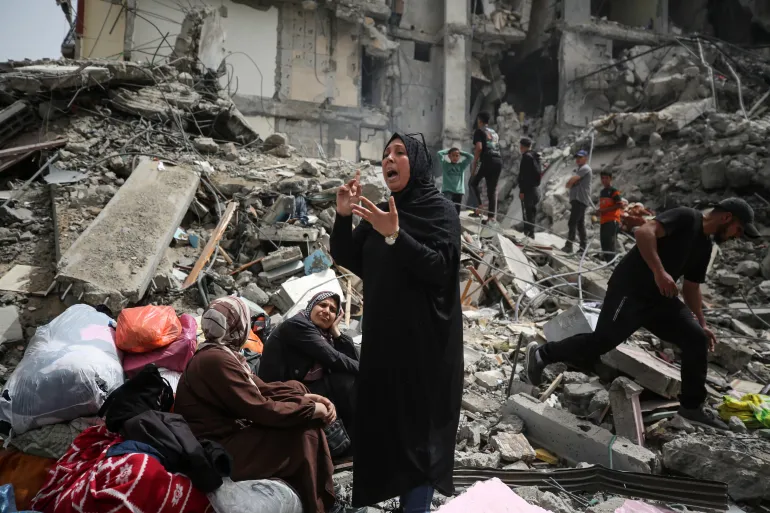
Another important point is that since the 12-day war with Israel—and even before that, beginning on October 7, 2023, with the large-scale assault launched by Benjamin Netanyahu’s far-right government—several realities have become clearer. These include not only an unprecedented genocide in Gaza but also the direct involvement of Western powers, particularly the United States. It has now become evident that this government, along with an increasingly right-leaning Israeli society, has entirely abandoned the two-state solution and adopted an irrational and internationally unlawful course of action. In simple terms, this can be described as the pursuit of an impossible ambition: a “Greater Israel” built through a series of endless wars aimed at establishing unchallenged regional dominance in the Middle East. This strategy is not only unfeasible but also dangerous for everyone involved—including Israel itself. It has already led to Israel’s near-total isolation on the international stage and is increasingly likely to result in the formal recognition of a Palestinian state in the coming weeks at the United Nations General Assembly, backed by an overwhelming majority of the world’s nations.
Another critical reality is that while prominent geopolitical experts such as John Mearsheimer emphasize that possessing nuclear weapons is perhaps the only effective deterrent against existential threats to Iran, the issue can—and should—also be viewed from another perspective: the prevention of nuclear proliferation and the profound risks it poses to all of humanity. In response to those who cite the examples of Libya, Iraq, and Syria—arguing that these states would not have collapsed had they possessed nuclear weapons—one could point to the fact that nuclear arms failed to prevent the fall of a superpower like the former Soviet Union, and are unlikely to guarantee survival for any state, whether China or others, in the long term. Therefore, the best course of action lies in combating nuclear proliferation while preserving the country’s technological capacity for uranium enrichment and maintaining its defensive capabilities. This must be coupled with a maximal commitment to democratization—an approach that offers the strongest path for defending national integrity and independence.
To those who constantly emphasize the threat of Iran’s disintegration or collapse, it must be said that drawing comparisons with short-lived Arab states such as Libya, Iraq, or Syria is not meaningful. A more appropriate comparison would be with countries like Turkey or Egypt. If such a threat truly exists, it is arguably even more imminent for Turkey than for Iran.
Furthermore, assuming that the far-right can continue its path through blatant violations of international law—despite and because of the heavy cost it incurs in global public opinion—and that a small state with fewer than ten million Jews could erase hundreds of millions of people, dozens of countries, and centuries of regional history, is nothing short of a dangerously childish delusion. It echoes the infamous “Lebensraum” (living space) doctrine of the Third Reich, which led to the deaths of over a hundred million people.
Meanwhile, possessing or lacking nuclear weapons will not have a decisive impact on advancing this doctrine. However, there is no doubt that the Israeli lobby in the United States has never been as powerful as it is today, largely because the U.S. has never been as weak or governed by a kakistocratic (rule by the least qualified and most unprincipled) administration as it is now.
In my view, the simultaneous bombing alongside negotiations—both regarding Iran and Gaza—by Israel, with the implicit acceptance of the U.S., is less a calculated strategy and more a reflection of the incompetence of the Trump administration. This incompetence has pushed the country to the brink of a form of cold civil war and authoritarianism, placing its economic, political, and social standing under unprecedented threats in its history.
However, within this context and accepting these initial assumptions—which themselves form a core part of our discussion—if we return to the issue of nuclear negotiations and cooperation with the International Atomic Energy Agency, we can identify two main groups as the primary pillars of opposition (setting aside conspiracy theories and security interventions from all sides).
The first group consists of hardliners inside Iran, who claim a return to principles and revolutionary ideals but actually represent only about two to three percent of the Iranian population. The second group is comprised of exiles opposed to the regime, for whom there is no clear measure of support within Iran; however, all evidence from the past year or two indicates that they lack significant domestic backing. This second group advocates for a “new revolution” aimed at overturning the country entirely. Of course, neither of these two groups uses the term “revolution” themselves. The first group sees itself as firmly standing on the “principles” and as the main, indispensable representative of the 1979 Revolution. The second group avoids the term “revolution” because their entire discourse is based on opposing the outcomes of the 1979 Revolution; therefore, they use the term “overthrow” (barandazi), although it is unclear how this differs from the revolution they envision.
But beyond all political, military, security, and strategic considerations, our social and cultural perspective is that nothing is more dangerous for Iran’s future than a revolution or a drastic upheaval in the country’s political, economic, and social situation. This does not mean that our country does not need extensive, deep, and both short- and long-term radical changes. Undoubtedly, these radical changes include the true rule of law, a widespread and serious fight against systemic corruption, full expansion of democratic, political, and social freedoms, elimination of government interference in people’s private lives, abandoning the hollow ideological facade that today only fosters rent-seeking and corruption, entrusting the affairs of the country to competent and qualified specialists and managers, breathing real life into a vibrant democracy worthy of this culture and its young people, and pursuing a balanced foreign policy in harmony with the international community. All these radical measures are absolutely necessary, but they can only be implemented under conditions of social peace and avoidance of violence. Any social or political collapse, any form of war or violence at the national level, not only fails to bring us closer to democratic goals but actually creates a wide gap from them— even if at first it may seem that progress has been made.
Therefore, continued cooperation with the International Atomic Energy Agency (IAEA) and ongoing negotiations with the US and Europe—without any illusions and with necessary caution—are absolutely essential for us. Likewise, staying within the framework of international laws at all costs and swiftly removing the country from harsh measures, political pressure, economic sanctions, restrictions on freedom of expression, lack of high-speed internet, and so forth, is crucial. As we have often stated, the more democratic and free Iran becomes, and the better the conditions and hopes for its people’s future, the stronger and more reliable the guarantees for the country’s survival—far beyond any weapons in the world. Therefore, there should be no doubt that any force opposing the normalization of Iran’s relations with the world, opposing negotiations, rejecting legal actions and commitments to international agreements, and still pursuing hostility—especially toward regional governments, but also toward major powers in the East (Russia and China) and the West (Europe and the United States)—is, in fact, playing into a strategy aimed at weakening and fragmenting Iran. While we believe such a goal is impossible, even the attempt to achieve it will inflict irreparable damage on the future of our country.
This text is an AI-assisted translation of Nasser Fakouhi’s writing dated September 16, 2025 (25 Shahrivar 1404 in the Iranian calendar). You can find the original in the following source on his website:
عکس فوری(۳۰۵): چند نکته درباره جنگ یا مذاکره در خاورمیانه کنونی
