

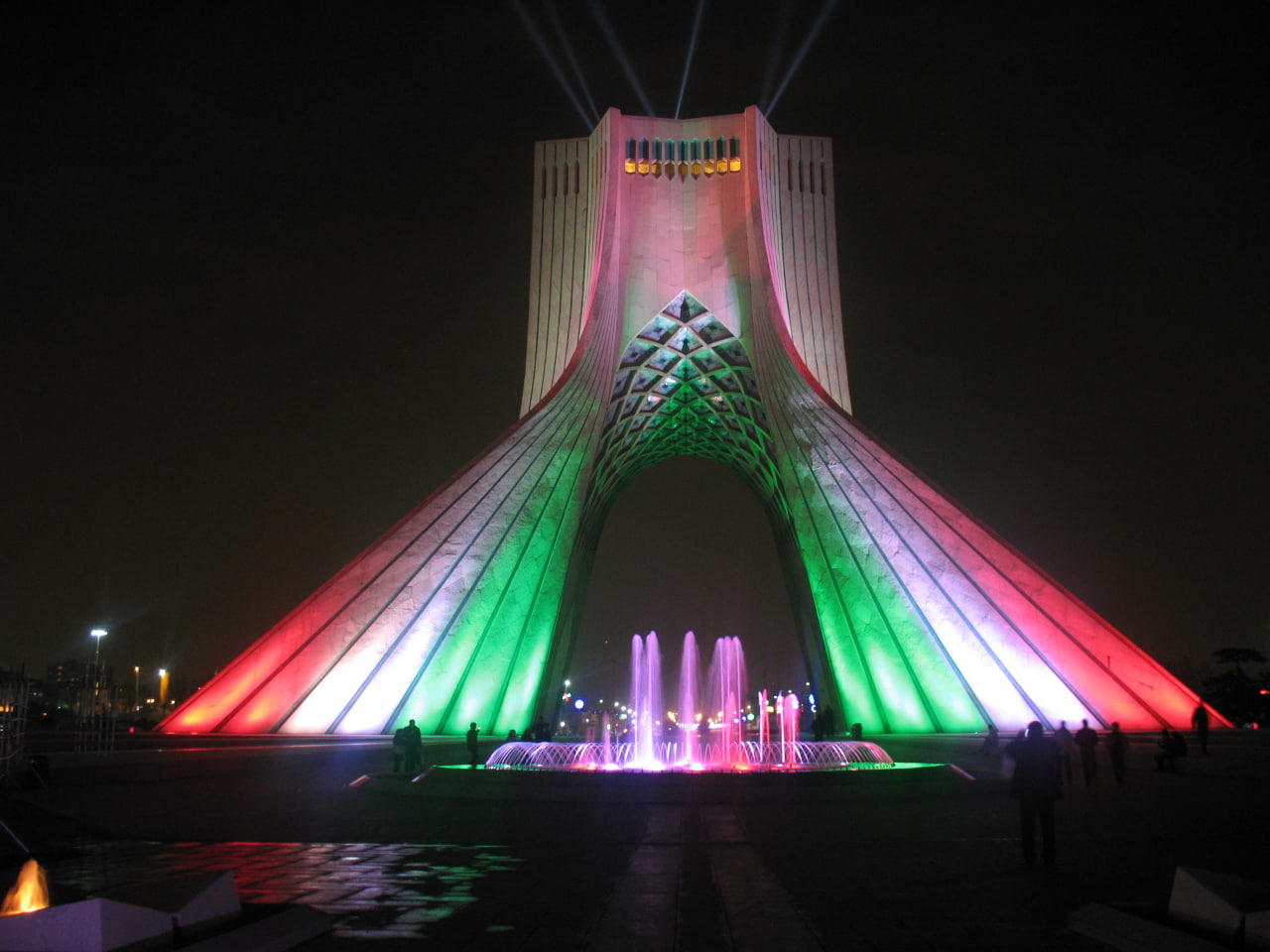
The Need to Defend National Cohesion and Solidarity Among All Iranians: The Greatest Threat Is Not War, but Social Collapse
After the 1979 Revolution, despite the fact that the United States and Western governments, using all their power, encouraged Saddam Hussein to attack Iran, the country—despite being in its most vulnerable post-revolutionary state—managed to survive the war with Iraq without any loss of territorial integrity. This was largely due to the national solidarity and resistance of the people. Although the war, like any war, was devastating—even if defensive and legitimate—it became one of the bloodiest conflicts of the late 20th century, claiming the lives of hundreds of thousands of Iran’s finest young people. Iraq, too, suffered enormous casualties. And following the war, due to the continuation of Saddam’s dictatorship, the country ultimately fell into the hands of the very powers that once supported him. These powers, now self-proclaimed “liberators,” invaded and utterly destroyed Iraq. The dictator was executed, but the nation entered a terrifying downward spiral. As we predicted at the time, the outlook for recovery would not be foreseeable in less than thirty or forty years. This catastrophe was part of a secret plan drawn up in 2003 by the neoconservative military strategists in the U.S., targeting seven relatively powerful countries in the region—including Syria, Iraq, Libya etc., and ultimately Iran. The entire operation was supposed to be executed within four to five years but was left incomplete, partly due to the 2008 global financial crisis. With the arrival of Barack Obama and the signing of the JCPoA (Iran nuclear deal), the plan was temporarily shelved.
Today, however, claim of a “New Middle East” has resurfaced—this time triggered by the most extremist political government in the region: Netanyahu, and its genocidal actions in Gaza. The war that Benjamin Netanyahu, after thirty years of failed attempts and opposition from every U.S. president—including Joe Biden, himself a Christian Zionist—finally managed to ignite between Israel and Iran, was ultimately made possible by the most incompetent and corrupt political disaster in American history: Donald Trump. Trump, a product of five decades of U.S. neocon policy, was drawn into this plan by the Israeli lobby, which had already succeeded during his first term in aligning hardliners on both sides to derail the JCPoA. Their dual goal was to prevent the normalization of relations between Iran and the U.S., and to block Iran’s progress and development.
Trump as US President is not only unprecedented in the history of this country for his greed and corruption, but he also stands out for his senile irrationality and recklessness. It was this very recklessness that led him to effectively enter into a war with Iran—without Congressional approval and with no regard for the consequences of such an action.
Nevertheless, two crucial points must be emphasized. According to the near-unanimous assessments of his former administration officials, respected U.S. and Israeli experts, and academics, Trump never engages in military or political actions based on national interests—whether American or Israeli. He is, above all, a narcissistic madman who acts solely in pursuit of his personal gain. His obsessive desire is to remain constantly in the spotlight, even if that means being reviled—so long as he is never forgotten.
This cannot be said about Netanyahu. He and his wife are not only corrupt and under judicial investigation for financial embezzlement, but also implicated in the October 7th horrible and terrorist attack and the genocide in Gaza. Through this ongoing war, they have effectively paralyzed Israel both economically and socially, while turning it into a symbol of contemporary mass atrocity on the international stage.
Military experts around the world have repeatedly emphasized that defeating a large country with significant population and landmass by a much smaller state is virtually impossible—especially if ground intervention is unfeasible. Comparisons to the British colonial empire and its colonies are misguided; we are centuries removed from that era. The world today bears little resemblance even to the post-World War II period, let alone the age of classical colonialism.
Netanyahu’s primary motivation, therefore, is not a national interest, but evading prosecution and imprisonment—a fate that has previously befallen political leaders even at the presidential level in Israel. His strategy hinges on perpetuating an endless war to cling to power, relying heavily on Israel’s most extreme right-wing factions, whose ideological vision includes the establishment of a “Greater Israel” stretching from the Nile to the Euphrates. This group’s ambitions do not end with Iran. Even if they manage to weaken Iran enough to push it aside, they will eventually turn their attention to Turkey and even Saudi Arabia. This is precisely where Trump’s reckless attack on Iran fundamentally shifted the geopolitical equation: many smaller nations today are beginning to consider alternative alliances beyond the United States and are exploring ways to reduce their dependence on the US dollar as the global reserve currency.
But perhaps the most dangerous consequence is the message this sends to the world: it is apparently better to be a dictatorship like North Korea—with nuclear weapons—than a dictatorship like Libya—without them. Moreover, countries such as Saudi Arabia, Turkey, Pakistan—and soon Iraq, along with China and Russia—are not willing to allow the United States to replace a strong regional power like Iran with its small military outpost (Israel) near or along their borders, especially in close alliance with Israel.
What is especially important in this context is Iran’s response to the American attack. If Iran’s reaction—or more broadly, its retaliatory actions—becomes too expansive and results in significant human casualties, it could provide the perfect justification for legitimizing an illegal act and framing it as a “preemptive strike”—a concept that is entirely unlawful and lacks any legal basis.
Actions such as launching wide-scale attacks on U.S. military bases in the region or closing the Strait of Hormuz, under current conditions, could shift global perception. Iran, which is now being defended by peace advocates around the world, may come to be seen as a country that has confirmed the very accusations made against it.But there is an even more important point here: if the Iranian government’s domestic response is to intensify restrictions, reduce political and cultural freedoms, curtail civil liberties, and increase interference in citizens’ private lives, this too would serve the interests of Iran’s enemies and strengthen their narrative.
Unlike any opening actions, any increase in freedoms (when possible) and any expansion of civil rights can increase the risk of social collapse— a risk far greater than that of civil war or ethnic division among the diverse Iranian peoples.
In my view, the Iranian ethnic groups would never sacrifice national cohesion for any other ideal, even in far worse circumstances: Iranian Arabs and patriotic people of Khuzestan and the south, Iranian Turks, Kurds, Baluchis, and others have always stood—and will continue to stand—at the forefront of defending Iran.
It is imperative that the government supports them, especially the honorable people of Khuzestan and Kurdistan, who endured the harshest conditions during the eight years of the imposed Iraq war and bore much of the burden of defending Iran.
At the same time, the government must distance itself from Pan-Iranian ancient Persia and Aryan racism, ideologies historically aligned with fascism and today echoed by far right groups in Israel, the U.S., and even opponents within their own countries who support attacking Iran as a so-called “way to salvation.”
The term “overthrow” is merely another word for “revolution,” a social anomic phenomenon which historically has led to disasters, harsher dictatorships, and increased political repression. For revolutionary movements to bring about fundamental change, they must first distinguish themselves from the chaotic revolutionary storms of the past in order to break free from their waves.
Revolutions are almost always imposed on the people of a culture by their rulers, and it is only in the post-revolutionary period that one can hope, gradually and through peaceful civil struggles, to build democratic rights—something that has been achieved to a considerable extent over the past forty years. The Iran we speak of is not merely its nature, forests, and historical monuments—products of a civilization spanning several millennia—but rather all the costly efforts of its people, especially its youth and women, carried out under the harshest conditions over recent decades, which must be preserved. There is no doubt that if the trust and solidarity among the Iranian people, currently at its peak but previously severely weakened, were to be lost (for any reason), no force would be able to prevent the physical destruction and widespread devastation of this land’s cultural and natural heritage.
It is better here—and anywhere—not to speak of those who today stand alongside the enemies who bomb the people of Iran day and night, calling this act “saving Iran.” There is plenty of time and countless historical examples for such discussions. The most important concern for every Iranian, wherever they are in the world, must be the preservation of Iran as a civil, cultural, and political unity. Any attempt to sow division among the people of this country—whether political, economic, ethnic, or religious—only aids the enemy and advances their goal: the destruction of Iran. What we speak of here is not nationalism, but the defense of one of the world’s greatest and oldest civilizational and cultural regions, whose future today worries much of humanity. Oligarchic authoritarians opposed to democracy, freedom, and social and economic justice think only of money and power—but they fail to realize that even these privileges require a relatively secure world, not one where every country sees military action and nuclear and deadly weapons as its only path to survival.
Peace, freedom, equality, and justice are the foundations upon which a better and brighter world and region can be built. In contrast, violence, war, and destruction yield nothing but greater suffering and calamity. Therefore, a wise and strategic defense of oneself is the best approach for Iran today and in the future. We must always ask ourselves: What do those who bomb Iran truly expect from the country, and what more justification do they need to increase the bombings further and further?
Let us ask ourselves why those who call themselves “opposition” become so excited each time Israel drops more bombs on Iran, especially now that the US is waiting for a pretext to join this “liberating bombs” campaign. Why do they believe that soon it will be their turn to seize wealth and power and fill their pockets by plundering this country? We must resist any extremist temptations—extremism or/and any form of hatred, racism, antisemitism etc. have never saved anyone, anywhere, nor have ever helped achieve any good goal.
#NasserFakouhi / June 24, 2025
This article has been translated from Persian to English by artificial intelligence for the website of Nasser Fakouhi (nasserfakouhi.com). The original Persian article is available at the following address:
