
Interview with Nasser Fakouhi on the Book “Nasser Fakouhi’s Narrative of Development” – Part One
By Ahmad Gholami Shargh Newspaper

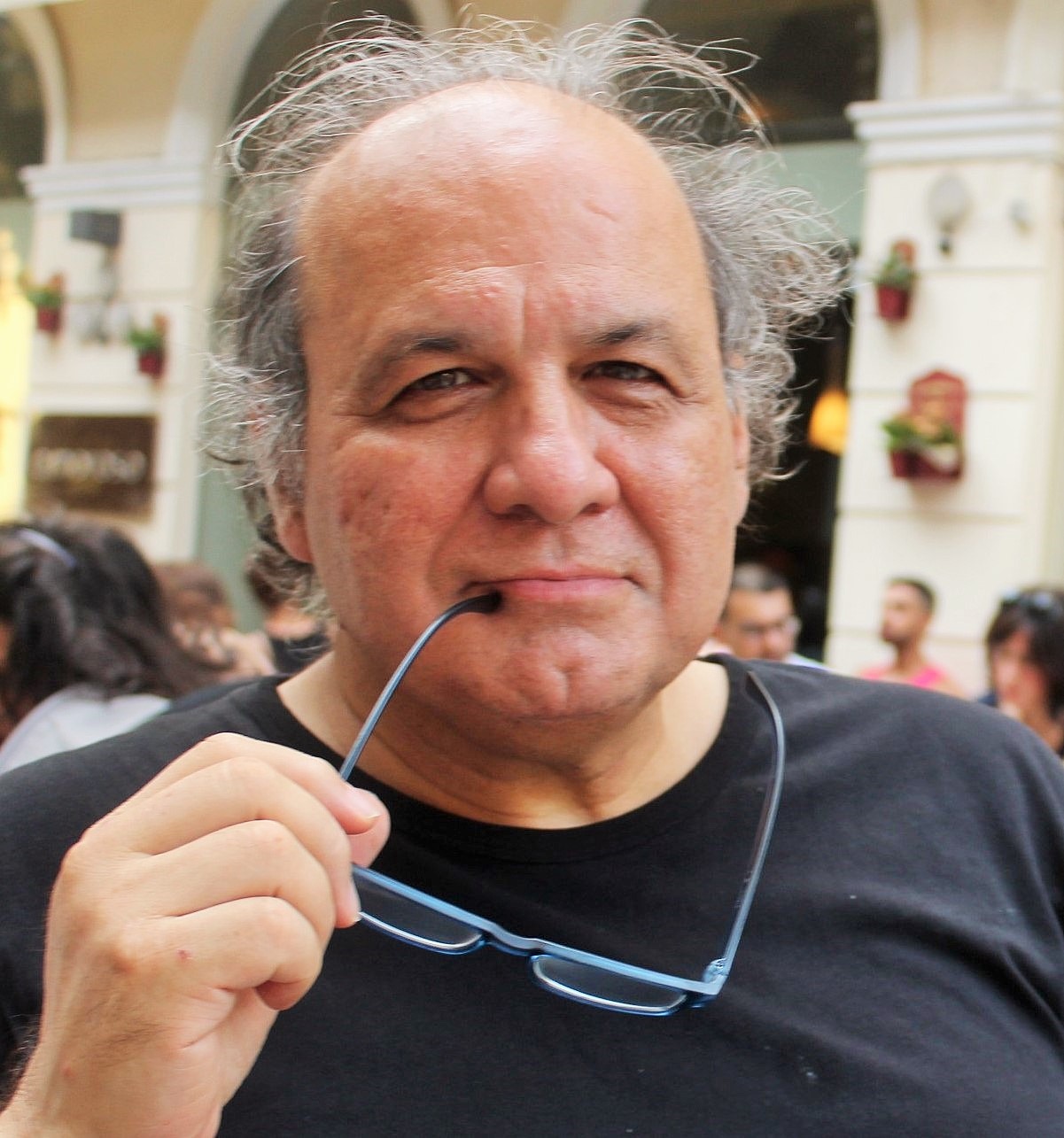
Each expert in the field of development—whether from economics, politics, or sociology—holds their own distinct perspective. Economists believe that the foundation for any country’s development and growth must be economic. Politicians argue that there is an inseparable link between modes of governance and development. However, sociologists and culturally-oriented development thinkers maintain that no serious or profound development can occur without culture. What sets culturally-minded thinkers apart from those focused on economics or politics is that, while acknowledging the validity of other approaches, they view culture as the necessary precursor to any form of development. Nasser Fakouhi is among those who believe in both short- and long-term cultural development programs. In this conversation with Fakouhi, alongside discussions of culture, economic and political issues in Iran are also addressed.
A recently published book titled “The Narrative of Nasser” has been jointly released by the Development Thought Campaign and Ketab-e Shargh. This volume brings together your views and theories on development. It presents a coherent compilation of your ideas, accompanied by critique and analysis. In the book’s introduction, Mr. Mohsen Renani states: “Our understanding of development is itself underdeveloped.” It seems that this statement directly touches on the foundation of your approach to development, as for you, cultural work forms the basis of any genuine developmental process.
The collection that Mr. Renani kindly initiated and managed includes interviews with several individuals, and this book is one of the titles in that series. In fact, I did not write the book myself. Colleagues such as Dr. Kalani, Ms. Sadeghi-Tabar, and a team from the Economic Research Center under Dr. Renani’s supervision compiled this work. Of course, the final version of the book was approved by me, but what I mean is that the book is an interpretation of my work, including numerous quotations—yet I was not directly the author of the text.
The sentence raised in your question—”Our understanding of development is underdeveloped”—is a formula, and another similar formula worth mentioning is that the issue of development, as typically defined in political science, economics, and social sciences, is not addressed in the same way across these disciplines. Each field tends to center its theoretical discussions around its own domain—economics, politics, etc. In sociology, and more specifically in anthropology and cultural studies, the focus is on culture. However, the question of which of these should be prioritized is a separate discussion.
We do not reject the economic or political discourse on development outright. In brief, political discourse centers development around governance and the type of political regime. Economic discourse focuses on economic governance, particularly the role of the market—be it regulated or unregulated. Our approach places culture at the center of development.There is also another layer of debate, especially within the cultural and social sciences, that critiques the economic and political perspectives on development. These are two distinct discussions that do not necessarily overlap.
You have made a valid point. Regarding your approach, there is a concern that analyzing and explaining development through the lens of culture might appear disconnected from politics or seem overly conservative. However, you have used the term “inequality of opportunity,” which is an insightful concept and helps to alleviate this concern—since the notion of unequal opportunities can be understood as a form of both economic and cultural critique. In other words, if individuals living in the same country are not afforded equal opportunities, then culture loses its effectiveness. From this perspective, your approach offers a way to avoid being labeled as conservative. The concept of inequality of opportunity provides a bridge between economic and cultural dimensions of development. This suggests that cultural development cannot be fully realized unless the structural and material conditions allow for equal access to cultural participation, education, and expression. Therefore, a culture-based approach to development, as you present it, does not isolate itself from economic or political analysis but rather seeks to integrate them through a broader, more inclusive framework.
Before addressing the issue of inequality of opportunity, I should note that one of the possible shortcomings of the book is that some of my more recent discussions have not been adequately reflected. These are topics I have recently elaborated on in a series of essays—particularly those related to the concepts of Coloniality and De-Coloniality .
These are more contemporary debates in which the very foundational model of development is subject to critique. This critique stems from new perspectives in cultural and social studies—particularly from figures such as the renowned anthropologist Arturo Escobar, along with a number of anthropologists and sociologists from Latin America. What is at stake here is the questioning of the development paradigm itself—one based on specific notions of markets, consumption, lifestyles, social relations, and worldviews. In political science and economics, whether in the West or even in peripheral countries, there is often an unexamined assumption of a universal model. For instance, from an economic standpoint, there is a prevailing idea that if the per capita income surpasses a certain threshold, then development issues are resolved. This is tied to the notion of a “flourishing economy,” usually measured in terms of the country’s gross per capita income.
Of course, this notion has somewhat become outdated today, and other development discourses have emerged, including political discussions. For example, it is argued that if democracy exists, the issues will be resolved. However, this binary way of looking at things—that is, essentialism or dualism—originates from the colonial system itself. This perspective was shaped based on a Eurocentric system that historically existed in Europe. Even within Europe, this was not always the case, but that form of governance projected this image and has now generalized it globally. This generalization neither corresponds to the realities of Western countries nor those of non-Western or Third World countries. For instance, today, countries with very high economic resource potential, such as Venezuela and Iran, are both in economic crises regarding the living conditions of their people.
However, even in places where this potential has turned into a market, accompanied by a free market system and relatively adequate democracy in the Third World—such as India—you do not see favorable conditions. There is an extremely high level of disparity, and here we arrive at the issue of inequality of opportunity. India has been one of the countries with some of the best management of resources and resource distribution. Even India’s democracy is notably more robust than that of many other Third World countries. However, when viewed on a large scale, the level of inequality of opportunity is disastrous. India is currently the global center for organ trafficking. The level of poverty in India is unimaginable. The extent of social harms such as female infanticide, Hindu-Muslim communal violence, and others is very high. Therefore, one cannot define a stable and widespread form of development there. Therefore, you cannot define a stable and widespread form of development. You need to break it down into smaller parts and consider relativity. The same can be said about China. China also has an authoritarian system, which some people defend today. They argue that instead of democracy, we should have technological authoritarianism that benefits the people, but they ignore the catastrophes currently happening in China.
The argument we make is that without incorporating the concept of complexity, in the sense that Edgar Morin describes, development cannot be truly understood. Because without considering this concept, it is possible that at a particular time and place you may have something called equality of opportunity, economic prosperity, etc., but still everything can be easily overturned.
I mentioned examples from developing countries, and allow me to also give examples from developed countries. Perhaps before the year 2000, roughly during the 1980s and 1990s, the United States had an extraordinarily flourishing economic model, although many say this situation lasted until the 2008 financial crisis. During that time, the middle class in America truly had meaning and there were very promising prospects. Everyone aspired to come to America because it was said that anyone could achieve great success there.
If you also consider Europe during those shining 30 years—roughly from 1950 to 1980 and even up to 1990—you see that the situation was very good. But what conditions are we facing today? Now, the United States is in a stage of economic collapse. Its economic situation is so dire that about 75% of Americans express dissatisfaction with the economic state. Price increases are extremely high, and the system under Trump’s governance is collapsing, with no clear direction on what to do next. This situation has also spread to Europe. In Europe, not only is there an economic crisis, but also a wartime situation, where they can neither confront Russia nor completely disengage from it. On the other hand, there is a rise in the far-right movement, which openly puts racism and inequality at the core of its agenda, causing widespread alarm. For instance, in France, there is concern based on current polls that the National Rally party—formerly known as the National Front—might come to power next year.
What does the rise of the far-right mean for France, given its historical background? France is very different from Italy, where the prime minister, Ms. Meloni, is far-right, yet Italy did not continue far-right policies after her. In any case, this development in France is a catastrophe. Price increases are extremely high, and the system under Trump’s governance is collapsing, with no clear direction on what to do. This situation has also spread to Europe.
In Europe, not only is there an economic crisis, but there is also a wartime situation, where they can neither confront Russia nor disengage from it. Meanwhile, the rise of the far right, which openly puts racism and inequality at the forefront of its agenda, has caused widespread fear.
For example, in France, there is concern that, according to current polls, the National Rally party—formerly known as the National Front—may come to power next year. What does the rise of the far right mean for France, given its historical background? France is quite different from Italy, where the prime minister, Ms. Meloni, is far right. However, Italy did not continue far-right policies after her tenure. In any case, this development in France is a disaster.
These are people who have no idea what the United States is doing in the world, simply because they don’t even know what it means for a country to exist outside of America—and many have never even left their own state. So, culture is an extremely important issue.
If we compare France’s projected situation in 2025 to the 1980s and 1990s, we witness a severe cultural decline—in universities, schools, the general public cultural system, and the media. The two major political parties in France, namely the Socialist Party and the broader Left coalition, held around 50% of the votes, while the Gaullists and the broader center-right also held about 50%. What do we see now? France has returned to a state similar to the Fourth Republic, with instability within parliament, as both major parties—the Socialists and Communists, along with the Gaullist alliance—have all collapsed..
What groups have risen to prominence? On one side, the far-right party and several small right-wing parties, and on the other, radical left-wing parties. As a result, the government doesn’t know what to do. This is the situation in countries that have structured the world based on their own position and interests.
Why is there a crisis now in the Global South? Because these countries, over several centuries, became dependent on the central (Western) countries in every aspect. And when the central countries face a crisis, the impact is even more severe in the peripheral ones.
In Europe and the U.S., the first issue people point to is immigration, claiming it is destroying their countries. But they never ask why this migration is happening in the first place. Migration is fundamentally a legacy of colonialism. For the past 20 years, nearly all the countries in the Middle East have been systematically destroyed one by one. The core of the migration crisis stems from migrants from Syria, Iraq, Somalia, Sudan, and others—countries that were devastated, leading their populations to flee to Europe, which in turn triggered political and social crises.
Therefore, we cannot isolate a country like Iran—or any other country—from the global system and say that if we simply implement democracy or good governance here, everything will be solved.
(More to come…)
Shargh Newspaper, 18 Azar 1404 (December 9, 2025)
Link to the article in Shargh
https://www.sharghdaily.com/%D8%A8%D8%AE%D8%B4-%D8%B1%D9%88%D8%B2%D9%86%D8%A7%D9%85%D9%87-100/1073114-%D9%86%D9%81%D9%88%D8%B0%DB%8C-%D9%87%D8%A7-%D9%85%D8%B1%D8%AF%D9%85-%DA%A9%D9%88%DA%86%D9%87-%D8%A8%D8%A7%D8%B2%D8%A7%D8%B1-%D9%86%DB%8C%D8%B3%D8%AA%D9%86%D8%AF
The link to this conversation on YouTube
This conversation with Naser Fakouhi was published in Shargh newspaper on December 9, 2025 (18 Azar 1404 in the Iranian calendar) and has been translated into English by artificial intelligence. The original conversation is available on Naser Fakouhi’s website at the following address:
گفتگو با ناصر فکوهی درباره کتاب «روایت ناصر فکوهی از توسعه» / احمد غلامی / بخش اول
