
Forty Days Later: Reassessing a Catastrophe and Its Consequences
Nasser Fakouhi

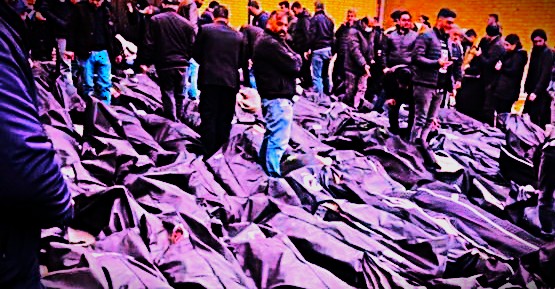
Forty days after the unprecedented and astonishing historical catastrophe of the massacre of our country’s suffering protesters—a tragedy that shook Iran and the world and has propelled our collective future toward an uncertain horizon—we revisit this event in a spirit of respect for the victims and with the hope that all dimensions of this disaster, as well as all those responsible, will be fully clarified and held accountable. It is evident that a relatively comprehensive analysis will only be possible after the publication of the findings of a credible and independent truth-seeking process.
The Catastrophe and the Responsibility of the State
The injury and killing of thousands of protesting compatriots—particularly Iran’s youth—through widespread and extreme violence in mid-Dey 1404 (January 2026), across the streets of more than three hundred Iranian cities and towns, constitutes, as I emphasized in an earlier note written only days after the events (1), the largest act of repression and the gravest catastrophe perpetrated by a governing authority against the legitimate protest of its own people, at least in several recent centuries. This assessment is based on the scale and temporal concentration of the violence, the intensity of its brutality, and the deliberate and public manner in which it was carried out.
The protests and the inevitable public anger, as even many officials have acknowledged, are the outcome of decades of futile efforts by citizens to make their voices and grievances heard. They therefore possess full and long-standing legitimacy. The deaths of thousands and the injury and detention of hundreds of thousands in this catastrophe are beyond dispute; variations in statistics do nothing to diminish either the severity of the violence or the horror and weight of its consequences. Similarly, expressions of regret by officials or attempts to attribute the protest movements to foreign interference neither reduce the responsibility of the governing authorities nor undermine the legitimacy of popular protest.
The core issue is largely clear. Whether the order and execution of this massacre were based on a political-security strategy, whether they were reactive measures stemming from a perceived existential threat, or whether they were justified by claims of foreign infiltration or interference, the heavy historical, political, and social burden of this event—and the full responsibility for all its consequences—rests with those institutions and individuals who, under domestic law and international political norms, are charged with protecting the lives and property of citizens. These consequences include the heightened risk of foreign military threats, for which this massacre served as one of the pretexts to prepare global public opinion for a potential attack on our country. Yet this responsibility has been consciously or unconsciously disregarded through recourse to a “iron-fist” policy, sustained by the illusion that such an approach could restore order—an illusion that in fact produces the opposite effect.
Domestic Consequences: Political Blockage and Deadlock, Polarization, Violent Radicalization, and the Further Collapse of Social Capital and Trust
The outcome of this repressive policy has been the creation of a dangerous bipolar situation within the country:
Maximalist violent radicalism from above, characterized by complete political closure and the escalation of security, military, and war-related threats;
Maximalist violent radicalism from below, marked by tendencies toward chaos, recurrent unrest, intensified economic instability, economic collapse, and a perilous revolutionary threshold situation.
It must be emphasized that this condition is not limited to the Dey catastrophe alone. Rather, it is the cumulative result of decades of internally tension-producing policies, the refusal to accept and adhere to the norms governing international order and relations—particularly in interactions with regional and global powers—and reliance on opposition movements in other countries instead of compliance with the widely accepted United Nations principle of non-interference in the internal affairs of states. This is especially paradoxical given that Iranian officials themselves repeatedly insist that other states should not interfere in Iran’s internal affairs—only to be confronted with the obvious response: “Then why do you do so in other countries?”
Another tangible consequence of these policies has been the decline of social hope and trust to their lowest and most dangerous levels. Indicators such as rising suicide rates and poverty, the near disappearance of the middle class, severe deterioration in public health, the collapse of environmental capital, sharp declines in marriage and fertility rates, and the astonishing increase in mass migration and capital flight all testify to the intensity of an acute social crisis and its accelerating, exponential trajectory in recent years. Economic and social injustice, the absence of civil and political freedoms, the lack of a democratic public sphere, and the expansion of corruption—long predicted and repeatedly warned against by sociologists, academics, and experts over more than two decades—have culminated in a profound state of social anomie and increasingly dangerous uprisings with an unpredictable future.
External Consequences: The Threat of Intervention and the Question of Global Legitimacy
Erroneous domestic strategies, combined with weaknesses in international relations, have exposed Iran to the threat of foreign military intervention. Simultaneously, the alignment of global public opinion—and even segments of Iranian society—with such threats is above all the result of misguided policies and long-term strategic approaches that have for years ignored expert opinion and even reprimanded specialists for expressing it. At the same time, efforts have been made to push the public toward a form of anti-academic, anti-intellectual, and anti-expert populism. The consequence has sometimes been the retreat of segments of society into purely emotional and reactive slogans, accompanied by hostility toward academics, intellectuals, and even civil institutions opposed to violence and supportive of protest and the pursuit of demands through non-violent means.
It is evident that powerful Western and Eastern governments prioritize nothing but their own interests. Yet this is precisely what citizens also expect from their own governing authorities: the prioritization of national interests and the future of Iran’s people and land over purely ideological or political choices—or worse, over the oligarchic interests and positions of a narrow elite. For years, intellectuals and academics have warned, through various platforms, against governmental inertia and inefficacy in confronting and reforming injustice and corruption. The persistent disregard of these warnings, coupled with the questioning of experts’ good faith and the casting of accusations against them, has led not only to an escalation and explosion of social anomie but also to the normalization of the risk of violent uprisings and their catastrophic consequences. A dangerous illusion has thus been fostered: that regardless of how long such policies persist, a few tactical maneuvers could restore normalcy and economic stability. In reality, even if ongoing negotiations with the United States were to result in an agreement and sanctions were absent or lifted, the continuation of these irrational domestic and foreign policies would prevent the country from emerging from its fragile and crisis-ridden condition.
Regrettably, therefore, the response of the authorities has not been guided by rationality or gradual, constructive solutions, but rather by the intensification of crises and the escalation of social pressure—with all the devastating domestic and international consequences such an approach entails.
An Alternative Horizon: A Non-Violent Transition from the Current Situation
The fundamental question today is whether a society driven into such a catastrophic condition can still envision and pursue a non-violent alternative for its future. In our view, hope must never be abandoned within the social system, for doing so would amount to a form of socio-political suicide that renders all debate, reflection, and thought meaningless. The civilizational, cultural, and political continuity of a cohesive Iran—without accepting any form of fragmentation or alteration of its territorial integrity—and the safeguarding of the security and livelihood of its people in a manner befitting a civilization of several millennia are not only necessary but constitute a duty incumbent upon every Iranian, wherever they may reside. Iran represents the invaluable experience of a great world civilization, a unique geopolitical position, and immense human resources both within and beyond its borders. There is no doubt that Iran and its long-suffering people will pass through this ordeal and endure with dignity.
Historical experience across dozens of societies and civilizations demonstrates that under all circumstances, commitment to the principle of non-violence is essential. Even when societies are drawn into seemingly inevitable processes of escalating violence, every possible effort must be made to prevent further violence at any cost. Analysts and scholars of history, politics, and society consistently attest that throughout the history of Iran and the world alike, no positive outcome—no lasting freedom, prosperity, or valuable culture—has ever emerged from violent processes such as war and revolution, in any of their forms. Such processes are always imposed by elites upon subaltern groups, as a result of elites’ evasion of responsibility and their role in driving society into deadlock and constraint. The irreparable costs are invariably borne by the lower strata, not by the elites, who, once wars or revolutions conclude, appropriate any achievements attained through popular struggle and claim them in the name of those very violent processes.
In short: the transition to freedom, justice, peace, democracy, independence, and national cohesion is possible not through war and revolution, but only despite them.
In paying tribute to the victims of Dey 1404 and all previous victims who sacrificed their lives for their aspirations, for freedom, and for justice, we hope that the voices of those who support any transition grounded in freedom and justice—including the prevention of further violence, the release of detainees and political prisoners, the creation of conditions for free elections and an open political space, and the establishment of a special commission composed of trusted figures to investigate and hold accountable those responsible for the Dey massacre and similar incidents in past years—will be heard. In a single phrase, this entails the complete elimination of the possibility of future violent retaliatory practices.
Freedom, justice, and democracy are attainable only through a proper understanding of governmental responsibility and the active, broad-based participation of all tendencies within civil society—not through violence or passivity.
Note
۱-Nasser Fakouhi, “Previous Note on the Protests and Repression,” personal website of Nasser Fakouhi.
This is an AI-generated translation of the following note:
