
Carroll, Nabokov, Kubrick, and the Eternal Lolita
Nasser Fakouhi

Lewis Carroll, the British novelist and photographer, owes his fame to a celebrated book that became the source of thousands of artistic works across all media—from film and photography to literature and music. It is also one of the best-selling books in literary history and a recurrent subject of artistic and literary research: Alice’s Adventures in Wonderland, along with its sequel, Through the Looking-Glass. The real-life inspiration for these works was a beautiful young girl named Alice Liddell. According to one account, the story began as a simple tale Carroll told one day while rowing on the River Thames, at the request of the ten-year-old Alice. He later wrote it down, and in 1865, published it as a Christmas gift, dedicating the book to her. That day in the boat, Alice was accompanied by her two sisters, Edith (eight years old) and Lorina (thirteen years old). Later, Carroll developed a deep affection for young girls of the same age as Alice and took a series of famous photographs of them—many of which depict the girls partially or fully nude, though reportedly taken with parental permission.
In his requests to parents, Carroll consistently emphasized that nudity at such young ages was devoid of any sexual connotation or inappropriate, unethical intent. By all accounts, he never crossed any explicit moral boundaries in this regard, although his relationship with Alice remained a subject of speculation and doubt.At the time when Alice asked for a story, she was at a transitional age—a moment anthropologically recognized as one of life’s critical thresholds. From the perspective of Arnold van Gennep, this is a “rite of passage,” a transitional period marked by significant change. Van Gennep identified four major life crises: birth, puberty, marriage, and death. He argued that moving from one stage to another necessitates rituals, which he called “rites of passage” or “initiation rites.”This process typically involves three stages: first, separation from the previous group or state; second, a period of seclusion or liminality; and finally, incorporation into a new group or state. The conditions and cultural expressions of these stages vary greatly depending on the society, but they are almost always experienced as crises—sometimes frightening, sometimes pleasurable, but always marked by a state of uncertainty and suspension.
For adolescent girls, puberty marks a transformative phase in which, from Carroll to Nabokov, the “young girls” range in age from about 9 to 13—a period when a child’s charm begins to take on womanly allure. Innocent girlishness, often cast in a victim-like position, gradually evolves into mischievous seduction and a power of feminine entrapment. In the symbolic reading of the boat and Alice’s two sisters—one younger, the other older—we find Alice herself at the critical middle point, representing the threshold. From this moment, the long rite of passage begins.
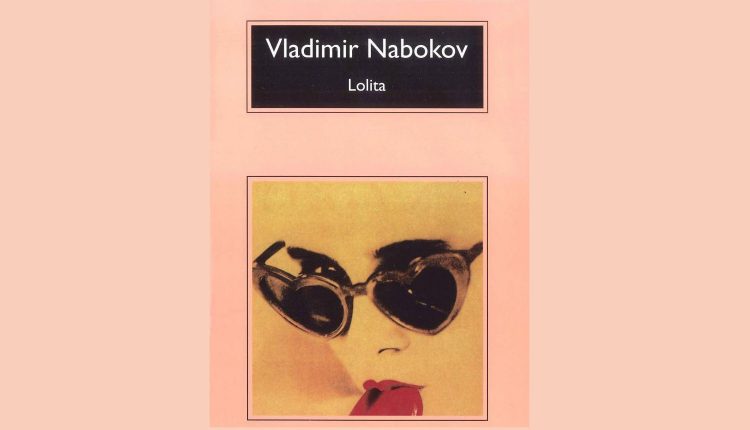
In 1922, at the age of 23, Vladimir Nabokov translated Alice in Wonderland into Russian. Perhaps even then—without necessarily harboring any morally transgressive feelings toward young girls—he had become captivated by Carroll’s worldview. But Nabokov’s Lolita is separated from Carroll’s Alice by nearly a century. Moreover, while Carroll’s aesthetic imagination can be traced across literature, photography, and the transformation of a young girl into a beautiful woman, Nabokov’s literary creativity is rooted in a constant journey through language—a kind of compensation for his forced departure from the Russian language and cultural heritage. Lolita had virtually no chance of being published in the morally conservative America of the mid-20th century. Thus, Nabokov entrusted the manuscript to Olympia Press in Paris, which published the first English edition semi-clandestinely in 1955.
Only a few years later, Stanley Kubrick’s project to adapt Lolita into a film in the U.S. gained momentum. At the time, Nabokov had already earned a respectable reputation as a screenwriter, and so—by mutual agreement—he undertook the writing of the screenplay himself: a massive 400-page script that flagrantly defied the limits of American moral standards and censorship. As a result, it was practically unusable for Kubrick. Consequently, much to Nabokov’s dismay, Kubrick—more out of necessity than disbelief—revised and completed Lolita with the help of a professional screenwriter, moving away from Nabokov’s original vision.
Thus, three legendary “Nymphets” emerge—first through Carroll’s portrayal of Alice, then through Nabokov’s literary creation, and finally through Kubrick’s cinematic vision: the romantic, chaste Lolita of Carroll, shaped by the innocent beauty of the 19th century; Nabokov’s Lolita, with roots both in eternal Russia and in the provocative Europe of the mid-20th century; and finally, Kubrick’s Lolita, woven into the multi-layered, genre-blurring, and anti-heroic fabric of his cinema.The passage from girlhood to womanhood—from victimized innocence to seductive agency—from the 19th century to modernity, unfolds with both wonder and disillusionment. Alice, pushed aside, is lost within Carroll’s wonderland and his daring yet “moral” photographs, steeped in romanticism. Meanwhile, Charlotte Haze, Nabokov’s twelve-year-old girl in crisis, is re-imagined by Kubrick as the 14-year-old Sue Lyon—half child, half woman, ever beautiful, ever seductive, ever enigmatic, and always the ultimate victim.Her rite of passage unfolds within the duality of Humbert/Quilty—a binary in which good and evil, love and lust, desire and exploitation, madness and death, blur into one another, mirroring the contradictions of a modern mythology built upon innocence lost. At this point, there is no choice but to take a stand at one of two completely opposing poles—both far removed from Carroll’s neutral position but each marking the threshold of crisis. The first pole situates us at the heart of the storm, the second at its calm aftermath. Therefore, if we are to compare Nabokov’s Lolita with Kubrick’s adaptation, we must concede that the Russian-American author had every reason to feel disillusioned. After realizing that his voluminous screenplay could never be faithfully translated into film, he published it years later—only to witness a cinematic version that, despite its lasting success (much like his novel), diverged from the tragic essence of transgression at the heart of his work.Nabokov envisioned Lolita within a literary framework governed by absolute freedom—free not only from political constraints but also from the moral and social norms of his time. It was a radical aesthetic ideal for a man who chased errant butterflies through mountains and meadows. Thus, it is no surprise that Nabokov, with his characteristic cynicism, expressed his views on the film by calling it a success for Kubrick—but not for himself.
Nabokov invested a significant part of himself in the character of Lolita: an immigrant man with a European cultural background, a literature professor, a lover of young girls, and an anti-conformist. Humbert’s character can be seen as a sinful, rebellious, and somewhat unsettling reflection of Nabokov himself. For this reason, Nabokov found neither his distant self-portrait nor the truly sinful love—rooted in a candid exploration of eroticism—that was central to his work represented in the film. His Lolita was not the “girl” depicted on screen; rather, she was more of a seductress on the verge of the ritualistic, guilt-laden threshold of the initiatory passage. This divergence was somewhat shocking to Nabokov, especially since it happened in America, which perhaps explains his decision to emigrate and spend the remainder of his life from the 1960s onward in Switzerland, living in a hotel. Nabokov was determined to relinquish any sense of ownership or attachment to any particular land. He considered himself a cosmopolitan, wandering among several cultures—Russian, French, British, and American—and witnessing a tragic process in which humans, following their own distinct path, construct and transform culture. Like butterflies, they undergo a metamorphosis from ugly, earthbound caterpillars to beautiful, colorful, and free creatures with dazzling wings—wings that can carry them on the highest flights, even if those flights lead to death.
In this tragedy—perhaps in the style of ancient Greek tragedies—each person is inevitably forced to accept a fate different from what they imagine and resist, only to ultimately acknowledge that their destiny is written by the gods and will manifest as reality accordingly: Lewis Carroll, the British author educated in church and university, became a Russian-American immigrant perpetually suspected of harboring a rebellious spirit deeper than he revealed; Nabokov, in turn, became Stanley Kubrick, the American filmmaker and an enigma in global cinema and life. Their creations ranged from Alice, the beautiful and innocent girl whose greatest adventure was “through the looking glass” into a world of “wonders,” to Charlotte Haze, a figure who, amid the rites of initiation and womanhood, lost her innocence; and the creatures of Alice’s Wonderland transformed into human animals with souls and bodies, all striving to reconcile the ethics of their art with the beauty of “young girls” and the process of their “becoming women,” while always denying that this fascination was anything other than genuine love.
Morality and love are, in fact, the two main actors in this narrative to which we will return. But first, we must turn to two giants—two great artists of the twentieth century—between whom Lolita seems to be nothing more than a pretext, a means by which each sought to assert their power through possession of her. Although Nabokov ultimately found satisfaction only when he restored his creation to his mother tongue, Kubrick was never fully content, admitting that had he known he would face such a formidable barrier of censorship, he would never have made the film. Perhaps he took his revenge through his final work, Eyes Wide Shut .
Therefore, when we speak of the two Lolitas, we must keep in mind their roots in Alice’s Wonderland—a journey from the romantic nineteenth century to a harsh and fearless twentieth century, in which even the word “little girls” has sometimes acquired the connotation of promiscuity associated with Lolita in common language. This first indicates the ultimate victory of Quilty (the real and visible face) over Humbert (the artificial and hidden face), meaning the triumph of a masculine “shamanic” debauchery in the rites of passage. Beyond this, it reveals the intense and dialectical confrontation between Nabokov and Kubrick—two giants in every sense of the word, both positive and negative: greatness, wonder, beauty, ugliness, cannibalism, terror, and endearment. One giant of twentieth-century literature, Vladimir Nabokov, and one giant of cinema in the same century, Stanley Kubrick. The tale of Lolita is the story of two kings, and it might be rephrased in Sa’di’s words: “Ten dervishes who sleep on a blanket, and two kings who cannot fit in one land.” Lolita herself is a strange tale—a cherubic girl who obliterates the ancient image of the dark well and womb, seduction and beauty, the magic of black and white , the outward angel and the inner devil. Without, at least here, either Nabokov or Kubrick showing any desire to submit to this eternal patriarchal cliché, yet unable to easily escape it, Lolita—the main character of this tragicomedy—is both the victimizer and the victim. Or perhaps we should say, first the victim (before Humbert and Quilty force her into womanhood), then the victimizer (when one kills the other and herself dies in prison before execution for murder), and finally once again the victim (her own death during childbirth). Kubrick undoubtedly cannot fully bring Nabokov’s Lolita to life on screen, but perhaps more than anyone, he reveals that the Russian émigré author’s insistence on Freud—the “Viennese charlatan psychoanalyst”—being so crucial is not as absolute as Nabokov thought. No matter how much the author, even as a genius, tried to escape well-trodden paths of centuries of human thought and coexistence—through his candid, taboo-breaking literary style or, like Kubrick, through his unique cinematic approach to unimaginable heights—it seems, like a Greek tragedy, that the fate of King Oedipus returns them to those same paths. Willingly or unwillingly, they must again strengthen and deepen “the eternal return” (especially in the mirror-like confrontation scene between Humbert and Quilty).
The story of two giants: Nabokov, undoubtedly a genius of twentieth-century literature, was a true cosmopolitan who managed to blend three often incompatible cultures and languages—Russian, French, and English—both in his life and his works. He settled in Europe and America but never shied away from his political leanings toward the right or his support of U.S. policies, including the Vietnam War, despite coming from a family inclined toward liberalism, with his father supporting Kerensky during the Russian Revolution. Nevertheless, Nabokov had a profoundly passionate relationship with nature (especially butterflies) and language (all three languages), making it unlikely for political corruption to corrupt that love. He never wanted to claim a single homeland—maternal or paternal—and the same can be said about his literature. If we attempt to place him within any of the distinct literary traditions he traversed—Russian, English, American, or French—it may prove impossible, given the vast scope of his works and their transformation across languages; for instance, Lolita exists both in English and its Russian translation. Although from the 1940s onward, his writings were often set against American backdrops, after settling in a Swiss hotel around 1960, his works increasingly acquired a cosmopolitan character. Nabokov’s cosmopolitanism and self-confidence—perhaps inherited from his aristocratic Russian family—led him not only to disdain Marx and Freud but also to look down upon literary giants ranging from Balzac to Sartre, and from Hemingway to Faulkner. Emerging from the land of immense and suppressed literary titans—Russia—it may not have been coincidental (nor should the influence of his translation of Alice in Wonderland and his acquaintance with Carroll and his photographic subjects, young girls, be overlooked) that Nabokov published Lolita semi-secretly in Paris in 1955, just two years after the death of the great dictator Stalin. Despite its conventional non-political nature, the novel stood in stark opposition to the regime he had fled—the revolutionary Soviet Union of the 1920s and beyond—where everything, especially human emotions and thoughts, was tightly bound, and worse, the oppressors demanded that people perform a grotesque, hypocritical, and humiliating play as clumsy actors in a happiness defined by “proletarian ethics.” Nabokov’s Lolita was not only in conflict with the monstrous leftist moralism of the Soviet Communist Party but also faced an unexpected challenge in the United States, where, despite the explosion of social freedoms, the transgressions in his work were perceived far more severely than he might have anticipated. His extraordinary linguistic style sparked a revolution, breaking sexual and social taboos—taboos that at the time were intolerable not only to the Puritan American society then and even today, but also to French society in the 1950s and ’۶۰s, before May 1968. Therefore, it is unsurprising that over time, the name “Lolita” became a common label for child pornography. It is particularly important to remember that child pornography only became a widespread social problem after the computer revolution of the 1980s; prior to that, it was mostly considered a rare aristocratic vice.
Within the book itself, the seed of this issue is apparent both in the character of Humbert Humbert (portrayed by James Mason in the film) and in his shadow or “other self,” Clare Quilty (played by Peter Sellers in the film). Quilty is a giant figure who shapes Lolita, yet he is more bound to the continuation of his own literary tradition of transgression than to conformity with the social and cultural boundaries of society. He possessed a strong inclination to depict erotic passions rooted in European origins—a tendency that, paradoxically, can be seen as both in tension and in harmony with the film’s relative de-eroticization compared to the novel. For Nabokov, the ideal—or perhaps illusion—of the land of freedom, America, which he regarded as the exact opposite of the totalitarian land of his birth, was shattered once upon the novel’s publication and again, perhaps even more profoundly, when his grand screenplay was rejected. And finally, he realized that although Kubrick might have been the only cinematic genius capable of adapting Lolita into film at that time (1967), the cinematic realization of his literary imagination exceeded what was attainable. This remains true perhaps even today. Thus, his admiration for Kubrick’s film was accompanied by a simultaneous critique, condemning it for degrading the erotic dream of the “young girls” and portraying the tragicomic fate of powerful men ensnared by them—and ultimately, by their own unconscious desires. As mentioned, his screenplay was later published but attracted little attention, as it failed to surpass the extraordinary language and imagination of his novel. This same limitation must be acknowledged regarding the film: Kubrick’s Lolita never reached the heights of Nabokov’s Lolita. This reduction of the book’s creative depth is a point Kubrick himself admitted.
Therefore, although one should be glad that a cinematic giant took on Lolita, the reality was that breaking taboos in this domain was so difficult that literary imagination could always provide a better ground for it than visual imagination. Nonetheless, Kubrick was a filmmaker who, in his few films, mastered every style and created unparalleled masterpieces and classic models. His film 2001: A Space Odyssey (1968) (known in Iran as The Secret of the Cosmos)—at a time when most so-called “space” films become laughable within ten or twenty years, even for dedicated cinephiles—remains not only highly watchable more than fifty years later but also seemingly beyond any addition or improvement. Meanwhile, the sacrifice of Nabokov’s screenplay to American censorship also took a toll on Kubrick himself. Nonetheless, the second giant was no less formidable than the first, for both before and after Lolita, he did not hesitate to tackle taboo and socially and politically transgressive subjects. From Paths of Glory and Spartacus to Full Metal Jacket and especially his final film, Eyes Wide Shut, he demonstrated that although he was aware of the limitations of his homeland, he possessed sleight-of-hand techniques to effectively challenge war worship, hero-making, and social injustice through anti-conformism.
In Lolita, Nabokov, besides exploring the process of encoding femininity—a central theme—also addresses another profound and eternal question in literature and human thought, traceable back to Plato, Socrates, and the famous Socratic dialogue in Charmides: a question that never finds a definitive answer—can the ethics and love of the soul be equated with the ethics and love of the body? Where are the boundaries between Platonic love and physical love? And at what point does one slip from one to the other, and is return possible? Or is the movement from one to the other an inevitable, one-way, irreversible process? Ultimately, which character should be judged not as “better” but as more “authentic” to themselves: Humbert Humbert, who consciously or unconsciously “beautifies” (idealizes) his love for young girls beyond the crude eroticism he truly harbors, refusing to accept his own reality and willing to mock and exploit every other human morality and affection—including Charlotte Haze’s (Shirley MacLaine) conventional and sincere love for him; or the detestable yet genuine and “honest” shadow of Humbert, Clare Quilty (Peter Sellers), the author and creator of child pornography who never hid anything and never portrayed himself as an invincible hero or a banner-bearer of freedom for body and soul—a sort of “Spartacus” of love? This confrontation between ethics and beauty, and their inherent incompatibility, is essentially a dead-end alley repeatedly depicted in literary and cinematic works. It perhaps calls to mind one of the most brilliant examples: Thomas Mann’s Death in Venice and the film adaptation by Luchino Visconti, both carrying a distinct resonance with this dilemma. Because if in Lolita, the taboo is breaking the boundary between childhood and maturity, girlhood and womanhood, then in Death in Venice, homosexuality and the inter-generational blending—old age and youth—are red lines that must not be crossed. Ultimately, if beauty and goodness are defined solely by the body, as Socrates argues, they cannot be justified unless they harmonize and resonate with the soul. The debate has always been that Kubrick, in his language and style (and according to Nabokov’s belief), largely downplayed the eroticism of the book. However, this depends on how, when, and within which semantic frameworks we interpret it. One of the most erotic scenes in the film is the opening credits sequence, where we see Humbert’s hands and Lolita’s foot arranged in a composition that, to me, recalls Michelangelo’s grand, profound, and historic painting of the hands of God and man on the Sistine Chapel ceiling: God creating man—fingers parting, cotton placed between them, and lacquer applied. This sequence itself acts as a ritual of transition: from girlhood to womanhood. A real love play also occurs in this scene, and on a semiotic level, it demonstrates Kubrick’s genius in circumventing censorship while creatively transforming broad semiotic elements within the body.
Unlike Nabokov’s linear narrative, Kubrick’s film begins at the end of the story: where Humbert, having learned of the tragic fate that Quilty inflicted on Lolita, confronts and kills him—who is, in fact, both his shadow and “other self.” Peter Sellers delivers an extraordinary performance, shifting fluidly between roles much like in Kubrick’s Dr. Strangelove, here reflecting a mirror-like relationship with Humbert. In a sense, Humbert is as perverse as this pornographic writer and filmmaker. Kubrick, using James Mason’s remarkable acting in the famous scene where Humbert reads Mrs. Haze’s love letter aloud, highlights this: Humbert reads the letter in a ridiculous and cruel tone, then bursts into laughter and collapses on the bed, while the camera fixes on a book by Quilty beside the bed. One might say Quilty is, in a way, more moral than Humbert—he does not hide his sexual desires for young girls and approaches the subject directly, whereas Humbert, fully aware of the immorality and inhumanity of his actions, shamelessly mocks and destroys the life of another human being, Mrs. Haze, in his pursuit of the girl. Mrs. Haze’s death brings Humbert a sense of peace and pleasure. It is here that his journey begins—traveling endless roads, stopping at gas stations and stores, moving through motels and hotels across America. This journey is also a kind of ritual passage during which Lolita transitions from girlhood to womanhood. This rite of passage is less about romantic or sexual relationships and more about this guilty movement along the roads.
The opening scene of the film, which in fact corresponds to the final scene of the book—Humbert confronting Quilty—reveals the stripped, bare self of Humbert, cleansed of the superficial and moral layers that had made him appear respectable in contrast to the cunning Quilty. The girl, having been separated from childhood and wandering the roads in solitude amid the intangible flow of life, finally joins the realm of women and can now regain the peace of the graveyard—where two shadows, two doubles, two giants embrace each other.
This note was first published in Barg-e Honar magazine, issue 125, spring 2020, and is now being republished.
This text is an AI-generated translation of a Persian article originally published on Nasser Fakouhi’s website (nasserfakouhi.com). The original article is available at the following link:
