
A Green-Blue Vision for Tehran
Nasser Fakouhi

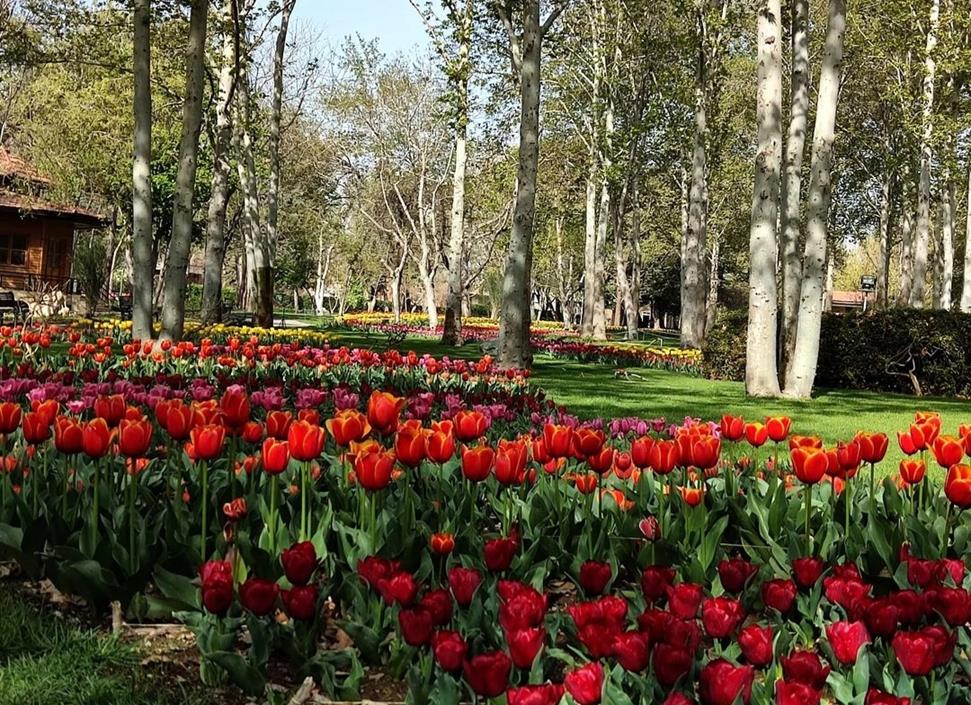
Once upon a time, Tehran was a city of gardens and streams, with fresh air that attracted the elite, who would settle there to adorn their lavish tables with its fruits. Tehran was once home to alley-gardens in Tajrish, filled with the scent of trees and flowers that enchanted wanderers. It had mountain foothills in places like Darband and Darakeh, where groups of young people, before sunrise, would hike up the heights to gaze upon the vast landscapes below, or rest in teahouses, finding comfort and spending tranquil moments. Tehran once had streets with only a few glistening cars, and people who would sit with ease on benches in its green squares, watching the bubbling fountains in the pools before them. Tehran once had a boulevard that marked the city’s northern edge, bordered by lawns that seemed more beautiful than the finest gardens in the world. It had streams and flowing water weaving through its streets, creating pleasant late afternoons. There was a time when the Karaj River, a rushing body of water, served as Tehran’s retreat—where people strolled along its banks, chilling watermelons in its icy flow. In summer, dipping even your feet into the cold current was a challenge, and people worried that a careless swimmer might be swept away.
Once, the summer resort for Tehran was Karaj, with its verdant riversides and trees stretching endlessly into the distance, where picnic cloths were spread out and people shared a joyful, living connection with nature. Tehran once meant Lalehzar nights—cool evening breezes and carefree wanderings in a city neither wealthy nor extravagant, yet full of people who shared a human, harmonious bond with water and greenery. Everywhere, you could splash your face with cool water, find a patch of grass to lie down in a park, or sit on a bench in the shade, watching streets where people simply enjoyed spending time in peace and contentment.
But that Tehran was not an ideal or utopian city; poverty was rampant. The buildings were old, highways were few, and much of the population lacked formal education. Women were rarely seen in public spaces, and those present were not often independent or on their way to work or study. Class disparities were stark: slum dwellers, street children, addicts, and the homeless—many having left their villages—filled the city. The tension between rich and poor was palpable. Tehran was not a flawless or modern metropolis, and high living standards were confined to a small segment of its residents.
But one day, the winds no longer carried a cool breeze—they brought endless streams of dollars. The city’s green spaces and trees were cut down to make way for massive buildings and later, towering skyscrapers. The flowing streams dried up so that more and more newly rich individuals could settle into luxury homes and high-rises, squandering water, polluting the air and soil, wearing absurd clothes and plastering their faces with makeup in an effort to look like Europeans or Americans.
A flood of cheap, worthless goods swept through the city like sewage, washing away the vibrant greenery, the running waters, and the pure-hearted people. Everyone became a trader, clutching foreign currency. In Lalehzar Street, where once people went to the theater at night, cries of buying and selling dollars now echoed day and night. Streets filled with cars—each one more luxurious than the last. The nouveau riche smeared everything with the color and stench of mud, a hue not unlike the very dollars they worshipped. Yet, people found contentment in what little they had. On a patch of grass, beside a stream, the bitterness of poverty could momentarily be forgotten. They could sit in the wind’s path, feel its breeze with empty pockets, and lose themselves in their dreams. They wore branded clothes—ever more varied and flashier—and drove massive vehicles not built for city life but for deserts and long journeys, or high-speed cars designed for racing tracks. They placed themselves or their children in these machines and roamed the narrow, overcrowded alleys or the highways that now sliced through the entire city, choking its breath and cutting it into fragments.
Many of those who had come into easy money just as easily abandoned ethics—and even more easily, their civic responsibility to preserve the environment and promote sustainable consumption for a viable future. Their only concern now seemed to be resembling Europeans and Americans as much as possible. Glass towers rose in an earthquake-prone country; construction boomed atop fault lines; wherever possible, urban streams and greenery were erased to make room for more buildings, to house ever-larger populations. The city was reduced to misshapen buildings and even more grotesque towers, linked by roads, leaving no space for anything else. Water, instead of flowing through visible streams, was now trapped in pipes—pipes many didn’t realize were contaminated with carcinogenic particles. The air became thick with fumes and toxic substances, the byproduct of the ceaseless movement of people in cars—cars bought with windfall money, driving endlessly thanks to nearly free gasoline and minimal maintenance costs.
The city had become a central place where all problems and issues were solved with money: young people and women who couldn’t find work in the sluggish market took to the streets, aimlessly—or with a purpose—cruising in their cars; others were trapped in meaningless jobs born from that sudden wealth: signing deeds, buying and selling properties, transferring titles, visiting tax offices, obtaining certificates, and so forth. Everyone was caught up in wealth that was supposed to bring comfort but instead brought trouble, fatigue, greed for more wealth, and a desire for greater display. The Karaj River had long since lost its life, and instead of the leisure spaces for weekend outings, there was a flood of cars filling the highways from Tehran to the northern provinces. The nouveau riche, like an infectious disease, spread everywhere. In the north, forests were being cleared to build villas for urbanites who tried to compensate for the loss of greenery and water by crowding the roads and towns of the north every week and every day. The once roaring river no longer roared; for years, it had grown accustomed to seeing beside it an urban sprawl like new Tehran—only far more chaotic, disorderly, and problematic. The garden alleys of Tajrish no longer existed, and there, too, the newly wealthy from the oil boom had established a whole new world for themselves, with tall towers rising in narrow alleys. Even the foothills and mountain paths had become poisoned; instead of streams and greenery, cafés, restaurants, and the like had sprung up everywhere. But this was not the end of the story—another great wave was coming, this time a wave of restless capital searching for places to launder itself. Banks sprouted everywhere, from the widest streets to the narrowest alleys, addicting everyone to a lifestyle dependent on consumption—and even more consumption. There were more ATMs than public restrooms, spitting out money side by side from every wall or even the sides of mobile trucks. These banks meddled in everything, breeding corruption, and did not spare our art, cinema, literature, or highest cultural and traditional values from their grasp. They stamped the mark of laundering their dirty money on everything and everyone, turning words like embezzlement and fraud into everyday terms that every child hears or utters many times a day.
In this city, there was no longer any place for the “blue” of flowing waters, nor for the fresh “green” of lush vegetation. All that remained was smoke, toxins, and pollution in the air, soil, and underground—while the people thought about everything except having the “water” and “greenery” their parents once knew, in a city that increasingly took on the face of a great monster.
But amid all this, was it impossible—or is it still impossible—to apply the modern concept of green-blue cities to a city like Tehran? Were we doomed to an unchangeable fate that we had to accept, blaming its problems on officials, the environment, or anyone and anything but ourselves? Must we, as always, find the cause of our misfortune in the prosperity of others, see the ruin of our home in the wealth of our neighbors? Should we constantly complain about why the countries of the Persian Gulf have built ski resorts and grand villas on the water, while they plunder our soil and water without regard, enriching themselves? Or shout about why our people travel to Turkey, how that country has prospered, and how Antalya, Alanya, and even Istanbul have become cities attracting millions of tourists—all thanks to Iranians? Such cries both freed us from taking responsibility and stirred the basest forms of racism among equally rootless people—something that others only encouraged. Clearly, this is the easiest reaction to expect from newly wealthy individuals who see themselves as the center of the world; those who think they can blame everyone but themselves. They never consider—and never will—that every time they buy a luxury item, build a villa, or replace a green space with a tall building; every time they bring an expensive, fuel-thirsty car into the city’s chaotic streets; every time they construct a more lavish restaurant, a bigger shopping center with pricier goods; every time they establish “exclusive” schools, universities, training centers, and research institutes with exorbitant tuition fees; every time they build dream hotels in a country lacking even basic tourism infrastructure; or erect hospital-hotels supposedly for “medical tourism” while ordinary people struggle to get basic healthcare—and hospitals turn into piggy banks for shareholders who travel the world with their money—they forget that each of these shortsighted and careless actions deals a harder blow with a bigger axe to the very branch they themselves are sitting on, making a return to a balanced, sustainable situation far more difficult. They like to talk about their appearance, their dream homes, their cars worth hundreds of millions, the exceptional schools their children attend, their extravagant shopping in expensive malls, and their endless trips to Europe, America, and East Asia—and they expect applause, seeing these as signs of their “modernization.” They prefer to imagine that water is something that should always flow inside pipes and be wasted to the maximum; they want to believe that the blue of the sky can only be seen on television and the green of endless meadows only during foreign travels. Therefore, they think it is acceptable to live in a city without running water, without greenery, without open spaces for its residents’ leisure—a city where at night the streets have become the playground of newly rich troublemakers (justified by the excuse that staying out at night might corrupt others’ morals), a city where private spaces seemingly do not exist and everything depends on money, and where people spend their time and lives.
The reality is that the concept of a green–blue city is neither a fantasy nor an idea born from a confused mind unfamiliar with Europe and America. Perhaps it wouldn’t hurt for the self-proclaimed modernists—those striving to resemble the “advanced” world—to sit down at one of their countless computers or tablets, which they buy for their children from infancy, and type the words “green blue city” into a search engine. Although they likely won’t understand the texts—because unlike their dollar-filled pockets, their minds are empty—they can at least look at the images and see how this concept has spread across Europe and America today, and how architects who have worked for years on sustainable cities are now working on this very idea: creating sustainable cycles—durable water and green spaces—in modern cities; distributing water throughout the city in ways that not only enhance its aesthetic but also improve the climate through evaporation; moving toward a “pedestrian city” and minimizing cars; elevating public transportation to such a quality that people choose it willingly over private vehicles; and advocating for concepts like cyclist-friendly cities (wherever possible), green cities, human-centered cities, and more. They might see cities whose walls are entirely covered in greenery, whose rooftops are filled with plants and trees, with streams flowing everywhere, and countless public spaces freely available to citizens who enjoy life itself rather than consumption or flaunting their possessions.
Can Tehran become such a city? Is this just a meaningless dream for a city that has inflicted the worst damage upon itself for over fifty years? We believe this dream can—and more importantly, must—be realized. It is the responsibility of every citizen of this city to abandon environmental betrayal, the betrayal in their lifestyles, and in their social behaviors, and to think more deeply about their own future and that of their children. But why do we defend this vision? Because we have actually experienced such dreams in reality—not just in modern times, but since the oldest eras: just look at Fin Garden in Kashan, Eram Garden in Shiraz, and the Shazdeh(Prince’s) Garden in Kerman. There is no doubt that a garden, especially a classical and ancient one, cannot be compared to a city in scale, but the issue lies not in size, rather in the spirit and our understanding of the relationship with nature and life. If we grasp this, we can guide our cities—especially Tehran—in that direction. Meanwhile, it cannot be denied that over the years, the municipality, other governmental and private institutions, and ordinary people have made significant efforts in this field, but these efforts must become more focused and be based on a general theory—that is, the theory of a sustainable city and a green-blue city—so that they can perhaps help us reach the ideal we have lost.
This paper is an AI generated translation from Persian into English for nasserfakouhi.com.
۰۴/۰۷/۲۰۲۵
