
A Brief Analysis of Kubrick’s 2001: A Space Odyssey (1968)
By Nasser Fakouhi

Stanley Kubrick (1928–۱۹۹۹) is, for many, most immediately recognized by his unparalleled film 2001: A Space Odyssey (1968). Yet Kubrick should be regarded as a true genius in the realms of cinema and cinematic writing. A skilled photographer before turning to filmmaking, he never confined himself to a single genre. Instead, through a relatively limited number of films, he managed to create masterpieces across a wide spectrum of genres—war films, romance, science fiction, horror, social dramas, and more. We will return to his other works in future writings.
According to a significant number of leading directors, filmmakers, and scholars from fields such as history, sociology, and psychology worldwide, Kubrick must be considered one of the greatest filmmakers of the 20th century. His film 2001: A Space Odyssey can, without doubt, be considered one of the most profound cinematic works of that century. The film poses a deeply ontological question central to human existence: the relationship of humans with their own humanity, examined through their connection to technology and the gradual loss of control over it.
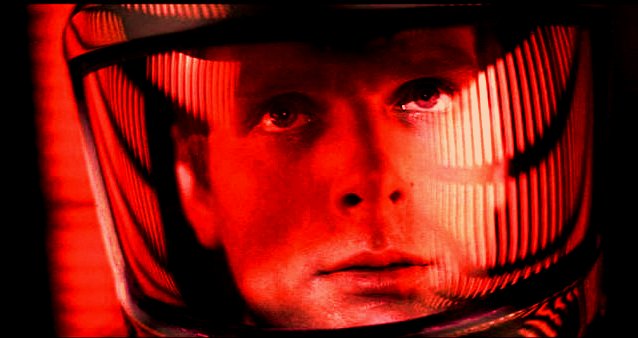
In the face of the monolith’s perfection, the primitive ape-like humans are as bewildered and agitated as the astronauts who, in the future, must operate a powerful supercomputer—only to ultimately be defeated by it. Their only remaining recourse is to drift once again through space in the form of a fetus/spaceship, a rebirth of sorts into another human form. Thus, the film’s message, while deeply pessimistic about the high likelihood of humanity’s defeat by machines—due to its inability to control computer technology—still contains a note of hope, embodied in the birth of the new fetus. This Nietzschean theme lies at the core of the film. It is therefore reductive to classify 2001: A Space Odyssey solely as a work of science fiction. Rather, it should be understood as a philosophical drama—one that probes the future of humankind and the paradoxical relationship it maintains with technology and artificial intelligence.
In addition, 2001: A Space Odyssey demonstrates an astonishing level of precision and foresight in depicting future modes of human life and advanced technological tools—innovations that, quite remarkably, have materialized over time. These projections were made possible through Kubrick’s close collaboration with NASA experts during the film’s production. The film may be approached through its central theme: the trajectory of human life, from the dawn of early hominids to the conquest of outer space. Yet, despite humanity’s immense scientific and technological progress, an ontological “mystery” persists—an enigma that acts as a guiding thread, linking all phases of human existence and its continuation in the universe.
This mystery is visually symbolized in the film by the recurring presence of a black, highly polished monolith that appears at critical moments in human history and development. Its appearance—always otherworldly—casts doubt, even at the highest stages of human intelligence and evolution, on the very nature of existence and consciousness itself.
This is a translation assisted by AI of a commentary by Nasser Fakouhi.
The original Persian text is available at the following link:
