
The Immediate End of War: The Only Opening Toward the Possibility of Freedom and Democracy
Nasser Fakouhi

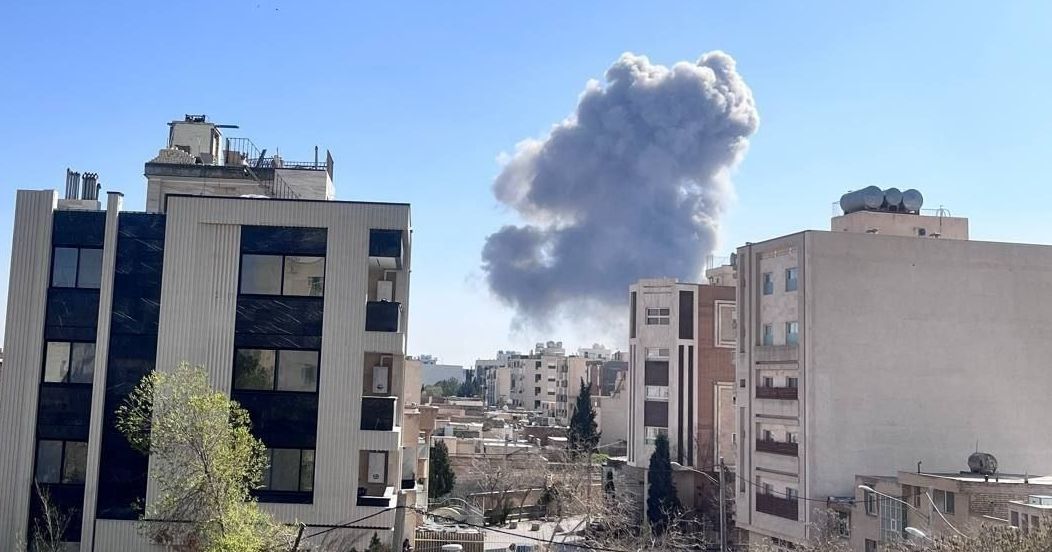
In previous notes, we have repeatedly emphasized a fundamental point: no violent solution can lead to a better situation in terms of democratic freedoms, the reduction of political pressure, or the improvement of economic, social, and cultural conditions in Iran—or anywhere else. The inclination—indeed, the claim—that democracy and freedom can emerge through violence, particularly through the mass killing and destruction known as war, is nothing more than a grand illusion. Today, only one week after the beginning of the unlawful and brutal war waged by the United States and Israel against Iran, this illusion reveals itself in burned cities, devastated infrastructures, and an uncertain future not only for the country but also for the region and even the world.
It is clear that the current situation is the result of years of both conscious and unconscious disregard for repeated warnings issued by academics, intellectuals, and specialists. These warnings were addressed, on the one hand, to the major world powers and, on the other hand, to the officials and decision-makers within Iran. The warning to the major global and military powers was that such authoritarian, militaristic, opportunistic, and destructive approaches would lead to nothing but increasing instability across the world, the violation of international law, and the growing endangerment of global peace. After two world wars, international law and institutions such as the United Nations were established precisely to prevent the emergence of dangerous tensions among states and the re-establishment of a “law of the jungle” in international relations—especially in light of the ever-growing risk of humanity’s annihilation through nuclear weapons. It is evident that the bellicose, opportunistic, and extremist foreign policies pursued by the United States and Israel throughout these years have systematically violated international law. The most recent example is the attack on Iran, the widespread destruction inflicted upon the country, and the killing of civilians—particularly innocent children—acts that we have condemned repeatedly, both before the outbreak of the war and now in its aftermath.
At the same time, warnings were also directed toward Iranian authorities, who bear, above all, the responsibility of defending the lives, property, health, and security of all the people of this land—regardless of their ideology, gender, ethnicity, or social position. Unfortunately, over the past years, widespread negligence, corruption, the contraction of political space, and the violent suppression of dissent have pushed society toward a dangerous polarization and deep resentment. This has produced a genuine deadlock within the country and has paved the way for potentially greater violence in the future.
Today, the most uninformed analysts—as well as the enemies of Iran and those who follow them blindly—are those who imagine that either internal violence, from whatever side and in whatever form it may take, or external violence—bombardment and aggression against Iran’s territory and population—could possibly achieve their objectives, whatever they may be. The games of war, violent uprisings, revolutions, and coups have never produced, throughout history, anything other than greater violence, the further closure of political space, and the distancing of societies from the horizons of development, freedom, and democracy. Their only beneficiaries have been criminals and merchants of deadly weapons.
There is little doubt that the states currently attacking Iran pursue no goals other than their own military and economic interests—particularly the United States, where a corrupt, psychologically unstable, authoritarian, and law-breaking president has driven the country’s political system into an unprecedented impasse. Likewise in Israel, where Benjamin Netanyahu, in an attempt to evade accountability for his own crimes and responsibilities in the present situation, continues to fuel the flames of permanent war with all neighboring countries. We should have no illusions that such governments will ultimately bring anything but disaster to their own populations.
At the same time, we must not forget that whenever opportunities have arisen in Iran to open the political space, to move away from authoritarian practices, to reconcile with the international community, and to transform the negative image of the country abroad, either no serious effort has been undertaken or the limited attempts that did occur were systematically undermined through various mechanisms. As a result, the most hardline factions have repeatedly had the final word. Even if the country manages to emerge from this harsh war in a condition that still allows for a conceivable short- or medium-term future, a long road will remain before stability can be achieved and even minimal improvements in the lives of its people become possible. This path, if it does not begin with the first steps toward freedom, democracy, flexibility, and reconciliation in foreign policy—while preserving the country’s independence and territorial integrity—offers little hope for meaningful improvement.
We must understand that every day this war continues increases the distance separating us from development, freedom, and democracy. The price that will eventually have to be paid to reach these goals may extend across generations. Therefore, the struggle to bring this destructive process to an end as quickly as possible, and to escape the logic of violence, revenge, killing, cruelty, and retaliation, constitutes the only viable path toward a better world and a more peaceful country—one in which its people may live together in relative security and social peace.
Let us hope that we can collectively free ourselves from the illusory, populist, naïve, and dangerous belief that violence can bring about liberation. We must abandon the delusion that destruction and cruelty, hatred and exclusion, the annihilation of others, repression and killing, can ever lead to peace, stability, or happiness.
Nasser Fakouhi
۸ March 2026 (18 Esfand 1404)
his note is an AI-assisted translation of a text originally published at the following source:
https://nasserfakouhi.com/%d9%be%d8%a7%db%8c%d8%a7%d9%86-%d8%af%d8%a7%d8%af%d9%86-%d9%81%d9%88%d8%b1%db%8c-%d8%a8%d9%87-%d8%ac%d9%86%da%af%d8%8c-%d8%aa%d9%86%d9%87%d8%a7-
