
Anthropology, Social Change, and Cultural Challenges in Contemporary Iran: An Interview with Nasser Fakouhi/Part 3 & 4 / Last Part
Azadeh Shams

Interviewer: Beyond personal concerns, when you think about contemporary Iranian society, what issues occupy your mind as pressing?
Nasser Fakouhi: I approach this question in two ways. We have a group of macro-level social issues that, at their root, produce other, smaller problems. The distinction between “macro” and “micro” issues does not mean that only the macro problems matter or that people are unaffected by micro-level problems; indeed, addressing micro-level issues can prevent macro-level harms. Among the macro-level challenges in Iran are the newly emerged monetization of society—both economically and culturally—and consumerism, without the economic or cultural rationality needed to manage such monetization.
Monetization is not something anyone can easily manage. Even in developed countries, monetization has caused destructive effects; in a society like ours, which has historically struggled to manage even more logical economic systems, rapid monetization is now eroding everything—from healthcare and education systems to social relations.
In terms of medical systems, over the past twenty or thirty years, our healthcare has moved toward an American-style neoliberal model, whereas the U.S. itself has long been attempting to reform this model. A society with a democratic history and a wealth of theorists has failed to manage the neoliberal medical system, and the accomplishments of two Obama administrations were only minor reforms.
In our country, a small minority of billionaire physicians has created the worst image of the profession, even though the majority are dedicated, working in the most remote and challenging areas with humane relationships. Yet these professionals are often overshadowed by the small elite that has emerged from the monetized healthcare system. A few lavish, well-equipped hospitals exist, leaving many other hospitals deprived of basic necessities. The healthcare system has reached a level of crisis where the Ministry of Health intervenes, but physicians continue to frame the discourse around professional interests, often ignoring the realities of the sector.
Physicians themselves must recognize this problem because Iranian society is not the United States. In our context, the consequences are catastrophic. While neoliberal medicine in the U.S. may coexist with some public healthcare, in Iran it is disastrous because economic neoliberalism thrives in financialized systems. Our economy is monetized, as evidenced by repeated embezzlements: abundant but unevenly distributed wealth. Over recent years, income has increased dramatically, yet class inequalities have widened. Understanding this does not require specialized expertise: if one were to jump from a multi-story building, they would understand the fatal consequences. Introducing massive amounts of money into a system whose participants lack the skills to manage it is tantamount to social suicide.
This is evident even beyond medicine. When intellect and scholarly thought come into play, we encounter a real catastrophe: highly capable, well-intentioned individuals find themselves trapped by a newly affluent class whose aggressive and opportunistic behavior undermines everything. The former are often discouraged from acting because the latter dominate the discourse and appear to dictate outcomes.
Iran also faces other structural challenges. Neoliberalism promises to solve problems but has largely failed. Cultural and social homogenization, the attempt to make everyone conform to a singular ideal, is destructive. Women’s rights remain another unresolved issue. Although post-revolutionary Iran has integrated women into society more broadly, the system has not managed this transition effectively. Misconceptions about tradition and religion persist, but the real problem lies in the type of modernity chosen. In a monetized society where money dominates and work is marginalized, those under greatest pressure—especially women and children—suffer most.
Urban pollution, the collapse of the education system, and the obsession with quantitative measures in universities reflect these macro-level problems. The global model we should look to is not American neoliberalism but the social welfare systems of Scandinavia, where university professors and unskilled workers are both respected and socially protected. Public services such as housing, transportation, healthcare, and utilities are safeguarded from commercial exploitation, unlike in societies where healthcare is monetized.
The commercialization of healthcare, the organ trade, and the erosion of doctor-patient respect are all consequences of these systemic conditions. It is essential to understand both macro and micro-level harms, as they interact cyclically and cannot be controlled easily. Government initiatives supporting civil society organizations, think tanks, and media are beginning to create spaces where the public and elites can influence society, and the system can gradually adjust its responses.
________________________________________
On Cultural Capital and Intellectual Engagement:
Although Iran has accumulated social, cultural, and economic capital, this alone has not translated into meaningful progress. Cultural capital, when combined with consumerist and status-driven behaviors, has sometimes produced cultural opportunism, such as reading books for fashion or creating superficial intellectual “stars.” Academics often lack a media presence, preventing their work from reaching society. Universities focus on quantitative output and scholarly prestige rather than social impact. Consequently, the few scholars who intervene meaningfully in society are limited, often facing opposition from the academic establishment, which discourages public engagement.
Even when society briefly notices sociology—as in the viral discussion of Morteza Pashaei’s music—the coverage is amplified by media outlets seeking controversy. The actual discussion, rooted in Frankfurt School perspectives on art and the dialectical relationship between dominance and subordination, was legitimate, yet the public focus often distorts the intent. Similarly, public reactions to events such as the nuclear agreement reflect both a desire for joy and a lack of structured spaces for communal celebration, creating exaggerated expectations and potential illusions.
________________________________________
On Women’s Rights:
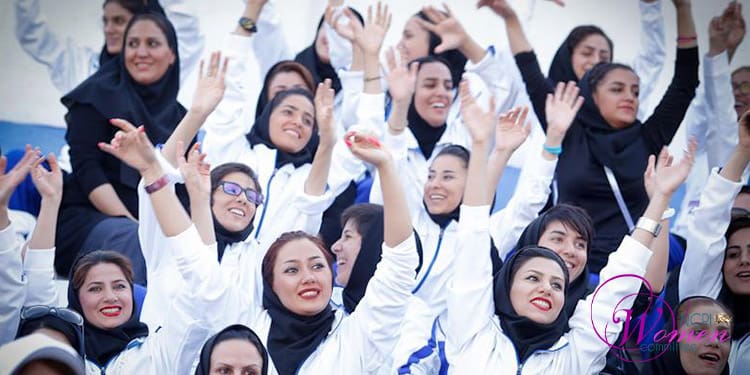
Women in Iran are increasingly claiming their rights. Social change often precedes legal reform. For example, the law requiring husbands’ permission for their wives to travel abroad has been bypassed in practice by many men, reflecting broader social evolution. Other laws, such as satellite restrictions and internet filtering, illustrate the gap between formal legal structures and social reality. These restrictions often produce dysfunction, weaken infrastructure, and serve as channels for external influence, highlighting the need for social systems to evolve independently of formal law.
________________________________________
On the Role of the Intellectual:
I am satisfied with my contributions, though I recognize that no single individual can effect large-scale social or intellectual change. Social and cultural transformation emerges from collective action: the work of ordinary people, scholars, institutions, and social mechanisms. Intellectual “lumpenism,” particularly the legacy of the Tudeh Party, continues to promote social naivety and superficiality. Yet those engaged in meaningful work are no longer intimidated by personal attacks or trivial criticisms. Silence should not be mistaken for inability to respond; engaging with shallow arguments legitimizes them unnecessarily. Satisfaction comes from pursuing work aligned with one’s capacities and interests, recognizing that progress occurs collectively, not individually.
Our goal should be the creation of indigenous, locally grounded theories, establishing an intellectual school independent of colonial and global powers. Reforming the university system—still quantitative, snobbish, and often outdated—is essential. Media engagement is critical, as scholars with public presence garner respect and ensure the connection between universities and society.
________________________________________
On Personal Philosophy and Satisfaction:
I believe I have done what I could, but such work is inherently collective. I am content if even a few people have benefited from my efforts. I have never held illusions about changing global knowledge or being a celebrated intellectual. I strive to do my work sincerely, understanding that science and knowledge develop collectively. Those who invest in personal attacks on me waste their time: I have already expressed my views, and, as the poet of Shiraz said, “the wise will understand.”
________________________________________
Publication Note:
This interview with Azadeh Shams was conducted within the framework of a collaboration on anthropology and culture with the ISNA news agency and was published on 4 Aban 1394 (October 26, 2015).
This translation is AI-assisted. The original version can be accessed here:
https://nasserfakouhi.com/%d8%a2%d8%b3%db%8c%d8%a8%d8%b4%d9%86%d8%a7%d8%b3%db%8c-%d8%ac%d8%a7%d9%85%d8%b9%db%80-%d8%a7%d9%85%d8%b1%d9%88%d8%b2-
Anthropology, Social Change, and Cultural Challenges in Contemporary Iran: An Interview with Nasser Fakouhi
This text is an AI-assisted translation. The original version can be accessed at:
آسیبشناسی جامعۀ امروز/ گفتوگو با ناصر فکوهی / بخش چهارم و آخر
