
Interview with Nasser Fakouhi on the Book “Nasser Fakouhi’s Narrative of Development” – Part Two
By Ahmad Gholami Shargh Newspaper

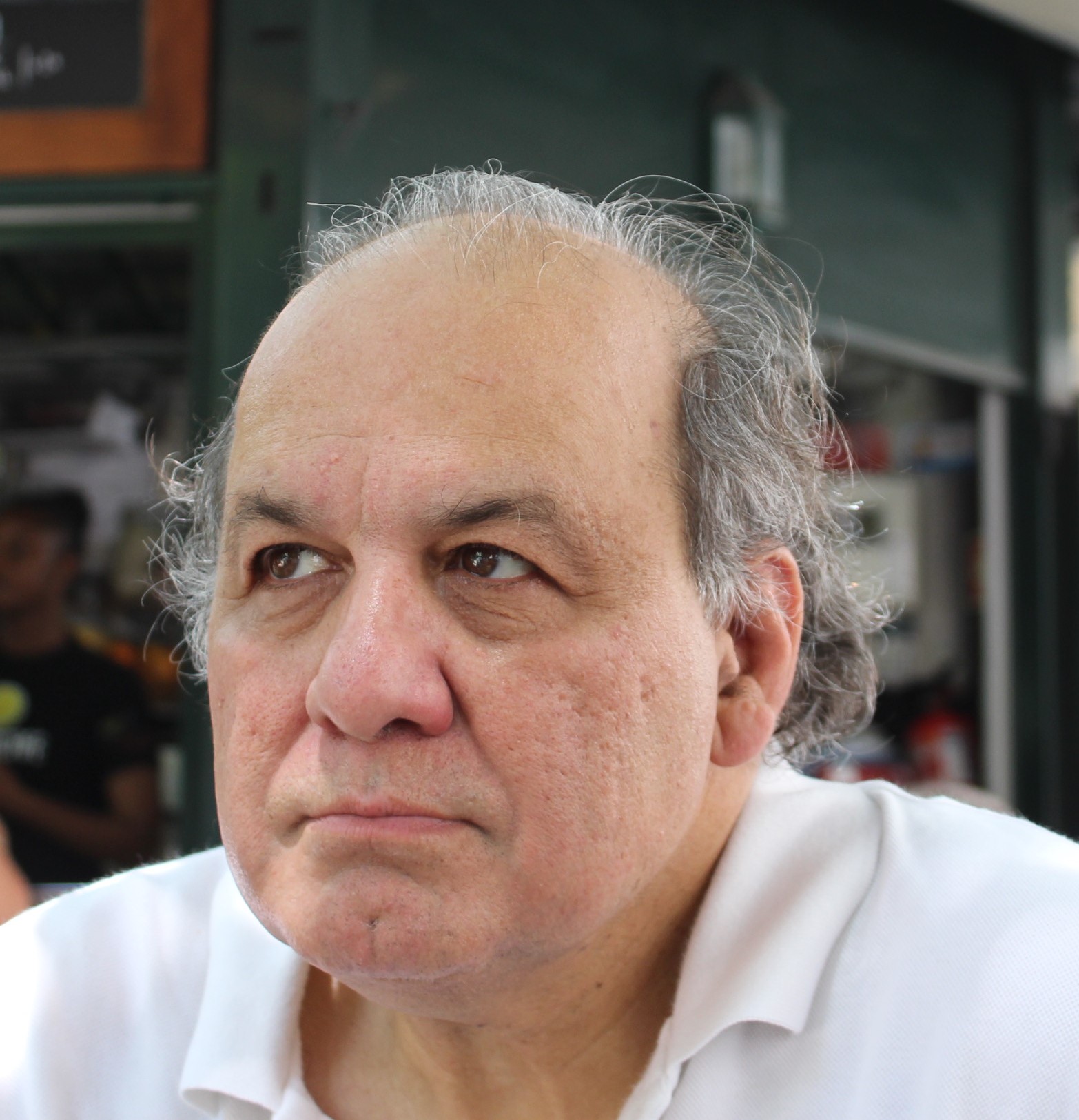
We need to ask why such conditions have not been established—or, if they have, why they collapsed or were dismantled. This question cannot be limited to the Islamic Republic alone. Iran experienced the Constitutional Revolution over a century ago. So why, in these hundred years, have all major efforts failed? A significant part of the answer lies in foreign interference, while another part is due to internal weaknesses. We are still caught in that same situation. Limiting the issue to technical, technological, or even purely economic factors will not solve anything.
Our economists have long argued that the government is too large and must be downsized—this has been repeated for years. What happened? Since the time of President Hashemi Rafsanjani, the idea of privatization has been on the table. But was privatization actually implemented in Iran? No. All national assets that originally belonged to the people were handed over to individuals. Even if these assets had been privately owned during the Shah’s era, they belonged to capitalists whose properties were later expropriated and transferred to the state. Then, under the banner of privatization, these assets were sold off at extremely low prices to various individuals. Privatization in Iran was carried out in the worst possible way.
Those who claim today that the government is too big and interferes in everything fail to see the fundamental issue: that what we refer to as “the state,” as it is properly defined, does not truly exist in Iran. A state is responsible for the welfare of its people and for managing their lives. Now, which areas that fall under the state’s responsibility are functioning properly? None.
There’s nothing more basic than food or air—yet even these, the government is now unable to provide. That’s why my argument becomes complex, and sometimes it’s mistakenly labeled as “conservative,” when in fact it’s anything but. The state’s failure to fulfill its responsibilities is not simply due to the individuals currently in power. If others were to take their place, but the global political and economic structure remained the same—as it currently does—they too would be unable to make meaningful change.
This has been demonstrated repeatedly: Wasn’t Iraq under U.S. control for 20 years? Wasn’t Afghanistan the same? What was the outcome? The U.S. eventually left, and both countries regressed into conditions even worse than the dictatorships they had before. Didn’t the same thing happen in Libya and Sudan? In my view, this is not a problem that can be solved at a local level. It must be addressed at the global level. But for that to happen, the solution is not for a country like Iran to isolate itself from the world, or to shift allegiance from the Western bloc to the Eastern bloc, thinking that this would somehow change the global system
Such actions only escalate tensions on a global scale and resolve nothing. That’s why I’ve always supported the principle of international legality. If Iran believes something is unlawful, it should pursue the legal route. Any country—no matter how powerful or well-connected through lobbying—that tries to operate outside the bounds of international law is bound to fail.
Take Israel as an example. There is arguably no country with more influence today, largely due to its powerful lobbying presence in Europe and the United States. The assumption was that this influence would grant it impunity to act as it pleases. Yet look at the situation Israel now faces. Its economy is on the verge of collapse, and many of its best-educated professionals are emigrating. Those remaining in Israel are largely ultra-Orthodox religious hardliners. Meanwhile, those who are leaving tend to be Europeans and Americans who had once immigrated to Israel but are no longer willing to live in a country that claims to be democratic while, in reality, functions as an apartheid state, constantly engaged in war. Israel has been in a state of conflict for over 80 years.
So, any country that steps outside the bounds of law cannot sustain itself—it will eventually either become another Afghanistan or another Israel.
My consistent argument has been in favor of legality—both domestically and internationally. When I say I oppose regime change, I mean I oppose revolution. Revolution is not a good thing. From a sociological perspective, we follow the Durkheimian tradition, which sees revolution as a symptom of social dysfunction, a kind of pathology. In social sciences, it is often said in various ways that revolution is something that the ruling power forces upon the people by leaving them no other way, and that is why everything is turned upside down. But that does not mean it is a good thing. Regime change is essentially the same as revolution, but since people do not want to call it a revolution, they call it regime change—though there is no real difference.
If something in Iran is not working or is wrong, it should be corrected through lawful protest and demands. I oppose any method or approach that is illegal, whether in international politics or domestic politics. And if the law itself is wrong, then there should be protest to change it.
Moreover, an incorrect law will not be effectively enforced. Numerous laws have been enacted in Iran, but how many of them have actually been implemented? Someone once said that the law banning cassette tapes still exists in Iran, even though cassette tapes have become obsolete technology and belong in history museums. Yet, that law remains on the books. Satellite TV no longer exists as it has been replaced by internet-based television, but the satellite law is still in place. This shows that such laws cannot be effectively enforced, and even if they are enforced, they have no practical benefit. For example, the hijab law is currently not enforced because it is unenforceable. However, the principle of legality must be preserved. A responsible and accountable government must be established.
As long as Iran’s issue has been about self-defense, I have always defended it. I have strongly condemned attacks by Israel and the United States and have vigorously supported Iran. Even today, I defend Venezuela, despite the fact that Venezuela is governed by an almost semi-military dictatorship. This is a matter of defending a country; however, if a country seeks to attack others through invasion and conflict, this is certainly a violation of international law.
If we accept that the world is facing a crisis, we see that powerful countries such as the United States, China, and Russia—which are technologically advanced and developed in terms of modernization—are confronting humanitarian crises. You argue that development is a human-centered process based on culture, which makes the issue highly complex. Another important point you mention is that, in any case, in a world governed by force and coercion, we are compelled to abide by the law. How can this contradiction be managed? We are dealing with a world shaped by power dynamics, and the most pressing issue is that the very countries you refer to as developed are themselves experiencing cultural and humanitarian crises. How can these contradictions be addressed through lawful and regulated means?
There are two solutions: short-term and long-term. You cannot change culture in the short term. That is, if we want to transform civility and enable people to have proper relationships with each other, it requires long-term work. This long-term effort must take place within educational systems—elementary schools, high schools, universities, and so on—which is a very prolonged process. But does this mean we cannot take any short-term actions because of the long-term nature of the task? My view is no; I believe we can undertake short-term measures as well. This relates to the point you raised in your question: in such a wild and harsh world, what can we do? The majority of people in every country are, to a large extent, victims, and this savagery is not attributable to the people themselves. Most of these countries have oligarchic systems where one to ten percent of the population controls the wealth, while the remaining ninety percent are ordinary individuals. However, these ordinary people are also influenced by the system. The prevailing image of Iran in foreign countries, especially in Europe and the United States, is that of a violent country—one in which only political violence exists, where everyone is bowed down by sorrow and no one takes any action. In their minds, the image is of a devastated country, akin to Iraq, where everything is destroyed, no one has money, and no one does anything. You have surely seen those videos where some Europeans and Americans come to Iran, film it, post it online, and make money. Why? Because Iran, with all its beauty, fascinating places, and many genuinely good people, contrasts sharply with the prevailing perception outside the country. Due to widespread distrust of official media, many people search on Google to find out what Iran is really like. This is something that these outsiders should not have to do; the Iranian government itself should take responsibility for this. How? After the 12-day war and the events that followed, the atmosphere somewhat softened. This is because the same distrust that people have towards the government is reciprocated by the government towards the people. The government’s distrust towards its own people can be described as paranoia, meaning it is driven by fear.
Under such circumstances, a series of events occur that many claim are orchestrated by infiltrators; however, I do not wish to delve deeply into conspiracy theories. Regardless of the negative international image of Iran, in times of war, everyone grants Iran the right to defend itself, acknowledging that it has been attacked. But five months after Israel’s attack, and in such conditions, when news of arrests, raids on concerts, and executions is continuously broadcast, do you think public opinion remains the same as before? Similarly, when the invasion of Iraq was being prepared, an image of Iraq and its regime was created as a monstrous entity, providing justification for its destruction at any cost. The same was true for Libya. We see that this scenario is now being repeated with Iran as well. Over the past four or five months, in many texts I have written and statements I have made, I have emphasized that the best short-term approach is to increase freedoms as much as possible and open up the space. Opening the space and expanding freedoms will not quickly eliminate inefficiencies that cause many issues, such as environmental pollution, but there is an old proverb that says: if the air is good but a person is miserable, it is much better than having bad air and a miserable person. In other words, if there is some degree of freedom—such as young people being able to play their own music—it creates a vitality that increases resilience and improves the external image.
The strategy of imposing strict controls to prevent infiltration is completely irrelevant. Even if such strictness aims to prevent uprisings or unrest, it is utterly futile. As a sociologist with historical insight, I say that if a society reaches a point of economic and political collapse, uprisings will inevitably occur. The Soviet Union, with all its power and nuclear weapons, collapsed. Such uprisings cannot be prevented in this way. The same applies to foreign powers—one cannot completely stop infiltration either. The infiltrators are not ordinary people from the streets or marketplaces; they operate through highly sophisticated espionage systems. However, if the people are satisfied, neither military attacks nor uprisings will occur. How can public satisfaction be achieved? In my opinion, creating satisfaction among the Iranian people is actually easier than in other countries, because due to external pressures, the Iranian people have become much more resilient. Nevertheless, this resilience should not be exploited. The Iranian people endured eight years of war with Iraq.
Few countries have been subjected to such attacks and pressures on their people while remaining so silent. Perhaps this is a shortcoming of the Iranian people, that their tolerance is so high; however, any further exploitation or increased repression will certainly not lead to better outcomes. Therefore, the short-term solution is a political-cultural one: opening up spaces and avoiding arrests. Currently, writers or anyone who publishes something online is arrested. This approach must make sense logically, unless these actions are truly the work of infiltrators. I do not want to delve into conspiracy theories, but the more I think about it, the harder it is to explain these actions otherwise. At the time of the attack, Iran was defended internationally because it was said that Iran was engaged in negotiations and was unjustly attacked.
However, after that, Israel and the U.S. were constantly given excuses, such as executions in Iran, arrests, polluted air, and lack of water due to irresponsibility and inefficiency. In the short term, steps can be taken to address these issues—for example, by somewhat reducing the ideological approach. They should allow some capable managers to come forward and propose solutions. I am certain that solutions exist within Iran that could alleviate the pressure. On Iranian radio, television, social networks, and channels, they ask: if there is no money in Iran, why is there class disparity? What does it mean that some people order pizza from Dubai? This shows that money does exist. The images I see of Iran and the evidence I receive indicate that there is enough money for a large number of restaurants and upscale venues—places that I personally cannot access. So, money does exist, but there is a problem with its distribution. There has been extensive debate about the statistics regarding the allocation of Iran’s cultural budget. How much is currently spent on Iranian radio and television, and what is their audience size? There are so many different channels. This money could be spent properly. Why must the people of Iran live in conditions typical of a poor third-world country? Currently, Iran is experiencing one of its worst economic situations. According to officials themselves, 30 percent of Iran’s population lives below the poverty line.
Is that even possible? Iran is one of the wealthiest countries in the world. So, we see that the issue is political, but immediately after this political issue, the matter of culture arises; because if you want to steer politics toward improvement, it requires a culture capable of doing so—and we do not have this culture. Currently, neither unity is seen at the level of governance nor among the people—whether those who oppose or those who do not. Dialogue between these groups is impossible because there is a fundamental flaw in our cultural system. This problem will not be resolved quickly, but it can be quickly recognized. These two things are different. I will give the example of an illness: they say that a patient cannot be treated until he accepts that he is ill. You may have an illness that requires three years to treat, but until the illness is diagnosed and secondly, you accept it, the treatment does not begin. You might say this sounds contradictory, but as a Chinese proverb says, even for a long journey, you must take the first step. That means you must understand where you want to go and then take the first step in the right direction. But if you think wrongly from the start, the problem will not be solved. For example, imagine if our income increases or we import technology, the situation will improve, or if we replace the current government with government X, it will improve—none of these are true solutions. Even if we did not have external factors, the issue would not be resolved this way.
For example, think about it this way: if our income increases or if we import technology, the situation will improve, or if we replace the current government with government X, things will get better—none of these will actually solve the problem. Even if we did not have external factors, this issue would not be resolved in this manner. Even if the entire Middle East were democratic, you still cannot overturn things all at once. Currently, the entire Middle East is non-democratic. Even Europe itself is oligarchic. Over the past 40 years, democracy worldwide has significantly declined. Why? Once again, for cultural reasons. This is because the cultural idea promoted by the far-right asserts that democracy is completely ineffective and that democratic systems are inefficient. This idea claims that an authoritarian technological system is what works. The model they cite is China, arguing that China, without democracy, is the world’s leading country and the living conditions of its people continuously improve, while the United States has declined under democracy. This perception has led to decline everywhere. Even in Europe, the far-right promotes this view. The far-right does not say it wants to enhance democracy; rather, it wants to limit democracy, close borders, withdraw from the European Union, and exit international laws and treaties. These treaties and laws are all the product of a cultural mindset that created them. Who established the United Nations and its affiliated organizations like UNESCO, the World Health Organization, or environmental treaties? Were they created by technocrats? They do not believe in any of these things. Politicians themselves don’t really believe in these either. All of these were established by those who understand that culture is the foundation of development and peace. Those who know that peace must be preserved at all costs; because without peace, you will have nothing. Ultimately, it would lead to a world war.
(More to come…)
Shargh Newspaper, 18 Azar 1404 (December 9, 2025)
Link to the article in Shargh
https://www.sharghdaily.com/%D8%A8%D8%AE%D8%B4-%D8%B1%D9%88%D8%B2%D9%86%D8%A7%D9%85%D9%87-100/1073114-%D9%86%D9%81%D9%88%D8%B0%DB%8C-%D9%87%D8%A7-%D9%85%D8%B1%D8%AF%D9%85-%DA%A9%D9%88%DA%86%D9%87-%D8%A8%D8%A7%D8%B2%D8%A7%D8%B1-%D9%86%DB%8C%D8%B3%D8%AA%D9%86%D8%AF
The link to this conversation on YouTube
This conversation with Naser Fakouhi was published in Shargh newspaper on December 9, 2025 (18 Azar 1404 in the Iranian calendar) and has been translated into English by artificial intelligence. The original conversation is available on Naser Fakouhi’s website at the following address:
گفتگو با ناصر فکوهی درباره کتاب «روایت ناصر فکوهی از توسعه» / احمد غلامی / بخش دوم
