
Zohran Mamdani: The Mayor of the Poor, in the City of Billionaires
By Nasser Fakouhi

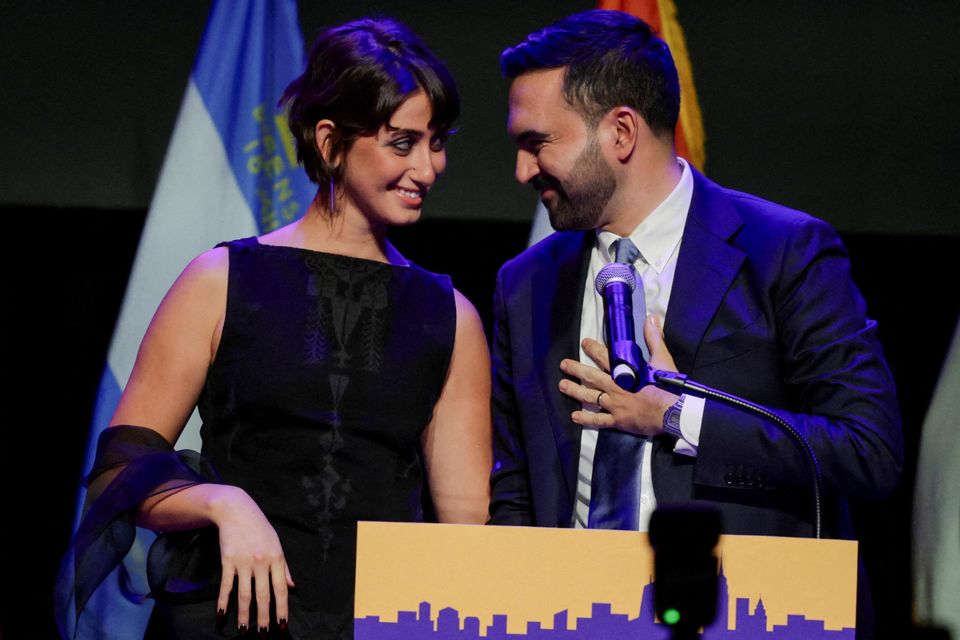
Zohran Mamdani’s victory in the New York City mayoral election in early November 2025, just one year after the shocking return of the gangster-like figure Trump to the U.S. presidency, once again drew global attention and marked an even more astonishing event. Zohran is the son of two Muslim Shia immigrants from Asia. However, her parents belong to the American elite—one a university professor, the other a well-known filmmaker. At just 34 years old, Zohran is a relatively recent naturalized American citizen.
Mamdani holds clearly anti-Zionist positions and has even declared that, should Netanyahu visit New York, he would issue a warrant for his arrest on charges of genocide. Her boldness is such that, in the United States—a country where any symbol or expression of socialist leanings or anti-capitalist sentiment remains a deeply entrenched and terrifying taboo—she openly identifies as a democratic socialist. For these reasons, among many others, her election as the mayor of the world’s largest and wealthiest city is a remarkable event, not only for the United States but for the world at large.
Although, like all American elections, this one was marked by a mix of feel-good Hollywood-style narratives, low-brow reality TV theatrics, and the heavy involvement of lobbying groups and immense financial power aimed at buying votes and political advertising, none of these factors can diminish the significance of this event. Last night, the Democrats also secured several other victories in states like New Jersey, Virginia, and California—each of which, had it occurred alone, would have made major headlines. Yet, the New York election overshadowed them all, pushing every other story into the background.
The blow was so severe that just hours after the results were announced, all of Zohran’s opponents united against him. At their head, Donald Trump threatened a fierce confrontation between the federal government and the state of New York, vowing to restrict or cut off federal aid, along with initiating other administrative and legal pressures on the state. However, if Zohran Mamdani emerges relatively victorious from this conflict and manages to fulfill even part of his campaign promises—most of which focus on reducing poverty and more fairly distributing services and privileges in the city of billionaires—it will mark a historic turning point in the U.S. It could spark a dynamic that, in a positive way, echoes the negative shockwave triggered by Trump’s election.
Mamdani’s success may signal that the growing inclination of younger generations—and perhaps the future itself—in developed countries, and even in parts of the developing world, could reverse the broader rightward shift seen in their societies. It suggests a potential turn toward democracy, social justice, and a rejection of the influence of financial capitalism and neoliberalism. Such a shift could mark a fundamental challenge to the destructive policies of major powers and the authoritarian leaders they have helped bring to power across the globe.
But beyond this, such a trend may also contribute to validating a proposition that, for at least two centuries, has yet to find a definitive answer: namely, whether even the most broken, corrupt, and compromised form of a democratic system (such as that of the United States) might still retain within it vital and healthy seeds of freedom of speech, thought, and civil liberties — including the right to dissent and protest.
It may also be possible that, by harnessing these remaining democratic elements and the energy of its youth, such a country — despite its deeply corrupt internal politics and aggressive, coup-driven foreign policy — could be peacefully transformed. From a global monster marked by war-mongering and anti-democratic interventions, it might evolve into a nation with a more just standing in the world, both economically and ethically.
And should we not also move from this first hypothesis to a second one: that authoritarian regimes, ideological or purely corrupt dictatorships — even the most “successful” among them (such as China) in terms of wealth creation and welfare distribution — precisely because they lack the fundamental principles of freedom of speech and thought, always carry above them a Damocles’ sword, bound to fall sooner or later and bring about their downfall?
This text is an AI-assisted translation of a note by Nasser Fakouhi originally published in Persian. The original article can be found at the following link:
