
City and Literature: A Conversation with Nasser Fakouhi
Neda Abed

Like many writers and poets of the continent, Márquez was constantly traveling from one country to another, from one city to the next in Latin America. In other words, he possessed a continental identity—one that was shaped by a complex and contradictory historical background: an identity that was lost, or as Octavio Paz put it, ‘buried’ beneath layers of soil and centuries of colonial history. It was an identity rooted in the pre-Columbian past of the region, yet also a native and hybrid one, born from the fusion of European and Indigenous heritage. N.F.
“Macondo is an imaginary town, a creation of Márquez’s imagination. Yet it feels intensely real—so much so that one can easily imagine it existing somewhere on a map of Latin America. This sense of realism is one of the key literary values of One Hundred Years of Solitude. But what does this realism contribute to the work’s significance?
When we speak of Macondo, it is worth noting a revealing detail: Márquez created this fictional village or town based on his own birthplace, Aracataca, in northern Colombia. In 2011, the town’s long-abandoned railway station was reopened as part of a new tourist route named the ‘Macondo Trail,’ in honor of García Márquez. In this event, there seems to lie a certain enigma: it is fiction that creates—or re-creates—reality, not the other way around. Here, the power of literature or imagination proves capable of shaping material urbanity and even overpowering social action.
And I believe this is one of the key elements that lends Latin American literature its unique power. Like many writers and poets of the continent, Márquez was constantly traveling—from one country to another, from city to city within Latin America. In a sense, he possessed a continental identity, one that was enriched and complicated by a historical contradiction: a lost identity—what Octavio Paz called a ‘buried’ one—hidden beneath layers of soil and centuries of colonial history. It was an identity rooted in the pre-Columbian past of the region, yet also a hybrid one, blending European and Indigenous elements. This cultural mixture, or « métissage », might even be described as a form of « bâtardise » —a fusion of good and evil in a meaningful contradiction. To express its modern artistic equivalent, we might draw upon the anthropological term « bricolage », as used by Claude Lévi-Strauss. This depth—and at times, complexity—is precisely what we encounter in the literary movement known as magical realism (réalisme magique), especially in the works of authors like Borges. Yet it is a presence that extends across much of the continent’s literature and, I would argue, permeates its political and social discourse as well—from Juan Perón to Fidel Castro. Che Guevara, Márquez, Perón, Fuentes, Paz, Borges, Castro, Botero, Maradona, Neruda, Allende—even ruthless dictators like Videla and Pinochet—seem, in a strange way, to be made of the same substance. The same substance that, at the dawn of the century, gave rise to enigmatic figures such as Frida Kahlo, Diego Rivera, José Clemente Orozco, Emiliano Zapata, Porfirio Díaz, and others. It is as though, when García Márquez speaks of a place, he is not only referring to a specific location, but simultaneously to a time, to all places and all times, and above all, to a dominant spirit that haunts an entire continent—a continent that appears cursed. This is why space—cities, villages, what one might theatrically call the ‘stage’—holds an absolute value in this literature; the same value that a stage and its composition and arrangement hold in a theatrical performance.
Is it possible to imagine a play or theatrical performance in which the actors, alive and present before our eyes, do not speak through their language or bodies, yet impose upon us what we must accept as reality? Can one conceive of a spectacle where a substitute reality—known by all of us to be no reality at all, but rather what Daniel Mesguich calls a state in which people and objects “are” on stage to demonstrate that those very people and objects “are not” there—i.e., powerful hyperrealities beyond reality—prevail?
It is precisely for this reason that the power of place in the works of Latin American writers in general, and Márquez in particular, can be understood. Although, as I will argue, this phenomenon is not unique to Latin America. Today, more than ever, in the social sciences and humanities, we speak of the concept of a literature/geography or “géopoétique” (to borrow Kenneth White’s term), which must be apprehended alongside and in intersection with literature/history, enriching and completing it. If I were to confine myself strictly to literature, deliberately setting aside the vast realms of visual arts—such as Paris with Degas, Lautrec, the Fauves, and the Surrealists; Germany with the Expressionists; and the visual scenes of Jean Rouch’s Africa, Woody Allen’s New York, or Cartier-Bresson’s France and Algeria—which inevitably intertwine with literature, I could here mention only two further examples, both connected to entirely different points of the contemporary world: first, New York represented by Paul Auster, and second, Istanbul embodied by Orhan Pamuk.
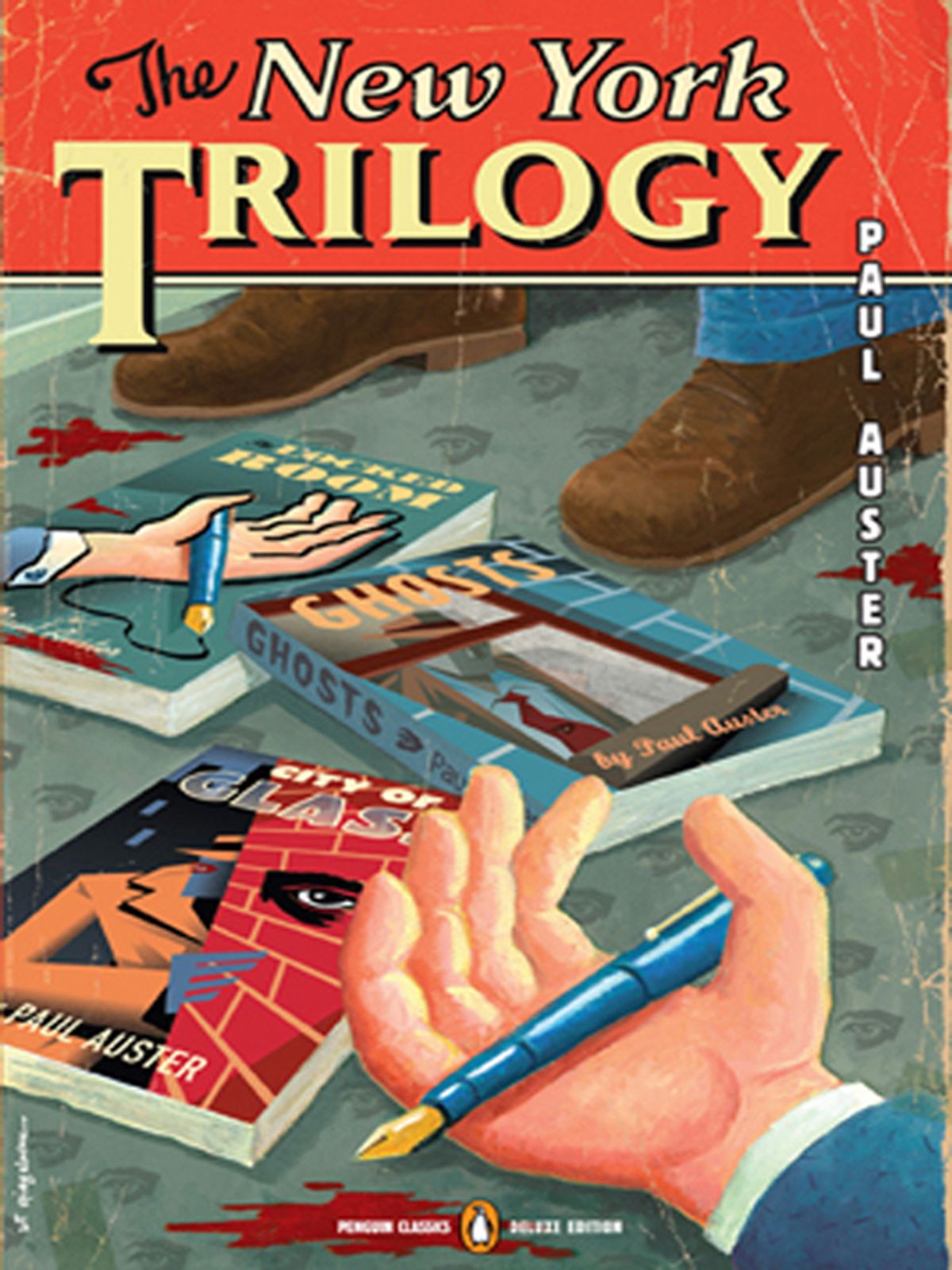
In his trilogy, Auster does not merely portray his unique literary style; rather, he presents this literature within a container seemingly inseparable from its contents: Brooklyn and New York. In the New York Trilogy (1985–۸۶), the central theme of all three novels—City of Glass (1985), Ghosts (1986), and The Locked Room (1986) —is identity, or more precisely, a lost identity and the struggle to reclaim it, which Auster seeks through the city itself. A form of social “unknown-ness,” to use a sociological term, must replace communal identity (the transition from Gemeinschaft to Gesellschaft in Tönnies’ terminology). The plays Auster performs among forms and characters (City of Glass), colors (Ghosts), and the stolen identity (The Locked Room) are, above all, an attempt to reconstruct New York as a spatiotemporal identity that must replace Auster himself, thus giving rise to an entity that might be called “New York/Auster” or “Auster/New York.” Thus, the unity of identity flows from the city or place to the novel’s character, which in turn shapes the author. This is exactly the reverse process of what one might call a conventional narrative in a typical story, where a defined identity emerges through its characters to the place and time created for their story.
Orhan Pamuk, the Turkish writer, shares not only a postmodern style and perspective with Paul Auster but, like him, is deeply influenced by a city that imparts identity to his work—beyond just the magical Istanbul. While Auster spent his youth in Paris, hoping perhaps to find European roots there much like Hemingway’s A Moveable Feast (1964), Pamuk spent several years in New York before ultimately returning to his hometown Istanbul. There, sometimes through historical lenses as in My Name Is Red (1998), sometimes autobiographically in Istanbul: Memories and the City (2003), or through fiction as in The Museum of Innocence (2008), Pamuk rediscovers and gives identity to himself through the city. Much like Auster, who repeatedly created New York’s identity alongside hundreds of other artists, Pamuk does the same for Istanbul: Istanbul is Pamuk, and Pamuk is Istanbul.
Unfortunately, I do not have the opportunity here to expand this discussion further, but these modern and postmodern examples can be paralleled with ancient instances of great cities, whether real or imaginary: from Plato’s Athens and Sparta to Thomas More’s Utopia (1516) and Campanella’s City of the Sun (1602); from Rossellini’s Rome, Open City (1945) and Fellini’s Roma (1972) to Kafka’s Prague in The Metamorphosis (1915) or Umberto Eco’s The Prague Cemetery (2010). In these works, the identity of the city and place is given life by a deeply compressed history that is realized within language, endowing the writer with vitality to weave space and time anew, creating an endless cycle of the transition of the human linguistic spirit into the spirit of things.
And since we are speaking of objects and cities, my remarks would be incomplete without mentioning Julien Gracq’s The Shape of a City (La Forme d’une Ville) (1985) about Nantes, France, and Pierre Sansot’s Poetics of a City (Poétique d’une ville) (1973) about Paris, which stand among the most beautiful and profound works that create a unique spirit of place and language, enabling the manifestation of what is called geopoetics.
Most of Iranian fictional works, especially those from the past two decades, lack a sense of place; or if a place is mentioned, it is merely a name upon which events occur. In reality, place does not possess an influential, interactive, or dynamic identity. To what extent do you consider this issue a factor in the weakness of contemporary fictional works?
The weakness of our relationship with space does not necessarily stem from linguistic or literary shortcomings. However, it is important to emphasize that when we speak of literature in central Iran and the Persian language (as opposed to ethnic literatures, which tell a completely different story), we mostly encounter a literature and language of silence, desert, dryness, and hardship; a literature of gaze, quietude, whisper, body, music, and ultimately poetry—whose endless and creative imagery can elevate the spirit and thought to infinite heights. Indeed, I have never read poetry as beautiful as that of Hafez and Rumi, whom I consider to be the great citadels of poetic thought worldwide. Yet, even here, we mostly wander in placelessness and timelessness rather than rooted in specific time and place. From this perspective, we can understand many features of our modern and postmodern novels, literature, and even other arts, which undoubtedly have been heavily influenced by a harsh nature where spatial and temporal stability often remained unattainable dreams due to natural, social, and political reasons. Consequently, places and times tended to retreat from external physical reality into the innermost layers of mind and subjectivity, with language becoming the shield against all hardships.
If we look at the origins of modern Iranian novel and storytelling—for example, in the works of Sadegh Hedayat—we find ambiguity more than a clear sense of “place”: a kind of resistance against locating both time and place, which is clearly observable in The Blind Owl (Bouf-e Kour) (1937), but also appears in his other stories. These narratives take place in Tehran, Shiraz, or other cities, yet lack precise imagery or concrete references that connect the setting meaningfully with the characters and other story elements. We see the same tendency in many other Iranian writers with very different styles, approaches, perspectives, and backgrounds—from Jalal Al-e Ahmad Setar, 1948 ; School Principal (Modir-e Madreseh), 1958) to Saedi Bayal mourners (Azadaran-e Bayal, 1964 ; Fear and trembling (Tars va Larz, 1968), from Mohammad Ali Jamalzadeh Once upon a time (Yeki Bud Yeki Nabud) Persian is a sugar (Farsi Shakar Ast 1921) to Simin Daneshvar, Souvashun, (1969). In all these works, there is a consistent avoidance of anchoring the narrative in time and place as central elements. Instead, the author’s mental subjectivity tends to abstract from the physical reality of the setting, aiming to reach a kind of universal spatiotemporal dimension. This creates very different literary styles but with a shared trait: an evasion or flight from specific time and place, even when the works are explicitly historical.
Here, we encounter a kind of spatial depiction and an effort to grant identity to characters and literary materialities through their integration with space/time. For example, in novels and stories characterized by local, rural, or ethnic features—from Sadegh Chubak (Tangsir, 1963) to Mahmoud Dowlatabadi (The Missing Piece of Soluch (Jay-e Khaliy-e Soluch), 1979 ; Kalidar, 1978–۸۳), and from Amin Faqiri (The Village of Sorrow (Dehkade-e Pormalal), 1963) to Ahmad Mahmoud (The Fig Tree of the Temples (Derakht Anjir-e Maabed), 1993) —we mostly face an evocation of space as an attempt to recover lost or deteriorating identities. To achieve this, writers employ literary, linguistic skills and sometimes exaggerated characterizations, so as to create a unique world of their own and simultaneously present a place as they wish it “to be,” rather than as it “is.” Of course, none of these observations are meant to carry critical or aesthetic judgment, as we do not assume the authority to pass literary critiques. My discussion is purely social, aiming to understand why a convergence at the literary crossroads—between writing, history, geography, and identity elements—rarely occurs. And when it does, it often takes place in exaggerated linguistic or cognitive forms, which unfortunately complicates establishing a connection between Iranian literature and non-Iranian mental worlds, often limiting it to exotic or stereotypical forms. This phenomenon is also observable, in different ways, in other artistic fields, particularly in the visual and plastic arts.
Why place in our literature does not become a character.
Place often cannot become a character for two reasons: First, the elements that form identities within place are limited and generally relate to phenomena that are non-geographical and even non-historical—for example, ethnicity or modes of livelihood (such as rural living, agriculture, local identity). These elements do not necessarily belong to “place” itself; although they are part of it, they have independent characteristics that also carry a form of placelessness. For instance, ethnicity tends to expand across space and time to assert its “authenticity,” and it requires linguistic skills, mythological frameworks, and imagination to establish a mental proof of itself.
All these factors can contribute to the absence of space as a materialized and materializing entity. In other words, although we have seas, rivers, forests, soil, sky, and countless constructed urban elements, when it comes to our novels, stories, and literature, there seems to be a tendency to overlook these elements, shrouding them in ambiguity. Instead, priority is often given to mental spaces, memories, distant myths, inner thoughts, expressions of emotions, or linguistic play, to such an extent that this results in a form of particularism and localism that becomes almost untranslatable—even within the relationships among internal cultures of our own country. This is aside from the broader question of how one might transition from one culture to another, which itself is an extensive topic. Localism creates a closed mindset that obstructs the possibility of cultural transfer. Of course, I do not believe this issue is unique to our literature ; we face similar challenges, and perhaps even more pronounced ones, in other artistic and scientific domains. Let me give an example from my own field—sociology and anthropology—where our greatest problem is local-mindedness without global perspectives. So much so that we have no hesitation in showcasing universal and historical theories completely disconnected from our own culture and era, often ritualistically flaunting them with a form of nouveau-riche display, simply to appear “global.” The more we do this, the more artificial our work becomes. This always reminds me of one of the final scenes in Visconti’s masterpiece film Death in Venice (1971), where the main character, who has heavily disguised his advanced age and decay, reveals to the audience a fragile face, melting and crumbling under the pressure of heat and humidity, exposing the worn and deteriorated features beneath the makeup.
Place plays a defining role as a character in the works of many great writers worldwide, sometimes impacting the reader even more than the story’s protagonists. To what extent does this role contribute to the overall value of a work, particularly in Dickens’s writings? Even in realist works, place is often largely a construct of the writer’s mind, shaped by the story’s atmosphere. How might this affect the reader’s perception?
It is a fact that Dickens should be seen as much a product and embodiment of 19th-century London as London itself is a product of Dickens. Before the Pickwick Papers (1837) and Oliver Twist (1838), London was merely a backdrop in English novels, but Dickens transformed London into a narrative character in its own right.
Exactly the same can be said about Victor Hugo and Émile Zola in the same century with Paris, or about Woody Allen and Paul Auster with late 20th-century New York. Here, we are not dealing with a linear relationship but a cyclical one. Auster or Allen are New York, and New York is them. This identity in these works reaches an astonishing degree that dissolves time and place within itself, creating a magical effect on the audience.
As I mentioned at the start of this discussion, I believe the best term coined for this phenomenon is “magical realism” — when temporal and spatial reality transcends the ordinary and becomes a magic that links the writer and reader in a wondrous, extraordinary relationship. Octavio Paz, in a text titled “Laughter and Atonement”, beautifully describes the moment at the start of the day when sunlight enters his study: the way sunlight combines with chairs, books, and small pre-Columbian sculpted heads to give birth to new beings that seem to emerge from the deepest depths of history, dying each night only to be reborn every morning in a space that is at once repetitive and ever new.
Many people think it’s possible to reconstruct 19th-century London, but the “place” in many of our classic literary works is often just a vague geographical whole—lacking specific, active features. Whereas in a narrative or dramatic work, a place or setting should have an active, dynamic quality. So, is the absence of a place with a clear identity in our literature a flaw?
Undoubtedly, it is. As I mentioned earlier, the London, Paris, Berlin, Rome, and New York we know today are shaped as much by the real actions and everyday experiences of their inhabitants as by the imaginary lives of characters in novels, films, radio dramas, and now the billions of electronic interactions happening constantly within and between these cities and their people. For many people around the world, cities like these have only been experienced through their representations—but can we say that this experience is any less deep or real than the daily, sensory experience of those who have lived or still live there? I don’t think so. Especially today, when representation has become the primary way we relate to the outside world, the value of these representations should never be underestimated.
It is said that literature of each era reflects the social conditions of that time. To what extent do the places created in these works play a role in expressing those conditions?
Indeed, literature carries the color and essence of its era, and more importantly, it serves as a crucial way to understand that period and society. Today, this perspective is increasingly emphasized by sociologists and anthropologists. In fact, recent research often uses literary materials as forms of representation of social reality. In recent years, we ourselves have been incorporating literature as a tool in urban studies and sociological research.
Of course, a challenge here—unlike in visual arts and somewhat similar to plastic arts—is that the representation of urban reality in our contemporary literature, especially novels, is quite weak. What we often see is far removed from reality and leans more toward the inner worlds and imaginations of the writers rather than social reality.
If I may speak somewhat reductively, while acknowledging exceptions, I would say our fiction and poetry tend to have more psychological frameworks than sociological ones. It seems there has been a kind of compulsion or necessity for distancing from the social sphere, pushing writers to retreat into their inner worlds.
It’s undeniable that non-democratic political systems over the past century have played a key role in this. However, this distancing shouldn’t necessarily be seen as purely negative, because the alternative could have been falling into a kind of “socialist realism,” which was quite prevalent in Iran during the 1940s and 1950s.
From an aesthetic and social perspective, this issue is complex: although socialist realist novels offer little insight into the societies they depict—serving mainly to understand the ideological systems that shape them—escaping external reality for whatever reason, and moving toward psychological literature, often closes the door to social studies through literature.
I believe a new generation of writers and poets might introduce literary modernity not through ideological influences on reality, but by establishing a modern relationship with it in their works. Unfortunately, some contemporary works show a kind of detachment or indifference toward reality, which is hard to understand and sometimes borders on snobbery or showiness—for example, in some experimental modernist practices or superficial mythologies seen in certain literary forms, or in literature that is more emotional and psychological than thoughtful and reflective.
The agency of place in a story is highly significant.
Place can be seen as a repository of memory: objects have the unique ability to transform a space into a place of memory. This idea is best expressed by Pierre Nora, a contemporary French historian, in his seminal work “Les Lieux de Mémoire” (۱۹۸۴-۱۹۹۲). Similarly, Pierre Sansot discusses the deep connection we can establish with objects, space, and place in his book “Ce qu’il reste” (۲۰۰۶). Perhaps one of the best works on this topic is Sansot’s “Poétique d’une ville” (Poetics of a City), which we mentioned earlier, where urban narratives are explored extensively, emphasizing how places carry layered meanings and memories that enrich storytelling.
If we look at place from this perspective, the nature of objects, space, and place undergoes a fundamental transformation for us. Places become embedded in emotional relationships, filled with memory and feeling. Place becomes a path to transition to the past and the future, a way to reconstruct the image of others, and of places and times different from our own.
For example, when Octavio Paz speaks of Pre-Columbian civilization’s objects, such emotion and excitement are evident in his writings that one is involuntarily drawn into the depths of ancient American history. When Paz discusses Aztec and Mayan sculptures, he reconstructs space, time, and in a sense, history through them.
In more contemporary examples, we can refer to the work of Nobel laureate in literature 2008, J.M.G. Le Clézio, who, for instance in “Mondo and Other Stories” (۱۹۷۸), presents a poetic relationship between objects and place, which despite its imaginary nature can be considered an example of reconstructing urban and non-urban spaces in contemporary literature.
Of course, Le Clézio’s work in Mondo leans toward a psychological, emotional, and mental conception of place rather than a real, physical one. From this perspective, it is important for us because it shows that place does not necessarily create a real relationship, yet it can be very impactful.
For another, more historical example, if we refer to German Expressionist literature and visual arts between the two world wars, we encounter artistic relationships that reconstruct space and place entirely through emotional frameworks and offer high analytical potential. However, here too, the possibilities mostly lie in psychological or at best social-psychological analyses rather than sociological ones. Nonetheless, this cyclical movement—from social conditions to literature and art and back—should never be overlooked, as it can always be valuable for the social analyst.
With this approach, we can even use the body of work by French or Latin American surrealists to understand the social situation between 1920 and 1960. However, the form and content of the analysis will change significantly. From this perspective, some sociologists believe such analysis should be left to semioticians and literary critics.
Meanwhile, others—especially philosophers who have never accepted confining themselves to a single category or discipline, like thinkers such as Foucault—argue that written material in all its forms can be a path to social-historical analysis, provided we do not start by separating psychological categories from social, philosophical, and ontological ones.
In any case, this is an open debate that I hope we can continue in the future.
This translated text is produced with the assistance of artificial intelligence and reviewed by author, is from an interview with Naser Fakouhi in Azma Magazine, Issue 110, May 2015. The original conversation in Persian is available at the link below:
