
Illness, Aging, and Death in Iranian Contemporary Society
By Nasser Fakouhi

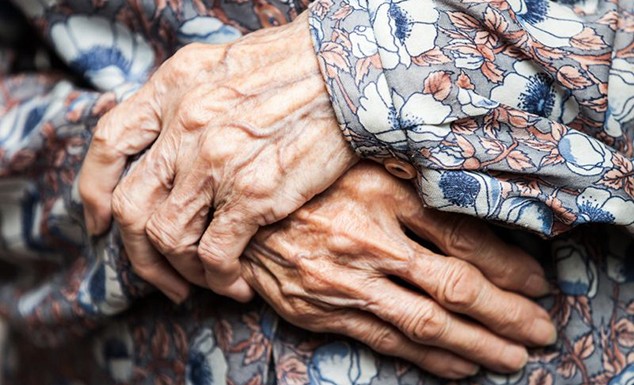
Some societies, during certain historical periods, are confronted with an intense experience of death. This experience, which is deeply unequal in its distribution across time and space, social groups, and within socio-cultural and political processes and mechanisms, can act as a “trauma” for these societies—conditioning part or all of the population and leaving lasting traces in both individual bodies and the social fabric. Over the past century, Iran has been one such society, having endured severe disruptions, including epidemic diseases, droughts, major natural disasters (especially earthquakes), the First and Second World Wars, the upheavals of the Islamic Revolution, the Iran-Iraq War, recent internal unrest, and finally, the COVID-19 pandemic. The events mentioned above represent only part of the long-term processes through which our society has been exposed to widespread death—whether ritualized, violent, or catastrophic. To these processes, we must also add the various deadly “points” or moments that have occurred over the past century. In the former case—extended waves of death—there was at least the possibility for reason and stability to provide a prolonged opportunity for justifying the experience of death. This, in turn, allowed another process, known as medicalization, to internalize death, suffering, and misfortune within rationalized frameworks of society (even if the wound itself remained present). In the second case—such as suicides, horrifying crimes, and all forms of death that appear to be exceptional (e.g., widespread self-immolations among women, infanticides, so-called honor killings, acid attacks, domestic violence, etc.)—these are in fact manifestations of alternative structures of death. In such instances, rationality must rely on concepts like “accident,” “exception,” “madness,” or “deviation” in order to construct a justification for these phenomena within what might be called the logical flow of a society’s life or, more fundamentally, its ontological legitimacy. This is because the assumption holds that if a society exists and has remained stable over time, beyond mere political power (such as the nation-state), it must have sustained a form of ontology among its people in a relatively shared time/space framework. Consequently, there must exist a set of common conceptual and mental structures shared across the society. The question, then, is whether over the past hundred years we have possessed such an ontology. If not, why? And how has this ontology evolved—fragmented into multiple ontologies—and transformed into the society we inhabit today? What role has the medicalization of society, in the sense developed within sociology and anthropology since the 1970s, played in this transformation? To answer these questions, we must also introduce another critical factor: the broader process of commodification and objectification of life itself, wherein life has increasingly come to be treated as an exchangeable commodity.
The Modern Subject and the Medicalization of the Body
We must necessarily begin our discussion from a universal perspective, because modernity—and the emergence, albeit incomplete, of the modern subject—is a Eurocentric phenomenon that, through colonialism and globalization, has become a global condition (Talal Asad, 1973). In the transition from antiquity to the classical and then modern eras, a fundamental shift occurs in the relationship of power.In antiquity, as in modern times, this relationship involved the domination of rulers over the bodies and lives of subordinates. However, whereas power in ancient times was exercised directly—through commands that sent the lower classes to war, where they died to protect the sovereign, or through taxation that starved them—in modernity, we are confronted with what Michel Foucault calls “biopower.” This form of power operates primarily through processes of regulation, exclusion, care, and punishment, by producing and enforcing norms that guide life and structure relationships among social actors. Here too, the body, the soul, space/place, movement, and their regulation, care, and transformation—as well as the ways they are combined—remain under the control of ruling powers. However, the major difference lies in the emergence of countless institutions of surveillance and punishment, along with normative mental structures. Institutions such as prisons, hospitals, psychiatric asylums, military barracks, schools, and universities—which simultaneously organize space, time, and the rhythm of spatio-temporal life—are deeply involved in shaping and disciplining the subject (Foucault, 1977). The modern subject, in fact, serves as a pretext to generate the illusion of freedom from former communal bonds—such as the family, tribe, or clan—while making obedience increasingly internalized and automatic. Thus, as in the past, the body still belongs to the holders of power. But now, that control is no longer necessarily exercised collectively or overtly; rather, it operates at the individual level through invisible structures of power (Le Breton, 1995).
Thus, the body—subjected to surveillance and discipline—internalizes obedience as a means of achieving order. But why does this process take place? Or in Foucauldian terms: how is power exercised? (Foucault, 1992). While Marxist thinkers like Henri Lefebvre answer this question primarily in terms of economic profit and capital accumulation (an argument we will address later), Foucault offers a more complex analysis. For him, power is exercised precisely because it can only reproduce itself through its application. In other words, the disciplined body produces power, and power, in turn, produces the disciplined body. This circular logic sustains itself through its own internal mechanisms and not through any external justification. Power, therefore, is not just a means to an end, but a self-generating force that shapes both subjects and the structures within which they exist. Stated differently, power must have a subject upon which it can be exercised in order to exist; if that subject disappears, power itself vanishes. Without students, there can be no teacher; without prison guards, there can be no prisoners, and so on. In this framework, the relation of power replaces the traditional notion of power as something held by individuals—rulers, kings, and so forth (Foucault, ibid). What changes in this equation is the realization that maintaining the power relation requires the continuous preservation of its ultimate object. In the discourse we are pursuing here, that ultimate object is the body and its various internal and external relations—as well as its social position. It includes the bodies of men, women, children, youth, workers; strong or weak individuals; beautiful or unattractive bodies (according to norms shaped and internalized by biopolitical regimes), and more. The body thus becomes both the target and the medium of power—regulated, categorized, and normalized within systems that depend on its continued presence and availability for discipline and control. Put simply, for power to exist, it must have a subject upon which it can be exercised; if that subject disappears, power itself vanishes. For example, without students, there would be no teachers, and conversely, without prison guards, there would be no prisoners. Here, the relation of power replaces power as a personal attribute of rulers or kings (Foucault: ibid), and the shifting equation is that maintaining the power relation requires preserving the ultimate subject of power. In the discourse we follow, this ultimate subject is the body and its various internal and external relations, as well as its position: bodies of men, women, children, youth, workers, the healthy or the weak, the strong or the frail, the beautiful or the ugly (according to the definition that biopower has created and internalized), and so on. The body is valuable, and life itself is precious—not as an inherent metaphysical essence, but as a factor for maintaining power relations. This is Foucault’s argument. However, before we address medicalization, we must also consider Lefebvre’s reasoning, so that we can later understand how, in late modernity, for reasons we will outline, these two concepts align and link medicalization with commodification, creating a new kind of relationship with space, time, rhythm, and the conditions of life and death.
Lefebvre, in his discussion of the ideology of everyday life (Lefebvre, 1981), which he considers the core of capitalism, sees the control of the body and its spatial-temporal relations in the city as the most crucial issue for generating profit and sustaining capitalism. However, from his perspective, capitalism is a “self-destructive” or “self-consuming” system—like a cannibal that eventually, finding nothing left, consumes its own limbs and thus leads to its own demise. Lefebvre argues that in the modern era—contrasted with what he calls the agricultural and then industrial ages, and distinguishing urban revolution from industrialization—an increasing control over urban space, especially through the regulated movement of human bodies within predetermined temporal corridors and rhythms, which he broadly terms “everyday life,” is a fundamental condition for capitalism’s survival. A simple cyclical movement illustrates this: what in France has become a popular phrase—“metro, work, sleep”—is a vicious cycle. People work to afford a home where they can renew their labor power, only to work again. The metro acts as the link connecting these two vital factors through a tunnel that severs direct connection with the city, effectively creating an underground city. As Marc Augé terms it, this functions as a “non-place” that alienates people, turning them into mere cogs in the reproduction of capitalism.
From a Commercial World to the Medicalization of the World
If we shift our perspective from the Eurocentric mercantilist (commercial), colonial, and industrial centers—whose values and ontologies they imposed on the world over several centuries (from the 17th to the 20th century)—to the viewpoint of a country like Iran, where such perspectives have existed for just over a hundred years, we must address new issues. Among the most important is the transfer of the ideology that demonizes death and aging. How this process unfolded in Europe and the central world is another discussion beyond our scope here, but we know it was gradual. Over centuries, thinking about disease, aging, and death—as the inevitable fate of all humans ordained by God—has increasingly shifted since the 17th century to be seen as avoidable conditions, grounded in a scientistic ideology that does not necessarily contradict religious discourse. In fact, it is primarily the Church, especially through Thomistic ideology, that aligns itself with demonizing these phenomena: as madness, physical illnesses, disabilities, and later even natural disasters, calamities, and ultimately death are increasingly regarded as “evil” or “demonic,” the fight against, rejection of, treatment of, or at least postponement of these conditions becomes framed in “divine” terms. Seeking forgiveness from God to avert the calamity, the illness afflicting someone, or aging and death, increasingly turns into a plea and supplication for divine help to confront these phenomena.
We also see the reflection of this in medicine. Medicine and its discourse increasingly position themselves within a “savior” ideology, sacralizing their role and legitimizing practices that traditionally were considered the domain of God alone. It is important to note that different cultures have varied greatly in this regard. For example, although human dissection existed in Ancient Greece from the 3rd century BCE and has a long history in India, in the Islamic world it has been generally unpopular—not only among authorities but also among the people—even up to the present day. Meanwhile, in Europe, dissection existed since the Middle Ages but was often viewed negatively, and when permitted, it was very limited. It was only from the beginning of the Renaissance—when European artists like Leonardo da Vinci and Michelangelo started producing anatomical drawings—that dissection began to increase significantly.
The peak expansion of this movement can be seen in the laws passed in the mid-19th century following murders committed to obtain and sell corpses, which legalized dissection. This occurred simultaneously with the European industrial, political, and intellectual revolutions, gradually embedding the medicalization of society and the sacralization of healing in public consciousness. As Foucault demonstrates in The Birth of the Clinic (Foucault, 1975), this process also legitimized the medical violence inflicted on patients. This legitimacy extended from confinement (mental asylums, hospitals, compulsory quarantine)—equivalent to imprisonment—to the complete control over the body in terms of nutrition and various “therapeutic” behaviors, some of which bordered on or were actual forms of torture (such as shock therapy on psychiatric patients). Therefore, the roots of the medicalization of society lie in the sacralization of medicine and the elevation of the physician’s status to that of a clergy member, sometimes even above the clergy. For example, doctors’ permission to observe, approach, and touch the body steadily increased, and with the widespread acceptance of surgery, they were effectively granted a right that was previously reserved for rulers and religious authorities—the right over life and death (Ivan Illich, 1975).
The Authority of Medical Discourse
The legitimization of medical discourse is directly connected to the process of democratization in human societies, the expansion of literacy, and the growth of human knowledge (encyclopedic knowledge) as opposed to ecclesiastical knowledge (the Bible and pre-Christian texts approved by the Church, including Aristotelian texts). Although this process occurs slowly, it follows a continuous trajectory. Initial resistance is strong but gradually diminishes.
Our own country’s experience since the early 20th century reflects intense public resistance against processes such as vaccination (Kotobi, 2000), surgeries, and even medications, with people preferring reliance on religious authorities, rituals, and sacred imams. However, the attitude of religious authorities themselves toward the importance of medical knowledge—which has historical roots in Islam—has led medical discourse to effectively prevail over anti-scientific and superstitious views. This dynamic is evident even in recent examples, such as Iranian officials’ approach toward religious leaders during the COVID-19 pandemic, including decisions like the closure of sacred sites. Therefore, the alliance between religion and the emerging power of doctors—who themselves represent the rising authority of specialists and technologists—especially from the 19th century and more intensively in recent decades of the 20th century, is one of the two main reasons that can explain the medicalization of society and the social experience of death.
As for why religion itself has stepped into this path, at least a few clear factors can be identified: first, the Thomistic tendency in Christianity—which also exists as a persistent trend in Islam—holds that religious beliefs and human reason are not opposed to human knowledge; rather, human knowledge is considered part of God’s will, meant to emerge, develop, and be acknowledged. The second reason is religion’s adaptation to the broader process of democratization in politics and culture within human societies—a process we have observed since the 1970s in the Catholic Church and more recently, though at a slower pace, within Islam. Thus, religion’s appeal lies in its ability to align itself with the modern world, particularly its technological aspects, ultimately allowing religious discourse to adapt and integrate into medical discourse.
The dialectic between religion (ethics) and knowledge in medicine fundamentally alters the approach to biological phenomena such as disease, aging, and death. Submission to traditional approaches is being replaced by a fierce struggle, which we witness today, where in some diseases and cases, the body and patient become the primary victims of the conflict that medical discourse initiates with nature. Consequently, two phenomena have emerged in the medicalization discourse of society. The first, which has gained the broadest consensus and is currently endorsed by most medical and social specialists, is the concept of “death-accompaniment medicine.” This approach strives to accompany terminally ill patients, enabling them to leave the world with minimal suffering and in peace, without undergoing harsh interventions. Within this trend, there are also forms of medicine that oppose aggressive methods such as surgery and painful diagnostic tests with very low efficacy, or the use of expensive but minimally effective drugs with uncertain side effects, as well as various alternative medical practices. Sociologists and anthropologists often support these approaches, acknowledging that a shift in the perspective on disease, aging, and death is largely inevitable. However, they argue that these processes must be culturally and technologically managed to prevent patients from being reduced to mere sources of profit.
In contrast to these approaches, there are others closely linked to neoliberal medicine and the commodification of the body. The avoidance of death at any cost, the use of harsh and painful methods to keep patients alive—especially surgeries and the use of life-sustaining artificial devices—often subject the patient and their families to severe suffering and pressure. The term “therapeutic obstinacy” has in recent years been adopted by proponents of euthanasia (assisted dying for terminally ill patients experiencing severe pain). Although euthanasia has not become a unilateral practice anywhere due to various legal, ethical, religious, and other reasons, most medical and social experts oppose such unilateral decisions and advocate for thorough, case-by-case evaluations, often under judicial supervision.
Commodification of the Body and Death
Here, we reach the second fundamental factor in the changing approach to disease, aging, and death, which began around the mid-20th century with the intensification of neoliberal capitalism. As this form of capitalism strengthened relative to social capitalism, these approaches also gained prominence. In social capitalism, the focus is on increasing preventive measures rather than treatment, and within treatment, prioritizing public health programs and general care over specific cases. This principle extends to the pharmaceutical and research systems as well, meaning major investments and planning are directed toward diseases that threaten the majority of the population and can be defined as outside the “natural” cycle in relation to nature—such as epidemics, illnesses, and problems affecting children and youth. In pharmaceuticals, this group of drugs primarily targets these kinds of diseases—that is, illnesses threatening large segments of society, particularly marginalized populations (e.g., infectious diseases in tropical regions). Conversely, the opposing trend has pushed medicalization toward commodification, where the main target population—wealthy “customers” and the privileged minority—has driven the entire medical system toward a set of practices primarily aimed at prolonging life in the very elderly, cosmetic surgeries, pharmaceutical products in this direction, and treating aging itself as a disease. It is clear that as investments shift toward pharmaceutical laboratories, hospitals, and dental clinics that deliberately prioritize cosmetic “treatments,” the medicalization of society reaches its worst state. The majority of the population is deprived of care while a wealthy minority benefits. This divide becomes particularly evident during epidemics like the current COVID-19 crisis, leading to a deadlock situation such as the one we face today.
A similar situation is encountered in death, where all the factors involved in the medicalization and commodification of society—which have shaped this medicalization by transforming mental structures toward turning the body into a commodity, a source of profit, and hospitals from refuges for the desperate into profit-driven, sometimes ruthless enterprises—have likewise occurred in the realm of death. Ritually, especially within the Islamic tradition, death is considered beyond human will and regarded as a precisely transcendental right. As the well-known phrase “death is a right” is widely acknowledged. Despite this, in both classical and modern Islam, the antagonism toward religion seen particularly in classical Christianity has not been observed. However, Islam has always had two opposing factions regarding science: those who believe science conflicts with faith, and those who view science and knowledge as identical with divine knowledge and the will of God. The latter group has generally held greater influence on average. This did not change after the establishment of the Islamic Republic in Iran, as scientific institutions in certain fields—such as fertility studies—have advanced far beyond what is tolerated, for example, by the Catholic Church. The same is evident in the approach to death, where the meaning of “death is a right” in Islam primarily does not imply resignation to pain (medical intervention), but rather acceptance of death as an integral part of life. The concept of “God’s will” in a religious reading means refraining from interfering with knowledge beyond human reason. Even in a secular interpretation, it signifies non-interference with natural processes beyond a certain boundary. This aligns with the earlier discussion about the tension between therapeutic obstinacy and palliative care.
In death, and specifically in Islam, the fundamental principle is acceptance of death and respect for the deceased body, which has led to specific rituals that—from the time of death until burial—are well known and need no detailed explanation. What is notable in the strictly religious aspect of these rituals, as opposed to their customary, cultural, political, or ideological dimensions, is their simplicity and avoidance of extravagance. Burial and shrouding ceremonies are conducted as quickly as possible, involving only washing the body, wrapping it in a simple shroud, and burying it in this manner—often without a coffin or elaborate tombstones. More detailed explanations can be provided regarding certain gravesites, but one cannot equate ordinary graves with shrines, imamzadehs, or other sacred sites. Rather, what we encounter in these cases is a “ritual domain” rather than the grave itself, which by principle should be simple and conducted uniformly for all Muslims. Therefore, simplicity has been the foundational principle. However, as noted earlier, both in Islam and Christianity—religions within the Abrahamic tradition with which we can compare ourselves—pressure, elitism, and politicization have caused death rituals to become increasingly extravagant. Examples such as graves costing hundreds of millions and highly expensive ceremonies are well known. These phenomena appear to reflect the commodification of death itself, which directly undermines people’s beliefs: when humans are unequal neither in life nor in death, it is unrealistic to expect temptations, disbelief, and doubts about faith to diminish. In a society like ours, which urgently needs religion and religious beliefs as a cohesive force, this situation risks creating dangerous and vicious cycles. Joseph Stiglitz’s analysis in The Price of Inequality eloquently addresses this issue.
However, we observe that death is becoming increasingly commodified and entangled in a vicious cycle with ideological influences. From the deaths of celebrities to various public figures, there is a growing tendency to hold more “grandiose” ceremonies. While this grandeur itself is not inherently problematic—as we also see worldwide that such ceremonies can be conducted calmly and without political, cultural, or promotional exploitation—it is particularly crucial to de-commodify death and restore authentic medical practices. This should be a top priority in cultural harm reduction programs within Iranian society. Otherwise, the neoliberal trends we witness will advance to the point where even managing a phenomenon like death—such as establishing proper cemeteries—will become unmanageable at the urban level.
Conclusion
Medicalization is the ultimate and late outcome in modernity of a very ancient process whose roots trace back to the dawn of civilization and even earlier. This process reflects humanity’s reluctance to accept the biological conditions inherently tied to human existence—such as disease, aging, and death—despite advancing in the process of “becoming human.” Both technological-instrumental dimensions and linguistic tools contribute: the former by enabling improved living conditions and the latter by fostering mentalities of immortality, allowing humans to extend their lifespan far beyond the natural limits of their species (nearly doubled by the late 20th century). This trend may continue, but it is a double-edged sword. The same nature that has set defined limits on all species regarding lifespan, reproductive capacity, and resource use may impose various constraints or even partially or wholly eliminate or reverse human progress in evolutionary processes. The medicalization of human societies, which emerged after the Industrial Revolution and, like the commodification of aging and disease, harbors an insatiable thirst to infinitely extend human lifespan while refusing to accept unavoidable biological realities such as illness, aging, and death, has been a source of much violence against nature and between humans over the past two centuries. If this trend does not change—especially if we fail to prevent the extension of this savage capitalism into human life, turning their bodies and even their lifeless remains into commodities—it will inevitably leave us with only two negative and dangerous paths: on one hand, the transcendence of humanity beyond itself, i.e., the dehumanization of humans (transhumanism), and on the other, species extinction or severe decline. Both paths entail enormous costs that severely harm both humans and nature. More importantly, neither path is inevitable or necessary. It is possible to move toward a balance in which increasing numbers of people can live better lives and experience greater happiness—rather than losing their humanity under the supervision and punishment described by Foucault, or living under the pressures of a repressive society and an oppressive routine, or ultimately disappearing altogether.
References
Asad, T. (Ed.). (1973). Anthropology & the Colonial Encounter. Ithaca Press.
Eco, U. (2004). History of beauty. New York: Rizzoli.
Eco, U. (2007). On ugliness (6th ed.). New York: Rizzoli.
Fakouhi, N. (2020). Deaths and Memories [مرگها و یادها]. Anthropology Publishing, Tehran.
Foucault, M. (1963). Naissance de la clinique: Une archéologie du regard médical. Paris: Presses Universitaires de France.
Foucault, M. (1975). Surveiller et punir. Paris: Gallimard.
Foucault, M. (1984/1992). Le pouvoir, comment s’exerce-t-elle? In D. Colas (Ed.), La Pensée politique (pp. 754–۷۶۴). Paris: Larousse.
Gorastan, Shahr va Hayat-Shahri [Cemetery, City, and Urban Life]. (2009). Andisheh Iran-Shahr Quarterly, 4(13).
Illich, I. (1975). Medical Nemesis: The Expropriation of Health. London: Calder & Boyars.
Kotobi, L. D. (2000). De quelques réflexions sur l’humanitaire dans le champ sanitaire en Iran islamique. CEMOTI, Cahiers d’Études sur la Méditerranée Orientale et le monde Turco-Iranien, 29, 89–۱۰۲.
Le Breton, D. (2008). Anthropologie du corps et modernité. PUF, coll. «Quadrige Essais Débats».
Lefebvre, H. (1947, 1961, 1981). Critique de la vie quotidienne. Paris: Grasset et l’Arche.
Stiglitz, J. (2012). The Price of Inequality: How Today’s Divided Society Endangers Our Future. New York: W.W. Norton & Co.
This text is a translation assisted by artificial intelligence of an article written by Nasser Fakouhi in 2021. The original source can be found on Nasser Fakouhi’s official website at:
