
A Capital Called Tehran /A Conversation with Nasser Fakouhi
Maryam Peyman

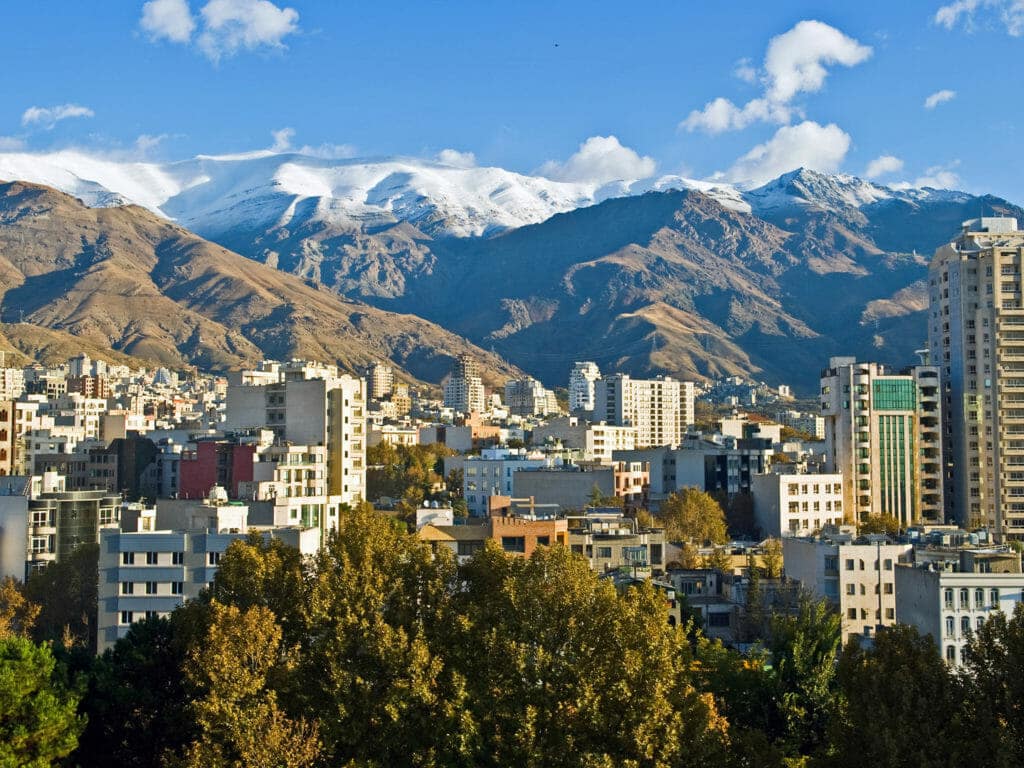
• What characteristics must a city possess to become a capital? Did Tehran have these characteristics when it was first declared the capital, or did it acquire them over time? Is Tehran a “capital” in all dimensions?
– The word capital in Persian does not share the same etymological roots as its equivalents in European languages. This linguistic difference reflects the differing historical and cultural concepts of the “city” in two major civilizational spheres: the Eastern Asian-Middle Eastern region represented by Iran—particularly from the Achaemenid period—and the Western sphere symbolized by the “Golden Age” of Athens in Greece. Of course, I will also briefly refer to earlier eras and other regions, but the core of my discussion focuses on Europe, which from the nineteenth century onward, came to shape the structure of the modern world. Prior to the classical civilizations of Greece and ancient Iran—roughly two and a half millennia ago—and even afterward, outside this central region, the type of city that would later be referred to as a “capital” generally appeared in the form of city-states. These were urban centers that served as the seat of a ruling authority along with its immediate affiliates and servants. Depending on the case, they often controlled surrounding rural areas (sources of agricultural wealth) and sometimes smaller neighboring cities. When the sphere of influence of such a city expanded, it would be referred to as an empire—for example, the ancient empires of China or India (dating back three to five thousand years), the Mesopotamian empires (five to six thousand years ago), or the Maya and Inca empires in Central and South America (around the first millennium CE). These capitals were the centers of life for a small elite within a given sociopolitical and cultural sphere—those who held power and where agricultural and artisanal wealth was concentrated. Alongside these capitals, there were also other forms of non-urban political centralization—such as among nomadic warrior societies like the Mongols in Asia or the Germanic tribes in Europe. These groups did not follow an urban logic, and the structures of power, social organization, politics, and culture among them were fundamentally different. Traces of these forms of social relations can still be observed today in the lifestyles of pastoral nomadic communities.
However, setting aside the vast topic of ancient civilizations and capitals, we can observe that in the central region—from present-day Western Europe to the borders of India and China—there have consistently existed, over the past three millennia, two opposing political systems, often in conflict with one another. Prior to the rise of Islam and the Christianization of Rome, these were primarily the powers of Iran and Greece, and later Iran and Rome. Geographically, one power extended from what is now Iran and Central Asia to Anatolia (modern-day Turkey), while the other stretched from central Anatolia to Western Europe. This geopolitical divide later came to include the northern and southern Mediterranean: the northern part generally under Western, Christian influence, and the southern part under Eastern, Islamic control.Within this overarching structure, countless political powers and diverse cities rose and fell, and territorial boundaries frequently shifted through complex patterns of war and peace. Nonetheless, the enduring conceptual dichotomy of “East” and “West”—which began to take shape during the colonial era—has its roots in this historical context.
But the two roots—from Iran with the word pāytakht and from Greco-Roman civilization with capitalis—while semantically related, also represent contrasting perspectives. The Persian word pāytakht literally means “the foot of the throne,” indicating the fundamentally political nature of the Iranian city, a tradition stretching back thousands of years. In this sense, the capital was the place chosen by the king for his residence. Except for the Achaemenid period—during which the empire had a distinctive system of political organization and therefore maintained multiple capitals—throughout Iranian history, the capital was typically wherever the king chose to reside most frequently. Of course, such a decision was not purely based on personal preference. In many cases, military considerations played a role (understandable given that ancient Persian kings came from the warrior caste and had strong military knowledge, as did their advisors later on), as well as economic factors. However, these choices could also be shaped by individual tastes or specific historical events. Over the centuries, Iran has had numerous capitals.
On the other side of this semantic landscape, we find the Greek and Roman traditions, and the word capitalis, derived from caput, meaning “head.” This reflects a different conceptualization of power: the city designated as capital was seen as the “head” of the body politic—home to the brain, the decision-making center, symbolizing both vitality and the authority over life and death (e.g., decapitation as execution), and concentrating sovereign power.However, in the Greco-Roman system, the city was more often the outcome of a process of union among tribes—a tradition that began in ancient Greece and continued in Rome. Over time, especially in Rome, this developed into imperial structures. In the Western tradition, therefore, the choice of a capital was less a matter of personal will, even if guided by consultation, and more of a collective or contractual decision.It is also important to note that in Greece, prior to Alexander the Great (4th century BCE), and in Rome before it evolved into an empire, the model largely remained that of the ancient city-state (polis). It was only after Rome’s expansion that the city fully embodied the modern notion of a capital—concentrating political power and wealth.
It is approximately over the past two centuries that the modern concept of a “capital” has truly emerged. Interestingly, the designation of Tehran as Iran’s capital by Agha Mohammad Khan Qajar in 1786 occurred just three years before Paris was affirmed as the capital of the French Revolution in 1789. This historical parallel is striking.Over the past two to three centuries—or, if we adopt the longue durée perspective of the Annales School and Fernand Braudel, over the past five centuries—we witness the rise of capitals and major urban centers as hubs of commerce, politics, and society. These developments mark a significant transformation in the nature of cities and the political logic of centralization.Regarding the second part of your question—whether Tehran possessed the characteristics of a modern capital at the time of its designation—the answer requires a more detailed exploration, which I will address through your subsequent questions about the city’s transformation.However, concerning whether Tehran met the criteria for becoming a capital at the time of its selection, it is important to note that there were no fixed or formal criteria for “capital-hood” in that period. Perhaps the most decisive factor was military strategy. Tehran, originally a village near the city of Rey—an earlier capital of Iran—began to attract population after Rey was destroyed during the Mongol invasions. Prior to that, Tehran had been a rural settlement located between Rey and the Alborz foothills, populated mainly by rebellious farmers. Yet it possessed a long historical legacy, with recent archaeological findings in the Qeytarieh hills dating human activity in the area back five to six thousand years.
During the reigns of several Safavid kings before Agha Mohammad Khan, Tehran had already been somewhat militarily strengthened due to political reasons and its proximity to Qazvin. After being declared the capital, this process intensified and continued. However, as I mentioned earlier, Tehran’s selection as the capital was more a matter of the king’s personal judgment than due to specific qualities or conditions of the city itself. This explains the large number of capitals Iran has had throughout history. In contrast, European capitals generally corresponded with a unified culture, language, and political-economic domain.Interested readers can find more detailed historical information in the works of Dr. Naser Takmil Homayoun, published by the Office of Cultural Research, both in comprehensive volumes and a shorter book. Another important reference is the work of Shahryar Adel and Bernard Hourcade, written on the occasion of the bicentennial of Tehran becoming the capital (1992).
• What shortcomings does Tehran have as a capital compared to other Middle Eastern capitals? Which capitals of other countries is it comparable to today?
The Middle East you are referring to is a region that, over several stages in the past half-century, has largely become a ruin. Some countries have been literally devastated (Afghanistan, Iraq, Syria), others are trapped under highly dictatorial and corrupt regimes (Turkey, the Caucasus countries, and the Gulf states), while some remain under intense international pressure and have yet to fully benefit from major efforts to improve their situation due to previous coups and ongoing interventions (Iran). Therefore, we are not dealing with a conventional region; the least we can say is that it is “crisis-ridden” and “highly tense.”The main engines driving these tensions and crises for over half a century have been, on one hand, the presence of vast strategic energy resources, and on the other, the existence of the apartheid state of Israel in this region, followed by intense militarization and overwhelming interference by major powers. At the time of speaking, the United States and Russia, two major powers, are destroying the last remnants of one of the countries in this region, namely Syria.
What really remains of Damascus, Baghdad, Herat, Kabul, and Beirut? I mention these points to argue that we should not base the construction of our country, capital, and cities solely on the Middle Eastern region. I don’t mean we should forget where we are or ignore its problems and limitations, but rather that we should consider the best global models—not those of a region that is entirely crisis-ridden, tense, and in ruins.
If we base our comparison of Tehran solely on other capitals in the region, we cannot say it is in a worse situation. However, our vision must be set according to our own potential. Of course, we cannot expect Tehran to become a city like Paris or London in ten or twenty years, but our model and goal should not be the ruins left by the Middle East.
Similarly, our aim should not be to turn Tehran into cities like the capitals of the Caucasus or Gulf countries, which in the former case are mostly gambling hubs, money laundering centers, and corruption hotbeds, and in the latter are commercial and major trading centers without any real social fabric.That said, perhaps better examples within the Middle East exist, such as Ankara and Alexandria.
If we look beyond the regional level, we find many examples with far better conditions than us, even though they don’t necessarily have greater resources—for instance, some Eastern European capitals like Prague, which have been very successful, or even some major cities in India.Overall, Tehran has its own characteristics, but it is increasingly resembling the capitals of the Gulf countries. This trend results from giving free rein to land speculators and adopting neo-liberal policies in urban management—something we must strongly avoid. Otherwise, we will face not only urban issues like pollution, soaring housing costs, and chaotic spaces but also the serious risk of urban unrest.
The reasons are numerous and interconnected. In my view, the turning point began in the 1960s (1340s in the Iranian calendar) when oil revenues were injected into Iran’s economy without proper planning, driven solely by political goals and quick financial fixes. From that time, the commodification of urban space in Tehran started, and speculation became a chronic disease that even the Revolution couldn’t cure.During the 1980s (the 1360s), due to the Iran-Iraq war and the wartime economy, this trend slowed somewhat, but it came back in full force from the 1990s (1370s) onward. With the liberalization and then neo-liberalization of Iran’s economy over the past 20 years, most urban systems have been damaged. Worse yet, this model has spread to other large Iranian cities, with Tehran becoming their ideal to emulate.A large part of Tehran aging infrastructure poses a great threat, fueling more land and space speculation. However, this also presents an opportunity: with radical spatial management policies, we could steer the city in a new direction. Some urban planners, sociologists, and anthropologists believe it’s too late to fix things. But based on historical experience and what I’ve witnessed in 20th-century cities that faced far worse situations than ours, I believe solutions always exist — provided there is political will, public commitment, awareness, ethical standards, and a strong sense of citizenship in society.
How has Tehran evolved over history as a city? Has it undergone all the necessary stages and dimensions of urbanization in order?
In my view, the history of Tehran from the late 18th century to the mid-20th century — approximately from the 1200s to 1350s in the Iranian calendar — differs significantly from what happened afterward. The first phase mainly falls within the domain of historians of Tehran and does not necessarily relate directly to the second phase. Not that there is no connection at all — clearly, that earlier history has had some impact. However, the reality is that the large-scale injection of oil revenues into Iran’s economy from the 1960s (1340s) onward fundamentally altered our relationship with urban space and the city itself, a transformation that continues to this day. Therefore, our studies on Tehran evolution and our perspectives on addressing its challenges must focus on this half-century. This historical trajectory can be summarized in one sentence: the gradual, accelerating, and ultimately complete commodification of space, accompanied by the adoption of neo-liberal policies turning the city into a vast market of land, space, time, consumer goods — and transforming citizens into consumers of these commodities, space, and time.
This, of course, has happened in many countries around the world. However, depending on how much democratic structures had developed in each of these countries, we observe significant differences in their outcomes. For example, today the situation in Northern Europe is much better than in Southern Europe; continental Europe fares better than Britain; Western Europe is better off than Eastern Europe; and Europe as a whole is generally in a better position than North America (except Canada). Among developing countries, conditions also vary. Those Asian countries that have relatively succeeded in overcoming corruption, authoritarianism, tribalism, and populism — such as Malaysia, Singapore, and South Korea — enjoy better conditions today. Conversely, those that have not fully succeeded in these areas tend to have poorer urban systems.
Returning to Tehran, we can say that at the beginning of the 1960s (early 1340s in the Iranian calendar), the city was in a relatively favorable position. There was still the possibility that urban policies could reach an appropriate point. Iran was in the process of implementing decentralization programs, controlling and managing urban development, and preventing land speculation. At the same time, efforts to increase freedoms had begun. However, from the second half of that decade, especially towards its end, the Pahlavi regime increasingly moved towards secularizing the environment, entrusting all affairs to SAVAK, and indulging in megalomania, nationalism, and illusions of cultural and political homogenization (for example, through the Rastakhiz Party). This process destroyed both the national bourgeoisie and the emerging middle social groups, pushing society toward a major tension that left no alternative but an anti-authoritarian revolution.
Following the revolution, the pressures from global powers to protect their interests against Iran began immediately and continue to this day. During this period, instead of active community-centered policies, the country moved towards neo-liberalism, promoted by a group of enthusiasts who were often inexperienced and unfamiliar with Western contexts. The result is that today we are caught in a state of neo-liberalism within the acute conditions of the Middle East, in a society that is very young, highly demanding, yet inexperienced, and often acts more emotionally than rationally—precisely when rationality is needed more than ever, rather than powerful but sometimes sincere passions.
What should a modern city be like? What are its characteristics? How do its citizens live?
The experience of the twentieth century and the first two decades of the twenty-first century shows that the best cities in the world are those that prioritize sustainable development rather than the sheer intensity of growth. Today, we have very precise and objective indicators to measure success in urban management, which relate to citizens’ satisfaction with life in the city, their sense of belonging, their commitment to staying and continuing their lives there, and more. These indicators are fully measurable, internationally recognized, and endorsed by organizations such as the United Nations; they are not ideological matters subject to debate. Among these indicators, the UN Human Development Index consistently demonstrates that cities implementing citizen-centered and neighborhood-centered policies, social support for minorities and vulnerable groups, and efforts to create social balance—while preventing the commodification of urban space and its components such as housing, transportation, and urban time—host the happiest populations in the world. Such cities are mainly found in Scandinavian countries and Canada.
In contrast, cities governed by elitist policies that continuously foster competition for wealth and fame, commodification of space, time, and their other products—following the prescriptions of liberal and then neo-liberal economics—and cities dominated by corruption, authoritarianism, tribalism, and populism, have become home to the most unfortunate populations in the world. Within the developed world, this is most evident in the United States, and among underdeveloped regions, in African countries and some poor South American nations. Therefore, we must examine where our policies have leaned more towards the first model and where towards the second. The reality is that in the years following the revolution, we have implemented policies that mix both tendencies; however, the balance has clearly tilted in favor of the second group—that is, neo-liberal policies—whose consequences we must endure today.
I mentioned that we should distance ourselves from historical comparisons, as they form a deceptive trap that leads us entirely astray. Imagine if the municipality of Athens today tried to address its problems based on the conditions of Athens two thousand, one thousand, or even a hundred years ago. This would be entirely irrelevant both for them and for us. I believe historical studies are immensely valuable and fruitful, offering many lessons, much like the study of architectural or artistic history. However, these lessons should not serve as direct models to imitate. We must study and understand the past, and through our own innovations, derive practical solutions applicable to contemporary conditions defined within late and advanced modernity. Otherwise, like antiquarians, we first create idealized historical models for ourselves and then, lamenting them and fostering illusions for ourselves and others, we may push our situation toward major and destructive tensions. Just imagine the potential Germany had for growth and development in the late 19th century, and how, by succumbing to the temptations of historical ghosts and searching for an imagined past grandeur, it dragged itself into fascism and the brink of complete destruction. It took more than half a century to recover from the devastation, yet even after more than seventy years since the end of the war, it has not fully regained its brilliant position in scientific, literary, and artistic modernity. History should serve as a lesson for us, but not to the extent of mechanical imitation.
How should this city be managed in the future? Which existing capital city does Tehran’s future resemble?
I believe I have addressed this question in previous responses, but I will summarize more precisely here. First and foremost, we must adopt community-centered, people-centered policies, emphasizing social economy, broad participation, and neighborhood-based approaches. Authority should be increasingly delegated to non-profit associations. Strict laws must be enforced to prevent the commodification of urban space and time. We need to strengthen citizenship, civil, and urban freedoms while intensifying our fight against corruption, authoritarianism, and all forms of discrimination. Otherwise, we must be prepared for increasingly anomic and dangerous conditions, which in this region will inevitably be accompanied by external threats and risks.
Is it possible to relocate the capital or redistribute Tehran functions to other cities? If so, will Tehran problems end?
Relocating the capital is not a serious option; it reflects an outdated and impractical way of thinking. Today, all modern urban development plans emphasize “decentralization,” not capital relocation. The point is that if we recreate Tehran current conditions in Isfahan, Shiraz, or anywhere else, the same problems will arise. What we must do is break away from the flawed logic that has governed the creation of this situation. Decentralization in Iran began in the 1960s but was gradually abandoned and after the 1990s was not pursued seriously. Today, it is time to return to it. However, before that, we need infrastructure that strongly supports civil liberties, freedom of the press and media, public opinion and the right to protest, and where basic needs of the people are met, and corruption and authoritarianism are largely eliminated or marginalized.
This Text is an AI generated translation of a Persian paper(published on spring of 2025) done for the website of Nasser Fakouhi (nasserfakouhi.com). The original piece is available at the following link:
